

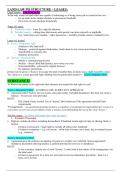
LAND LAW PQ STRUCTURE – LEASES:
Legal Estates – LPA 1925, s1(1):
à the only estates in land which are capable of subsisting or of being conveyed or created at law are –
- (a) an estate in fee simple absolute in possession (freehold)
- (b) a term of years absolute (leasehold).
Types of Leases:
1. Fixed term lease – lease for a specific duration.
2. Periodic tenancy – rolling lease that renews each period, can arise expressly or impliedly.
- E.g., tenant pays rent monthly + takes possession = monthly periodic tenancy implied by law.
Lease or License?
• Lease = Proprietary right:
- Attaches to the land itself.
- Stronger – protected against third parties, binds them so new owner must honour lease.
- Transferable to someone else
- Statutory protections.
• Licence = Personal right:
- Merely a contractual permission
- Weaker – doesn’t bind third parties, new owner can evict
- Non-transferable – personal to original licensee.
- No statutory protections.
person may be given a ‘licence’ to occupy the land of another that, in many ways, might resemble a lease.
Yet a licence is a mere personal right, binding only the parties that created it – Lloyd v Dugdale (2001)
SUBSTANCE:
à What is the nature of the right and what elements are needed for that right to exist?
Street v. Mountford [1985] – LEADING CASE, SUBJECTIVE APPROACH:
• Agreement titled ‘licence’ for two rooms, rent paid weekly. Included declaration ‘this does not create a
tenancy’. No services were provided.
HELD:
- HoL found a lease existed. Use of ‘license’ label irrelevant if the agreement satisfied lease
requirements.
à (judgement) – ‘an agreement granting exclusive occupation of residential accommodation for a term at a
rent (where no services are provided) creates a tenancy, notwithstanding the use of the word ‘license’’.
Test for a lease – ‘exclusive possession, for a rent, at a term’:
1. Exclusive Possession
• Right to exclude all others, including the landlord. If landlord retains right of entry or sharing, likely a
license.
- Exclusive possession = legal right to exclude all others (incl. landlord).
- Exclusive occupation = e.g., uni accom – often only a license, not a lease, due to retained access
(e.g., cleaners).
Street v. Mountford [1985]:
• Agreement gave M exclusive occupation of rooms at a weekly rent. Labelled ‘license agreement’;
included a declaration denying tenancy. Landlord provided no services or attendance.
HELD:
- It was a tenancy, despite use of word ‘license’. Courts look at true nature of the arrangement, not
the label used.
- Exclusive possession for a term at a rent (and no services/attendance provided) – then it is a
lease, not a license.
, à Per Lord Templeman - “An occupier of residential accommodation at a rent for a term is either a lodger
or a tenant. The occupier is a lodger if the landlord provides attendance or services which require the
landlord…to exercise unrestricted access to and use of the premises”
à“A lodger is entitled to live in the premises but cannot call the place his own”
Single Occupancy Cases:
à provision of services by the landlord is key – if landlord reserves rights (e.g., cleaning), it may indicate a
license not a lease à no exclusive possession.
Aslan v. Murphy [1990] – licence was a sham, agreement created a lease:
• Landlord granted ‘licence’ for basement room. Said occupiers must leave property for 90mins a day so
landlord can provide services, landlord could introduce other occupiers and landlord retained key.
HELD:
- Agreement created a tenancy/lease, not a licence. Occupiers never actually left, no services were
provided, despite claim. Room was too small for occupiers, clause not genuine.
- Retaining key = not decisive, depends on why/how landlord uses it.
à Per Lord Donaldson MR – ‘The identification of a pretence does not necessarily lead to the conclusion
that the agreement is a sham but only that the terms of the true bargain are not wholly the same as those of
the bargain on the face of the agreement’.
Westminster City Council v. Clarke [1992]:
• Homeless man in council-run hostel for vulnerable individuals. Signed licence agreement with no
exclusive rights, rooms reallocatable, council could enter freely, deliver services, monitor safety. Licence
could be ended on 7 day’s notice or for rule breaches.
HELD:
- Genuine licence, not a tenancy. Occupier was a lodger with no exclusive possession. Councils
intent and control over premises was key.
à Per Lord Templeman – ‘the grant of exclusive possession would be inconsistent with the C’s purpose in
providing accommodation for the following reasons: if there was exclusive possession the C would not be
able to supervise and control the occupiers; C should be allowed to move occupiers if rooms were
unsuitable for them; and occupiers were also barred from having visitors and that rule that to be enforced’.
Multiple Occupancy Cases:
A.G Securities v. Vaughan [1990]:
• 4 occupiers shared a 4-bedroom flat, each signing individual licence agreements with the landlord. The
occupiers didn’t know each other, and the landlord could move new people in when one left.
HELD:
- NO EXCLUSIVE POSSESSION as each occupier shared the flat with others who had similar
rights to occupy.
- No JT existed, so the court found that the agreement created a licence rather than a lease.
à (judgement) – ‘the four separate agreements, which were independent of each other, did not confer a
right of exclusive possession on any one occupant but merely a right to share the flat with others; and the
agreements having been made with four individuals on different dates and with different terms and rents,
they could not be construed as a joint tenancy’.
Antoniades v. Villiers [1990]:
• A couple entered into a licence agreement for a one-bedroom flat, with clauses that allowed the landlord
to enter the flat and introduce other occupiers.
HELD:
- SHAM CLAUSE – landlord attempted to prevent exclusive possession. The agreement was a
lease, as the couple had exclusive possession of the flat despite the landlords provisions.
à (judgement) – ‘They were introduced into the agreement for no other purpose than as an attempt to
disguise the true character of the agreement which it was hoped would deceive the court and prevent the
appellants enjoying the protection of the Rent Acts’.
Legal Estates – LPA 1925, s1(1):
à the only estates in land which are capable of subsisting or of being conveyed or created at law are –
- (a) an estate in fee simple absolute in possession (freehold)
- (b) a term of years absolute (leasehold).
Types of Leases:
1. Fixed term lease – lease for a specific duration.
2. Periodic tenancy – rolling lease that renews each period, can arise expressly or impliedly.
- E.g., tenant pays rent monthly + takes possession = monthly periodic tenancy implied by law.
Lease or License?
• Lease = Proprietary right:
- Attaches to the land itself.
- Stronger – protected against third parties, binds them so new owner must honour lease.
- Transferable to someone else
- Statutory protections.
• Licence = Personal right:
- Merely a contractual permission
- Weaker – doesn’t bind third parties, new owner can evict
- Non-transferable – personal to original licensee.
- No statutory protections.
person may be given a ‘licence’ to occupy the land of another that, in many ways, might resemble a lease.
Yet a licence is a mere personal right, binding only the parties that created it – Lloyd v Dugdale (2001)
SUBSTANCE:
à What is the nature of the right and what elements are needed for that right to exist?
Street v. Mountford [1985] – LEADING CASE, SUBJECTIVE APPROACH:
• Agreement titled ‘licence’ for two rooms, rent paid weekly. Included declaration ‘this does not create a
tenancy’. No services were provided.
HELD:
- HoL found a lease existed. Use of ‘license’ label irrelevant if the agreement satisfied lease
requirements.
à (judgement) – ‘an agreement granting exclusive occupation of residential accommodation for a term at a
rent (where no services are provided) creates a tenancy, notwithstanding the use of the word ‘license’’.
Test for a lease – ‘exclusive possession, for a rent, at a term’:
1. Exclusive Possession
• Right to exclude all others, including the landlord. If landlord retains right of entry or sharing, likely a
license.
- Exclusive possession = legal right to exclude all others (incl. landlord).
- Exclusive occupation = e.g., uni accom – often only a license, not a lease, due to retained access
(e.g., cleaners).
Street v. Mountford [1985]:
• Agreement gave M exclusive occupation of rooms at a weekly rent. Labelled ‘license agreement’;
included a declaration denying tenancy. Landlord provided no services or attendance.
HELD:
- It was a tenancy, despite use of word ‘license’. Courts look at true nature of the arrangement, not
the label used.
- Exclusive possession for a term at a rent (and no services/attendance provided) – then it is a
lease, not a license.
, à Per Lord Templeman - “An occupier of residential accommodation at a rent for a term is either a lodger
or a tenant. The occupier is a lodger if the landlord provides attendance or services which require the
landlord…to exercise unrestricted access to and use of the premises”
à“A lodger is entitled to live in the premises but cannot call the place his own”
Single Occupancy Cases:
à provision of services by the landlord is key – if landlord reserves rights (e.g., cleaning), it may indicate a
license not a lease à no exclusive possession.
Aslan v. Murphy [1990] – licence was a sham, agreement created a lease:
• Landlord granted ‘licence’ for basement room. Said occupiers must leave property for 90mins a day so
landlord can provide services, landlord could introduce other occupiers and landlord retained key.
HELD:
- Agreement created a tenancy/lease, not a licence. Occupiers never actually left, no services were
provided, despite claim. Room was too small for occupiers, clause not genuine.
- Retaining key = not decisive, depends on why/how landlord uses it.
à Per Lord Donaldson MR – ‘The identification of a pretence does not necessarily lead to the conclusion
that the agreement is a sham but only that the terms of the true bargain are not wholly the same as those of
the bargain on the face of the agreement’.
Westminster City Council v. Clarke [1992]:
• Homeless man in council-run hostel for vulnerable individuals. Signed licence agreement with no
exclusive rights, rooms reallocatable, council could enter freely, deliver services, monitor safety. Licence
could be ended on 7 day’s notice or for rule breaches.
HELD:
- Genuine licence, not a tenancy. Occupier was a lodger with no exclusive possession. Councils
intent and control over premises was key.
à Per Lord Templeman – ‘the grant of exclusive possession would be inconsistent with the C’s purpose in
providing accommodation for the following reasons: if there was exclusive possession the C would not be
able to supervise and control the occupiers; C should be allowed to move occupiers if rooms were
unsuitable for them; and occupiers were also barred from having visitors and that rule that to be enforced’.
Multiple Occupancy Cases:
A.G Securities v. Vaughan [1990]:
• 4 occupiers shared a 4-bedroom flat, each signing individual licence agreements with the landlord. The
occupiers didn’t know each other, and the landlord could move new people in when one left.
HELD:
- NO EXCLUSIVE POSSESSION as each occupier shared the flat with others who had similar
rights to occupy.
- No JT existed, so the court found that the agreement created a licence rather than a lease.
à (judgement) – ‘the four separate agreements, which were independent of each other, did not confer a
right of exclusive possession on any one occupant but merely a right to share the flat with others; and the
agreements having been made with four individuals on different dates and with different terms and rents,
they could not be construed as a joint tenancy’.
Antoniades v. Villiers [1990]:
• A couple entered into a licence agreement for a one-bedroom flat, with clauses that allowed the landlord
to enter the flat and introduce other occupiers.
HELD:
- SHAM CLAUSE – landlord attempted to prevent exclusive possession. The agreement was a
lease, as the couple had exclusive possession of the flat despite the landlords provisions.
à (judgement) – ‘They were introduced into the agreement for no other purpose than as an attempt to
disguise the true character of the agreement which it was hoped would deceive the court and prevent the
appellants enjoying the protection of the Rent Acts’.


