

BMC Knowledge Check NaN/50
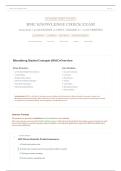
BLOOMBERG MARKET CONCEPTS
BMC KNOWLEDGE CHECK EXAM
2026/2027 | 50 QUESTIONS | LATEST | GRADED A+ | 100% VERIFIED
50 Questions 7 Modules Open Book Bloomberg Certified
Economic Indicators Currencies Fixed Income Equities Commodities
Bloomberg Market Concepts (BMC) Overview
Exam Structure Core Modules
✓ 50 Total Knowledge Check Questions ● Economic Indicators
✓ 7 Core Modules ● Currencies
✓ Multiple-Choice Format ● Fixed Income
✓ Self-Paced (Unlimited Attempts) ● Equities
✓ Open-Book Examination ● Commodities
✓ Online Bloomberg Platform ● Bloomberg Terminal
● Market Analysis
Introduction: BMC is a self-paced e-learning course providing visual introduction to financial markets, economic concepts, and
Bloomberg Terminal functionality. BMC certification is widely recognized in finance industry and often required for internships and entry-
level positions in investment banking, asset management, and financial services.
Answer Format
All questions are presented in bold text for clear distinction and readability.
All correct answers are presented in bold and lime green, followed by clearly defined, financially accurate rationales in italic
format that reinforce economic concepts, market principles, and analytical applications required for BMC knowledge check
success and certification.
Economic Indicators
1
GDP (Gross Domestic Product) measures:
A) Total stock market value
B) Total value of goods and services produced within a country
C) Total government spending
D) Total consumer spending only
, Correct Answer: B) Total value of goods and services produced within a country
Rationale: GDP measures the total monetary value of all final goods and services produced within a country's borders
in a specific time period. It's the primary indicator of economic health.
Economic Indicators
2
Which unemployment rate type includes discouraged workers?
A) U-3
B) U-6
C) U-1
D) U-2
Correct Answer: B) U-6
Rationale: U-6 is the broadest unemployment measure, including unemployed, marginally attached workers, and
those working part-time for economic reasons. U-3 is the official unemployment rate.
Economic Indicators
3
CPI (Consumer Price Index) measures:
A) Stock prices
B) Changes in prices paid by consumers for goods and services
C) Producer prices
D) Housing prices only
Correct Answer: B) Changes in prices paid by consumers for goods and services
Rationale: CPI measures the average change over time in prices paid by urban consumers for a market basket of
consumer goods and services. It's the primary inflation gauge.
Economic Indicators
4
A yield curve inversion typically signals:
A) Economic expansion
B) Potential recession
C) Low inflation
D) High employment
Correct Answer: B) Potential recession
Rationale: Yield curve inversion (short-term rates > long-term rates) has historically preceded recessions. It indicates
investors expect lower future rates due to economic weakness.
Economic Indicators
5
PMI (Purchasing Managers' Index) above 50 indicates:
, A) Contraction
B) Expansion
C) No change
D) Recession
Correct Answer: B) Expansion
Rationale: PMI above 50 indicates expansion in the manufacturing or services sector. Below 50 indicates contraction.
It's a leading economic indicator.
Economic Indicators
6
Consumer Confidence Index measures:
A) Stock market performance
B) Consumer optimism about economy
C) Inflation expectations
D) Interest rates
Correct Answer: B) Consumer optimism about economy
Rationale: Consumer Confidence Index measures consumers' optimism about economic conditions, affecting spending
decisions. High confidence typically leads to increased consumer spending.
Economic Indicators
7
Housing Starts data is important because:
A) It measures stock prices
B) It's a leading indicator of economic activity
C) It measures inflation
D) It measures unemployment
Correct Answer: B) It's a leading indicator of economic activity
Rationale: Housing starts are a leading economic indicator. Housing sector impacts many industries (construction,
materials, appliances, furniture) and indicates economic health.
Economic Indicators
8
Core inflation excludes:
A) Services
B) Food and energy
C) Housing
D) Transportation
Correct Answer: B) Food and energy
BLOOMBERG MARKET CONCEPTS
BMC KNOWLEDGE CHECK EXAM
2026/2027 | 50 QUESTIONS | LATEST | GRADED A+ | 100% VERIFIED
50 Questions 7 Modules Open Book Bloomberg Certified
Economic Indicators Currencies Fixed Income Equities Commodities
Bloomberg Market Concepts (BMC) Overview
Exam Structure Core Modules
✓ 50 Total Knowledge Check Questions ● Economic Indicators
✓ 7 Core Modules ● Currencies
✓ Multiple-Choice Format ● Fixed Income
✓ Self-Paced (Unlimited Attempts) ● Equities
✓ Open-Book Examination ● Commodities
✓ Online Bloomberg Platform ● Bloomberg Terminal
● Market Analysis
Introduction: BMC is a self-paced e-learning course providing visual introduction to financial markets, economic concepts, and
Bloomberg Terminal functionality. BMC certification is widely recognized in finance industry and often required for internships and entry-
level positions in investment banking, asset management, and financial services.
Answer Format
All questions are presented in bold text for clear distinction and readability.
All correct answers are presented in bold and lime green, followed by clearly defined, financially accurate rationales in italic
format that reinforce economic concepts, market principles, and analytical applications required for BMC knowledge check
success and certification.
Economic Indicators
1
GDP (Gross Domestic Product) measures:
A) Total stock market value
B) Total value of goods and services produced within a country
C) Total government spending
D) Total consumer spending only
, Correct Answer: B) Total value of goods and services produced within a country
Rationale: GDP measures the total monetary value of all final goods and services produced within a country's borders
in a specific time period. It's the primary indicator of economic health.
Economic Indicators
2
Which unemployment rate type includes discouraged workers?
A) U-3
B) U-6
C) U-1
D) U-2
Correct Answer: B) U-6
Rationale: U-6 is the broadest unemployment measure, including unemployed, marginally attached workers, and
those working part-time for economic reasons. U-3 is the official unemployment rate.
Economic Indicators
3
CPI (Consumer Price Index) measures:
A) Stock prices
B) Changes in prices paid by consumers for goods and services
C) Producer prices
D) Housing prices only
Correct Answer: B) Changes in prices paid by consumers for goods and services
Rationale: CPI measures the average change over time in prices paid by urban consumers for a market basket of
consumer goods and services. It's the primary inflation gauge.
Economic Indicators
4
A yield curve inversion typically signals:
A) Economic expansion
B) Potential recession
C) Low inflation
D) High employment
Correct Answer: B) Potential recession
Rationale: Yield curve inversion (short-term rates > long-term rates) has historically preceded recessions. It indicates
investors expect lower future rates due to economic weakness.
Economic Indicators
5
PMI (Purchasing Managers' Index) above 50 indicates:
, A) Contraction
B) Expansion
C) No change
D) Recession
Correct Answer: B) Expansion
Rationale: PMI above 50 indicates expansion in the manufacturing or services sector. Below 50 indicates contraction.
It's a leading economic indicator.
Economic Indicators
6
Consumer Confidence Index measures:
A) Stock market performance
B) Consumer optimism about economy
C) Inflation expectations
D) Interest rates
Correct Answer: B) Consumer optimism about economy
Rationale: Consumer Confidence Index measures consumers' optimism about economic conditions, affecting spending
decisions. High confidence typically leads to increased consumer spending.
Economic Indicators
7
Housing Starts data is important because:
A) It measures stock prices
B) It's a leading indicator of economic activity
C) It measures inflation
D) It measures unemployment
Correct Answer: B) It's a leading indicator of economic activity
Rationale: Housing starts are a leading economic indicator. Housing sector impacts many industries (construction,
materials, appliances, furniture) and indicates economic health.
Economic Indicators
8
Core inflation excludes:
A) Services
B) Food and energy
C) Housing
D) Transportation
Correct Answer: B) Food and energy


