

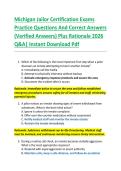
Michigan Jailor Certification Exams
Practice Questions And Correct Answers
(Verified Answers) Plus Rationale 2026
Q&A| Instant Download Pdf
1. Which of the following is the most important first step when a jailor
discovers an inmate attempting to harm another inmate?
A. Immediately call the media
B. Attempt to physically intervene without backup
C. Activate emergency response protocols and secure the area
D. Document the incident after it occurs
Rationale: Immediate action to secure the area and follow established
emergency procedures ensures safety for all inmates and staff, minimizing
potential injuries.
2. A jailor notices an inmate showing signs of severe withdrawal from
substances. What is the best initial action?
A. Ignore it unless the inmate complains
B. Offer over-the-counter medication without assessment
C. Notify medical staff and monitor the inmate closely
D. Restrain the inmate immediately
Rationale: Substance withdrawal can be life-threatening. Medical staff
must be involved, and continuous monitoring ensures timely intervention.
3. During a routine cell check, an inmate becomes verbally aggressive.
What is the most appropriate response?
A. Respond with equal aggression to assert authority
B. Maintain calm, keep a safe distance, and follow de-escalation
, protocols
C. Immediately use physical force
D. Retreat and leave the inmate unsupervised
Rationale: Maintaining calm and using de-escalation techniques prevents
escalation and maintains safety for both staff and inmates.
4. Which of the following best describes a jailor’s legal responsibility
regarding inmate rights?
A. Rights can be suspended at any time for safety
B. Jailors have no responsibility toward inmate welfare
C. Jailors must uphold constitutional and statutory rights while
maintaining security
D. Jailors only enforce rules without consideration of rights
Rationale: Jailors are legally obligated to balance security with the
protection of inmates’ constitutional and legal rights.
5. A fire breaks out in a housing unit. What is the priority action for the
jailor?
A. Save personal belongings
B. Document the fire for records
C. Evacuate inmates and staff safely, following fire protocols
D. Attempt to extinguish the fire alone
Rationale: Human life takes priority. Following evacuation procedures
ensures safety and prevents casualties.
6. What is the most effective way to prevent contraband from entering a
correctional facility?
A. Trusting inmate honesty
B. Reducing searches to save time
C. Implementing consistent searches, screening, and monitoring
procedures
D. Allowing personal visits without oversight
, Rationale: Systematic searches and monitoring are proven methods to
reduce contraband, enhancing facility safety.
7. Which of the following best illustrates professional boundaries
between jailors and inmates?
A. Sharing personal contact information
B. Providing favors in exchange for compliance
C. Maintaining neutral, respectful interactions without personal
involvement
D. Engaging in social media contact with inmates
Rationale: Clear professional boundaries prevent conflicts of interest,
favoritism, and safety risks.
8. An inmate refuses to comply with an order to return to their cell.
Which is the correct immediate action?
A. Yell and physically force compliance
B. Ignore the refusal
C. Use verbal de-escalation and request backup if needed
D. Threaten punitive action without following protocol
Rationale: Verbal de-escalation and calling backup maintain safety while
adhering to facility rules.
9. Which factor is most critical when conducting a cell search?
A. Speed of the search
B. Inmate complaints
C. Safety of staff and adherence to legal procedures
D. Personal discretion in searching
Rationale: Ensuring staff safety and legal compliance is essential to
prevent injury and uphold lawful practices.
10. A new inmate exhibits extreme anxiety during intake. What is
the best practice for a jailor?
A. Ignore behavior as non-threatening
B. Immediately place in solitary confinement
Practice Questions And Correct Answers
(Verified Answers) Plus Rationale 2026
Q&A| Instant Download Pdf
1. Which of the following is the most important first step when a jailor
discovers an inmate attempting to harm another inmate?
A. Immediately call the media
B. Attempt to physically intervene without backup
C. Activate emergency response protocols and secure the area
D. Document the incident after it occurs
Rationale: Immediate action to secure the area and follow established
emergency procedures ensures safety for all inmates and staff, minimizing
potential injuries.
2. A jailor notices an inmate showing signs of severe withdrawal from
substances. What is the best initial action?
A. Ignore it unless the inmate complains
B. Offer over-the-counter medication without assessment
C. Notify medical staff and monitor the inmate closely
D. Restrain the inmate immediately
Rationale: Substance withdrawal can be life-threatening. Medical staff
must be involved, and continuous monitoring ensures timely intervention.
3. During a routine cell check, an inmate becomes verbally aggressive.
What is the most appropriate response?
A. Respond with equal aggression to assert authority
B. Maintain calm, keep a safe distance, and follow de-escalation
, protocols
C. Immediately use physical force
D. Retreat and leave the inmate unsupervised
Rationale: Maintaining calm and using de-escalation techniques prevents
escalation and maintains safety for both staff and inmates.
4. Which of the following best describes a jailor’s legal responsibility
regarding inmate rights?
A. Rights can be suspended at any time for safety
B. Jailors have no responsibility toward inmate welfare
C. Jailors must uphold constitutional and statutory rights while
maintaining security
D. Jailors only enforce rules without consideration of rights
Rationale: Jailors are legally obligated to balance security with the
protection of inmates’ constitutional and legal rights.
5. A fire breaks out in a housing unit. What is the priority action for the
jailor?
A. Save personal belongings
B. Document the fire for records
C. Evacuate inmates and staff safely, following fire protocols
D. Attempt to extinguish the fire alone
Rationale: Human life takes priority. Following evacuation procedures
ensures safety and prevents casualties.
6. What is the most effective way to prevent contraband from entering a
correctional facility?
A. Trusting inmate honesty
B. Reducing searches to save time
C. Implementing consistent searches, screening, and monitoring
procedures
D. Allowing personal visits without oversight
, Rationale: Systematic searches and monitoring are proven methods to
reduce contraband, enhancing facility safety.
7. Which of the following best illustrates professional boundaries
between jailors and inmates?
A. Sharing personal contact information
B. Providing favors in exchange for compliance
C. Maintaining neutral, respectful interactions without personal
involvement
D. Engaging in social media contact with inmates
Rationale: Clear professional boundaries prevent conflicts of interest,
favoritism, and safety risks.
8. An inmate refuses to comply with an order to return to their cell.
Which is the correct immediate action?
A. Yell and physically force compliance
B. Ignore the refusal
C. Use verbal de-escalation and request backup if needed
D. Threaten punitive action without following protocol
Rationale: Verbal de-escalation and calling backup maintain safety while
adhering to facility rules.
9. Which factor is most critical when conducting a cell search?
A. Speed of the search
B. Inmate complaints
C. Safety of staff and adherence to legal procedures
D. Personal discretion in searching
Rationale: Ensuring staff safety and legal compliance is essential to
prevent injury and uphold lawful practices.
10. A new inmate exhibits extreme anxiety during intake. What is
the best practice for a jailor?
A. Ignore behavior as non-threatening
B. Immediately place in solitary confinement


