
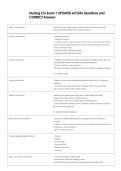
Nursing 216 Exam 1 UPDATED ACTUAL Questions and
CORRECT Answers
Types of precautions standard, contact, droplet, airborne, reverse/protective (always wash hands
before and after working with any type of patient)
Standard precautions - Applied to everyone
- implemented always
- everytime we leave a room we clean our hands (cover nose and mouth with arm
or tissue when coughing, wear gown, gloves, face protection for any risk of
contact with bodily fluids)
- PPE: gloves when touching wet things
- Assume all bodily fluids are infectious
Contact precations - In addition to standard precautions you must gown and glove at the door and
use disposable equipment or patient dedicated equipment.
- Clean and disinfect shared equipment
-PPE: gloves and gown, possibly shoe/hair covers, masks, or goggles if needed
Ex- C DIFF or MRSA
Droplet precautions - Droplet- mucus or saliva transporting respiratory infections (ex- coughing or
sneezing)
- Must wear mask, eye protection with respiratory symptoms and standard
precautions if contact with secretions likely
Aiborne precautions -Isolation room required, gloves and gown at door, keep door closed
(High-level containment, No visitors allowed)
- PPE: Full gown, boot covers, gloves (before entering room)
- patient disposable equipment, clean and disinfect shared equipment, single use
gloves with extended cuffs
Ex- ebola (extremely dangerous)
Reverse/protective isolation - purpose is to protect the patient from any germs the staff or visitors are
carrying.
- Patients who have a decreased immune system, usually from chemotherapy, may
be placed in reverse isolation.
- gloves, a mask and a gown.
Factors supporting healthy immunity - Nutrition
- Hygiene
- Rest and sleep
- Stress reduction
- Exercise and activity
- vaccines
Safety concerns for older adults - changes in strength and gait stability
- sensory losses, especially hearing or vision
Motor and sensory losses lead to an increased risk for accidents/falls
, Safety concerns in healthcare settings - For fires in healthcare setting, rescue patient first then pull the alarm
- Seek advice if unsure how to operate equipment
Reportable events
Safety concerns for young children - Children can ingest poisonous agents in households like cleaners, medicines,
etc.
- Toddler's motor skills advance faster than their judgment
Settings for care Hospitals, extended care facilities, ambulatory care centers, home healthcare
agencies, rehab centers, assisted living facilities
Hospitals -most expensive
- most frequently used site
- basic services include inpatient beds, radiology, and laboratory services
- emergency department, diagnostic centers, and units such as intensive care,
medical, surgical, pediatrics, and maternal newborn.
Extended care facilities - care for an extended period of time—usually longer than 1 month.
- nursing homes, skilled nursing facilities (also known as convalescent hospitals),
and rehabilitation facilities.
- distinction based primarily on whether they provide skilled or custodial care.
Ambulatory care center - same-day cost-effective healthcare. - synonymous with outpatient care
- provides services for clients who are able to come and go from the facility
- Clients live at home or in non hospital settings and come to the site for care.
Home healthcare agencies - care to patients after hospitalization
provided when:
1) clients are homebound or unable to get to ambulatory care centers for services
2) the client or family prefers to receive care in the home— client is terminally ill 3)
a client still requires skilled care but is discharged from the hospital because
length-of-stay has expired.
Rehabilitation centers - provide extended care and treatment for patients with physical and mental
illness.
- services include alcohol and drug rehabilitation, physical rehabilitation for
traumatic injuries, and rehabilitation for stroke or heart attack.
- Rehabilitation services may be inpatient, outpatient, or a combination.
Assisted living facilities - bridge the gap between independence and institutionalization for older adults
who have a decline in health status and cannot live alone independently.
- able to perform self-care activities, but require assistance with meals,
housekeeping, or medications.
Health promotion measures that promote general health
Ex. going to check-ups/dentist, teaching a group of students about hand washing
Illness prevention measures that decrease the risk for specific illnesses or infections
Ex. wearing sunscreen to prevent skin cancer; avoiding sick people
CORRECT Answers
Types of precautions standard, contact, droplet, airborne, reverse/protective (always wash hands
before and after working with any type of patient)
Standard precautions - Applied to everyone
- implemented always
- everytime we leave a room we clean our hands (cover nose and mouth with arm
or tissue when coughing, wear gown, gloves, face protection for any risk of
contact with bodily fluids)
- PPE: gloves when touching wet things
- Assume all bodily fluids are infectious
Contact precations - In addition to standard precautions you must gown and glove at the door and
use disposable equipment or patient dedicated equipment.
- Clean and disinfect shared equipment
-PPE: gloves and gown, possibly shoe/hair covers, masks, or goggles if needed
Ex- C DIFF or MRSA
Droplet precautions - Droplet- mucus or saliva transporting respiratory infections (ex- coughing or
sneezing)
- Must wear mask, eye protection with respiratory symptoms and standard
precautions if contact with secretions likely
Aiborne precautions -Isolation room required, gloves and gown at door, keep door closed
(High-level containment, No visitors allowed)
- PPE: Full gown, boot covers, gloves (before entering room)
- patient disposable equipment, clean and disinfect shared equipment, single use
gloves with extended cuffs
Ex- ebola (extremely dangerous)
Reverse/protective isolation - purpose is to protect the patient from any germs the staff or visitors are
carrying.
- Patients who have a decreased immune system, usually from chemotherapy, may
be placed in reverse isolation.
- gloves, a mask and a gown.
Factors supporting healthy immunity - Nutrition
- Hygiene
- Rest and sleep
- Stress reduction
- Exercise and activity
- vaccines
Safety concerns for older adults - changes in strength and gait stability
- sensory losses, especially hearing or vision
Motor and sensory losses lead to an increased risk for accidents/falls
, Safety concerns in healthcare settings - For fires in healthcare setting, rescue patient first then pull the alarm
- Seek advice if unsure how to operate equipment
Reportable events
Safety concerns for young children - Children can ingest poisonous agents in households like cleaners, medicines,
etc.
- Toddler's motor skills advance faster than their judgment
Settings for care Hospitals, extended care facilities, ambulatory care centers, home healthcare
agencies, rehab centers, assisted living facilities
Hospitals -most expensive
- most frequently used site
- basic services include inpatient beds, radiology, and laboratory services
- emergency department, diagnostic centers, and units such as intensive care,
medical, surgical, pediatrics, and maternal newborn.
Extended care facilities - care for an extended period of time—usually longer than 1 month.
- nursing homes, skilled nursing facilities (also known as convalescent hospitals),
and rehabilitation facilities.
- distinction based primarily on whether they provide skilled or custodial care.
Ambulatory care center - same-day cost-effective healthcare. - synonymous with outpatient care
- provides services for clients who are able to come and go from the facility
- Clients live at home or in non hospital settings and come to the site for care.
Home healthcare agencies - care to patients after hospitalization
provided when:
1) clients are homebound or unable to get to ambulatory care centers for services
2) the client or family prefers to receive care in the home— client is terminally ill 3)
a client still requires skilled care but is discharged from the hospital because
length-of-stay has expired.
Rehabilitation centers - provide extended care and treatment for patients with physical and mental
illness.
- services include alcohol and drug rehabilitation, physical rehabilitation for
traumatic injuries, and rehabilitation for stroke or heart attack.
- Rehabilitation services may be inpatient, outpatient, or a combination.
Assisted living facilities - bridge the gap between independence and institutionalization for older adults
who have a decline in health status and cannot live alone independently.
- able to perform self-care activities, but require assistance with meals,
housekeeping, or medications.
Health promotion measures that promote general health
Ex. going to check-ups/dentist, teaching a group of students about hand washing
Illness prevention measures that decrease the risk for specific illnesses or infections
Ex. wearing sunscreen to prevent skin cancer; avoiding sick people


