

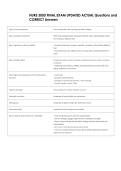
NURS 3000 FINAL EXAM UPDATED ACTUAL Questions and
CORRECT Answers
Signs of visual impairment Poor coordination, falls, squinting, repositions objects
Signs of auditory impairment Blank looks, speaking loudly, decreased attention span, inappropriately smiling
and nodding, ringing in ears
Signs of gustatory / olfactory deficits - Excessive seasoning, changes in appetite, complaints of food tasting different /
bad
- Increased body odor, failure to react to strong odors, increased sensitivity to
odors
Signs of tactile deficits No response when touched, increased or decreased reaction to pain, clumsiness,
numbness
- Positioning: poor balance, shuffling, decreased response to brace self when
falling, deliberate movements
What might cause disruptions in the normal sensory - Loud noises
process? - Excessive / reduced stimuli
- Damage to sensorineural pathways / nerve damage
- Genetic disorders (autism, OCD)
Vibratory sensation sensory pathway to detect vibrations by touch
Kinesthetic sensation Awareness of body position and movements
Stereognosis Awareness of object's shape, size, texture from touch
Visceral sensation Awareness of internal organs and sensation
How to assess and document LOC / orientation - Alert: readily responds to all stimuli appropriately
- Drowsy: lethargic, groggy, responses slow or delayed; arousable
- Stupor: arouses with greater stimulation, shaking, reactions decreased and
inappropriate
- Semi coma: minimally aroused by painful stimuli
- Coma: no consistent response to any stimuli; reflexes depressed or absent;
pupils may not respond
, Clients at high risk for various sensory disturbances - Immobilized
- Isolated
- Elderly
- Confused
- Terminally ill
- Sensory deficit
- Acutely ill; ICU/CCU
- In intense pain
- Those in unfamiliar environment
- Many visitors
- Decreased rest/sleep
Sensory deprivation - Caused by restricting environment, decreased input from impaired senses,
meaningless stimuli
- Boredom, restlessness, decreased attention span, emotional liability,
disorganized thought, anxiety, hallucinations, increased sleep, irritability
Sensory overload - Caused by too much stimuli, stimuli without meaning, repetitious / unchanging
- Anxiety, fear, irritability, anger outbursts, restlessness, decreased sleep / change
in sleep patterns, crying, covering eyes / ears
Nursing interventions for sensory deprivation - Increase stimuli and meaning
- Visit more and orient frequently
- Explain all care
- Place TV, radio, clock, calendar in room
- Display pictures, cards, familiar objects
- Touch more
- Offer variety of foods
- Elevate HOB, open door
- Assist OOB, ambulate
Nursing interventions for sensory overload - Decrease stimuli
- Decrease interruptions
- Organize care to accomplish more at once
- Close door, turn off TV, decrease odors
- Restrict visitors, calls
- Decrease noise levels
- Provide comfort measures to decreased pain
Hypotheses / problem statements r/t disruptions in ...
sensory needs
How can nurse assist clients who are dealing with - Provide knowledge about sexuality and sexual phenomena
sexuality issues? - Positive body image
- Self-awareness or appreciation for one's attitudes/feelings related to sexuality
- Value systems that enhance sexual decision making
- Effective relationships with members of both genders
- Emotional comfort with one's sexual activities
- Capacity for physical and psychosexual responsiveness, which is enhancing to
self and others
What is the greatest aspect of sexuality? SELF-CONCEPT
CORRECT Answers
Signs of visual impairment Poor coordination, falls, squinting, repositions objects
Signs of auditory impairment Blank looks, speaking loudly, decreased attention span, inappropriately smiling
and nodding, ringing in ears
Signs of gustatory / olfactory deficits - Excessive seasoning, changes in appetite, complaints of food tasting different /
bad
- Increased body odor, failure to react to strong odors, increased sensitivity to
odors
Signs of tactile deficits No response when touched, increased or decreased reaction to pain, clumsiness,
numbness
- Positioning: poor balance, shuffling, decreased response to brace self when
falling, deliberate movements
What might cause disruptions in the normal sensory - Loud noises
process? - Excessive / reduced stimuli
- Damage to sensorineural pathways / nerve damage
- Genetic disorders (autism, OCD)
Vibratory sensation sensory pathway to detect vibrations by touch
Kinesthetic sensation Awareness of body position and movements
Stereognosis Awareness of object's shape, size, texture from touch
Visceral sensation Awareness of internal organs and sensation
How to assess and document LOC / orientation - Alert: readily responds to all stimuli appropriately
- Drowsy: lethargic, groggy, responses slow or delayed; arousable
- Stupor: arouses with greater stimulation, shaking, reactions decreased and
inappropriate
- Semi coma: minimally aroused by painful stimuli
- Coma: no consistent response to any stimuli; reflexes depressed or absent;
pupils may not respond
, Clients at high risk for various sensory disturbances - Immobilized
- Isolated
- Elderly
- Confused
- Terminally ill
- Sensory deficit
- Acutely ill; ICU/CCU
- In intense pain
- Those in unfamiliar environment
- Many visitors
- Decreased rest/sleep
Sensory deprivation - Caused by restricting environment, decreased input from impaired senses,
meaningless stimuli
- Boredom, restlessness, decreased attention span, emotional liability,
disorganized thought, anxiety, hallucinations, increased sleep, irritability
Sensory overload - Caused by too much stimuli, stimuli without meaning, repetitious / unchanging
- Anxiety, fear, irritability, anger outbursts, restlessness, decreased sleep / change
in sleep patterns, crying, covering eyes / ears
Nursing interventions for sensory deprivation - Increase stimuli and meaning
- Visit more and orient frequently
- Explain all care
- Place TV, radio, clock, calendar in room
- Display pictures, cards, familiar objects
- Touch more
- Offer variety of foods
- Elevate HOB, open door
- Assist OOB, ambulate
Nursing interventions for sensory overload - Decrease stimuli
- Decrease interruptions
- Organize care to accomplish more at once
- Close door, turn off TV, decrease odors
- Restrict visitors, calls
- Decrease noise levels
- Provide comfort measures to decreased pain
Hypotheses / problem statements r/t disruptions in ...
sensory needs
How can nurse assist clients who are dealing with - Provide knowledge about sexuality and sexual phenomena
sexuality issues? - Positive body image
- Self-awareness or appreciation for one's attitudes/feelings related to sexuality
- Value systems that enhance sexual decision making
- Effective relationships with members of both genders
- Emotional comfort with one's sexual activities
- Capacity for physical and psychosexual responsiveness, which is enhancing to
self and others
What is the greatest aspect of sexuality? SELF-CONCEPT


