
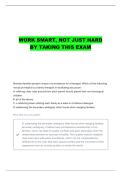
Blended families present unique circumstances for a therapist. Which of the following
would be helpful to a family therapist in facilitating discussion:
A: offering clear rules around how each parent should parent their non-biological
children.
B: all of the above.
C: a reflecting team utilizing each family as a team in a fishbowl dialogue.
D: addressing the boundary ambiguity often found when merging families.
Give this one a try later!
D: addressing the boundary ambiguity often found when merging families.
Boundary ambiguity: Children have simultaneous membership in two
families, which can lead to loyalty conflicts and guilt, especially when the
relationship between ex-spouses is hostile. The couples need to establish
clear executive subsystem boundaries, which can be complicated by
differences in the rules that each spouse prefers and the movement of the
stepparent from an outside position to inside the family.
,According to a Behavioral therapist, a therapeutic intervention might be designed to
do all of the following except:
A: looking at the ways the family will resist change and the ways the family will take
charge of their own growth.
B: probe for the stream-of-consciousness thoughts and visual images held by each
member of the couple or family system when describing past events that elicit
negative affect.
C: have each member write a self-report logs listing complete records of daily
dysfunction thoughts, upsetting marital/family interaction, etc.
D: encourage the spouses to interact during the session.
Give this one a try later!
A: looking at the ways the family will resist change and the ways the family
will take charge of their own growth.
This is an exception question. Look for the answer reflecting an approach
that a Behavioral family therapist is generally brief, focusing on the
presenting problem, and is also ahistoric. Behaviorists are not interested in
resistance and growth, and tend to focus on symptom removal. All of the
other answers reflect elements of the Behavioral model.
A family is referred for therapy because their 14-year-old son has threatened suicide.
His grades have dropped from honors to failing and he spends much time in his room.
He has begun giving his things away and reveals to the therapist that he has thought
about suicide and has a plan for how he would kill himself. The therapist should:
A: tell the parents how manipulative their son is and that limits need to be set.
B: discuss their son's active suicidality and encourage them to take it seriously.
C: use a paradoxical intervention.
D: refer the son to a psychiatrist.
Give this one a try later!
, B: discuss their son's active suicidality and encourage them to take it
seriously.
Common clinical sense is that all suicidal intent must be taken seriously.
Paradox is never used in life-threatening or dangerous contexts.
Knowledge domain: Family Studies & Development Practice Domain:
Conducting Course of Treatment Question Type: Vignette Glossary Link
Keyword: Suicidal Ideation.
During the process of treatment, Mr. Medieros recognizes how he was victimized by
his parents, and that past generations were also victimized by their parents. In
recognizing this he began to see his parents less as monsters and more as struggling
human beings, themselves acting out invisible loyalties. Therefore, he was able to
block the trans-generational pattern of destructive entitlement and allowed the
positive transmission of relational resources. The process by which he earned
entitlement by dealing with his own issues with his own parents is called:
A: A family projection process
B: relational ethics
C: societal regression
D: exoneration
Give this one a try later!
D: exoneration
Exoneration is a process by which the therapist attempts to help the client
see the positive intent and inter-generational loyalty issues that motivate
the behavior of members of previous generations.
Which of the following is most true regarding the treatment of premature ejaculation
(P.E.)?
A: Treatment will generally begin by seeing the man individually to assess his sexual
history.
B: Abstinence is generally the initial step in treatment.
C: Treatment will involve the use of 'stop-start' or 'squeeze' technique.
D: P.E. is one of the most difficult sexual dysfunctions to treat.
, Give this one a try later!
C: Treatment will involve the use of 'stop-start' or 'squeeze' technique.
The 'squeeze' technique is commonly used to slow down or stop
ejaculation. Premature ejaculation is not considered especially difficult to
treat, abstinence is more likely to be prescribed in the initial phases of
treating vaginismus and/or impotence, and a sexual history of the couple is
often obtained early on.
Beth and Paul come to counseling because Beth feels that after two years of marriage
she and Paul have nothing in common. She complains that for the past six months she
has been complaining to Paul that there are problems with their relationship. Paul
states that he doesn't feel that there are problems, he feels his wife is just
overreacting.
In assessing this couple, A Strategic Family Therapist would:
A: assess Beth and Paul's attempts to solve the problem.
B: affirm all efforts at positive structural changes.
C: use a genogram construction to help the couple identify family of origin patterns.
D: strengthen the martial subsystem
Give this one a try later!
A: assess Beth and Paul's attempts to solve the problem.
The attempted solution that becomes the problem is a hallmark concept of
the MRI branch of the strategic model. The other answers can be
eliminated as follows: 'affirm all efforts at positive structural change'.
Behavioral 'use a genogram construction to help the couple identify family
of origin patterns'. Intergenerational 'strengthen the martial subsystem'.
Structural.
An MFT in private practice keeps some of her clinical records on her laptop
computer, which she carries back and forth to work every day. One evening after
work she stopped to meet a friend for dinner before going home. When she returned
to her car she noticed the trunk was open and then found her computer had been
would be helpful to a family therapist in facilitating discussion:
A: offering clear rules around how each parent should parent their non-biological
children.
B: all of the above.
C: a reflecting team utilizing each family as a team in a fishbowl dialogue.
D: addressing the boundary ambiguity often found when merging families.
Give this one a try later!
D: addressing the boundary ambiguity often found when merging families.
Boundary ambiguity: Children have simultaneous membership in two
families, which can lead to loyalty conflicts and guilt, especially when the
relationship between ex-spouses is hostile. The couples need to establish
clear executive subsystem boundaries, which can be complicated by
differences in the rules that each spouse prefers and the movement of the
stepparent from an outside position to inside the family.
,According to a Behavioral therapist, a therapeutic intervention might be designed to
do all of the following except:
A: looking at the ways the family will resist change and the ways the family will take
charge of their own growth.
B: probe for the stream-of-consciousness thoughts and visual images held by each
member of the couple or family system when describing past events that elicit
negative affect.
C: have each member write a self-report logs listing complete records of daily
dysfunction thoughts, upsetting marital/family interaction, etc.
D: encourage the spouses to interact during the session.
Give this one a try later!
A: looking at the ways the family will resist change and the ways the family
will take charge of their own growth.
This is an exception question. Look for the answer reflecting an approach
that a Behavioral family therapist is generally brief, focusing on the
presenting problem, and is also ahistoric. Behaviorists are not interested in
resistance and growth, and tend to focus on symptom removal. All of the
other answers reflect elements of the Behavioral model.
A family is referred for therapy because their 14-year-old son has threatened suicide.
His grades have dropped from honors to failing and he spends much time in his room.
He has begun giving his things away and reveals to the therapist that he has thought
about suicide and has a plan for how he would kill himself. The therapist should:
A: tell the parents how manipulative their son is and that limits need to be set.
B: discuss their son's active suicidality and encourage them to take it seriously.
C: use a paradoxical intervention.
D: refer the son to a psychiatrist.
Give this one a try later!
, B: discuss their son's active suicidality and encourage them to take it
seriously.
Common clinical sense is that all suicidal intent must be taken seriously.
Paradox is never used in life-threatening or dangerous contexts.
Knowledge domain: Family Studies & Development Practice Domain:
Conducting Course of Treatment Question Type: Vignette Glossary Link
Keyword: Suicidal Ideation.
During the process of treatment, Mr. Medieros recognizes how he was victimized by
his parents, and that past generations were also victimized by their parents. In
recognizing this he began to see his parents less as monsters and more as struggling
human beings, themselves acting out invisible loyalties. Therefore, he was able to
block the trans-generational pattern of destructive entitlement and allowed the
positive transmission of relational resources. The process by which he earned
entitlement by dealing with his own issues with his own parents is called:
A: A family projection process
B: relational ethics
C: societal regression
D: exoneration
Give this one a try later!
D: exoneration
Exoneration is a process by which the therapist attempts to help the client
see the positive intent and inter-generational loyalty issues that motivate
the behavior of members of previous generations.
Which of the following is most true regarding the treatment of premature ejaculation
(P.E.)?
A: Treatment will generally begin by seeing the man individually to assess his sexual
history.
B: Abstinence is generally the initial step in treatment.
C: Treatment will involve the use of 'stop-start' or 'squeeze' technique.
D: P.E. is one of the most difficult sexual dysfunctions to treat.
, Give this one a try later!
C: Treatment will involve the use of 'stop-start' or 'squeeze' technique.
The 'squeeze' technique is commonly used to slow down or stop
ejaculation. Premature ejaculation is not considered especially difficult to
treat, abstinence is more likely to be prescribed in the initial phases of
treating vaginismus and/or impotence, and a sexual history of the couple is
often obtained early on.
Beth and Paul come to counseling because Beth feels that after two years of marriage
she and Paul have nothing in common. She complains that for the past six months she
has been complaining to Paul that there are problems with their relationship. Paul
states that he doesn't feel that there are problems, he feels his wife is just
overreacting.
In assessing this couple, A Strategic Family Therapist would:
A: assess Beth and Paul's attempts to solve the problem.
B: affirm all efforts at positive structural changes.
C: use a genogram construction to help the couple identify family of origin patterns.
D: strengthen the martial subsystem
Give this one a try later!
A: assess Beth and Paul's attempts to solve the problem.
The attempted solution that becomes the problem is a hallmark concept of
the MRI branch of the strategic model. The other answers can be
eliminated as follows: 'affirm all efforts at positive structural change'.
Behavioral 'use a genogram construction to help the couple identify family
of origin patterns'. Intergenerational 'strengthen the martial subsystem'.
Structural.
An MFT in private practice keeps some of her clinical records on her laptop
computer, which she carries back and forth to work every day. One evening after
work she stopped to meet a friend for dinner before going home. When she returned
to her car she noticed the trunk was open and then found her computer had been


