
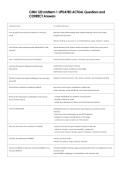
CMN 120 midterm 1 UPDATED ACTUAL Questions and
CORRECT Answers
unrequited love not reciprocated love
how do rejected and rejecters experience unrequited rejected: more positive feelings than negative feelings, the rush and makes
love? people feel more alive
rejecters: feelings of annoyance, uncomfortableness, anger, negative > positive
what factors make people sexually disinterested in their sexual disinterest often reflects relational problems rather than purely sexual
partner? ones, especially loss of intimacy, communication, or satisfaction
- interpersonal dissatisfaction
what is relational/unwanted pursuit behaviors? intentional and persistent contact, unwanted, psychology aversive
what are the levels of stalking/unwanted pursuit mildly intrusive: showing up at places
behaviors? moderately invasive: surveillance of the target
extremely invasive: induces fear
What is the impact of relational stalking on the one being Negative emotional reactions, fear, anxiety, paranoia, psychologically troubling
pursued?
What factors contribute to relational stalking? Key factor social norms: scriptlessness, indirectness
others: disorders, social skill deficits, and other individual factors
What are the "responses to victimization" and what do - change their lifestyle and patterns of social activity
each of them mean? - develop a distrust of others
- exhibit sleep disturbances, illness, and other physical symptoms
what is scriptlessness? Scriptlessness: lack of a clear script for responding to unwanted romantic
attention
- don't know how to tell people we are NOT interested
- feelings of confusion and self blame on the target
- contributes to passive avoidance of the situation
What are the factors that contribute to infidelity? - person: if you are the type of person to step out, like men.
- relational: emotions, sexual incompatibility, problematic
- environmental: frequent traveler, greater availability of alternative partners
what are the responses to infidelity? cheater: guilt and conflict
cheated on: jealousy, anger, betrayal, self doubt
What is the difference between "emotional infidelity" and emotional infidelity: forming a deep emotional attachment to or falling in love with
"sexual infidelity?" someone else
sexual infidelity: engaging in sexual relations with someone else
, What is the "evolutionary framework" regarding infidelity? men: ends up providing resources to and raising another man's child, genetic
How do males and females differ regarding their dead end
reactions to emotional and sexual infidelity?
women: emotionally unfaithful partner was likely to divert those resources away
emotional attunement - accurately mirroring, sending, and validating each other's emotions
- transient moods and chronic emotional dispositions play a role in how
accurately spouses read each other's emotions
functionalist approach to emotion infants and later adults will use emotions in ways to ensure survival
- infants cry to be fed, diapered
- we learn to smile to easily connect with our communities
what are the levels to emotions hard, soft, flat
ex: males respond somewhat better to soft emotions than hard emotions, they
themselves express anger (hard emotions) more
ex: partner's flat emotion is perceived as neglect or lack of love
stonewalling - withdrawing from a conversation
- adaptive response to high physiological negative arousal
- perceived lack of involvement
emotional socialization the process through which children acquire the values, standards, skills,
knowledge, and behaviors that are regarded as appropriate for their present and
future role in their particular culture
- parents will need to adapt to the way their child is experiencing and expressing
emotions
emotional cultivation parents strive to instill positive emotional awareness and expression in their
children
ex: arranging social activities, encouraging their children to reflect on positive
experiences
sibling dynamics - experience jealousy, competition, and territoriality with one another
- strong emotional supporters of one another
- displays of sibling jealous regarding imbalance in parent attention often
perceived POSITIVELY by parents
collectivistic cultures Cultures where people have stronger bonds to their groups, and group
membership forms a person's self identity.
individualistic culture A culture in which people believe that their primary responsibility is to themselves.
emotion dampening serves the function of encouraging "the middle way" of balancing both positive
and negative emotions.
dismissing approach associated with a philosophy that regards emotions as dangerous or unimportant,
to be dismissed, or even punished
CORRECT Answers
unrequited love not reciprocated love
how do rejected and rejecters experience unrequited rejected: more positive feelings than negative feelings, the rush and makes
love? people feel more alive
rejecters: feelings of annoyance, uncomfortableness, anger, negative > positive
what factors make people sexually disinterested in their sexual disinterest often reflects relational problems rather than purely sexual
partner? ones, especially loss of intimacy, communication, or satisfaction
- interpersonal dissatisfaction
what is relational/unwanted pursuit behaviors? intentional and persistent contact, unwanted, psychology aversive
what are the levels of stalking/unwanted pursuit mildly intrusive: showing up at places
behaviors? moderately invasive: surveillance of the target
extremely invasive: induces fear
What is the impact of relational stalking on the one being Negative emotional reactions, fear, anxiety, paranoia, psychologically troubling
pursued?
What factors contribute to relational stalking? Key factor social norms: scriptlessness, indirectness
others: disorders, social skill deficits, and other individual factors
What are the "responses to victimization" and what do - change their lifestyle and patterns of social activity
each of them mean? - develop a distrust of others
- exhibit sleep disturbances, illness, and other physical symptoms
what is scriptlessness? Scriptlessness: lack of a clear script for responding to unwanted romantic
attention
- don't know how to tell people we are NOT interested
- feelings of confusion and self blame on the target
- contributes to passive avoidance of the situation
What are the factors that contribute to infidelity? - person: if you are the type of person to step out, like men.
- relational: emotions, sexual incompatibility, problematic
- environmental: frequent traveler, greater availability of alternative partners
what are the responses to infidelity? cheater: guilt and conflict
cheated on: jealousy, anger, betrayal, self doubt
What is the difference between "emotional infidelity" and emotional infidelity: forming a deep emotional attachment to or falling in love with
"sexual infidelity?" someone else
sexual infidelity: engaging in sexual relations with someone else
, What is the "evolutionary framework" regarding infidelity? men: ends up providing resources to and raising another man's child, genetic
How do males and females differ regarding their dead end
reactions to emotional and sexual infidelity?
women: emotionally unfaithful partner was likely to divert those resources away
emotional attunement - accurately mirroring, sending, and validating each other's emotions
- transient moods and chronic emotional dispositions play a role in how
accurately spouses read each other's emotions
functionalist approach to emotion infants and later adults will use emotions in ways to ensure survival
- infants cry to be fed, diapered
- we learn to smile to easily connect with our communities
what are the levels to emotions hard, soft, flat
ex: males respond somewhat better to soft emotions than hard emotions, they
themselves express anger (hard emotions) more
ex: partner's flat emotion is perceived as neglect or lack of love
stonewalling - withdrawing from a conversation
- adaptive response to high physiological negative arousal
- perceived lack of involvement
emotional socialization the process through which children acquire the values, standards, skills,
knowledge, and behaviors that are regarded as appropriate for their present and
future role in their particular culture
- parents will need to adapt to the way their child is experiencing and expressing
emotions
emotional cultivation parents strive to instill positive emotional awareness and expression in their
children
ex: arranging social activities, encouraging their children to reflect on positive
experiences
sibling dynamics - experience jealousy, competition, and territoriality with one another
- strong emotional supporters of one another
- displays of sibling jealous regarding imbalance in parent attention often
perceived POSITIVELY by parents
collectivistic cultures Cultures where people have stronger bonds to their groups, and group
membership forms a person's self identity.
individualistic culture A culture in which people believe that their primary responsibility is to themselves.
emotion dampening serves the function of encouraging "the middle way" of balancing both positive
and negative emotions.
dismissing approach associated with a philosophy that regards emotions as dangerous or unimportant,
to be dismissed, or even punished


