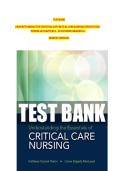
TEST BANK q
UNDERSTANDING THE ESSENTIALS OF CRITICAL CARE NURSING 3RD EDITION
q q q q q q q q q
PERRIN all CHAPTERS 1 - 19 COVERED GRADED A+
q q q q q q q q q q
NEWESTVERSION. q
, TEST BANK FOR UNDERSTANDING THEESSENTIALS OF CRITICAL CARE NURSING 3RD EDITION BY
q q q q q q q q q q q q
KATHLEEN PERRIN, CARRIE MACLEODq q q q
TABLE OF CONTENT
q q
1. What is Critical Care?
q q q
2. Care of the Critical Ill Patient
q q q q q
3. Care of the Patient with Respiratory Failure
q q q q q q
4. Interpretation and Management of Basic Dysrhythmias
q q q q q
5. Cardiodynamicsand Hemodynamic Regulation q q q
6. Care of the Patient Experiencing Shock
q q q q q
7. Care of the Patient Experiencing Heart Failure
q q q q q q
8. Care of the Patient Experiencing Acute Coronary Syndrome
q q q q q q q
9. Care of the Patient Following Traumatic Injury
q q q q q q
10. Care of the Patient Experiencing an Intracranial Dysfunction
q q q q q q q
11. Care of the Patient With a Cerebral or Cerbrovascular Disorder
q q q q q q q q q
12. Care of the Critically Ill Patient Experiencing Alcohol Withdrawal and/or Liver Failure
q q q q q q q q q q q
13. Care of the Patient With an Acute Gastrointestinal Bleed or Pancreatitis
q q q q q q q q q q
14. Care of the Patient with Problems in Glucose Metabolism
q q q q q q q q
15. Care of the Patient with Acute Kidney Injury
q q q q q q q
16. Care of the Organ Donor and Transplant Recipient
q q q q q q q
17. Care of the Acutely Ill Burn Patient
q q q q q q
18. Care of the Patient with Sepsis
q q q q q
19. Care of the ICU Patient at the End of Life
q q q q q q q q q
, Perrin: Understanding the Essentials of Critical Care Nursing Chapter 1: What is
q q q q q q q q q q q
Critical Care? q q
MULTIPLE CHOICE. Choose the one alternative that best completes the statement or answers the ques
q q q q q q q q q q q q q q q
1) Of the following patients, who should be cared for in a critical care unit? A patient: (Select all that apply.)
q q q q q q q q q q q q q q q q q q q
A) With an acetaminophen overdose
q q q
B) Suffering from acute mental illness q q q q
C) With chronic renal failure
q q q
D) With acute decompensated heart failure
q q q q
q ANSWER: A, Dq q
Explanation: q q A) (Note: This requires multiple responses to be correct.)
q q q q q q q q
Critical care units are c o- estffi cient units for caring for patients with specific organ
q q q q q q q q q q q q q q q q
system failure. Although the organ failing in #4 is obvious, patients with acetaminophen overdose
q q q q q q q q q q q q q
often suffer liver failure as a consequence. #2 and #3 present patient concerns of a noncritical
q q q q q q q q q q q q q q q q
nature. q
Nursing Process: Evaluation q q
Cognitive Level: Analysis
q q q
Category of Need: Physiological Integrity–Physiological Adaptation
q q q q q
, B) (Note: This requires multiple responses to be correct.)
q q q q q q q
Critical care units are c o- estffi cient units for caring for patients with specific organ
q q q q q q q q q q q q q q q q
system failure. Although the organ failing in #4 is obvious, patients with acetaminophen overdose
q q q q q q q q q q q q q
often suffer liver failure as a consequence. #2 and #3 present patient concerns of a noncritical
q q q q q q q q q q q q q q q q
nature.
q
Nursing Process: Evaluation
q q
qCognitive Level: Analysis
q q
Category of Need: Physiological Integrity–Physiological Adaptation
q q q q q
C) (Note: This requires multiple responses to be correct.)
q q q q q q q
Critical care units are c o- estffi cient units for caring for patients with specific organ
q q q q q q q q q q q q q q q q
system failure. Although the organ failing in #4 is obvious, patients with acetaminophen overdose
q q q q q q q q q q q q q
often suffer liver failure as a consequence. #2 and #3 present patient concerns of a noncritical
q q q q q q q q q q q q q q q q
nature.
q
Nursing Process: Evaluation
q q
qCognitive Level: Analysis
q q
Category of Need: Physiological Integrity–Physiological Adaptation
q q q q q
D) (Note: This requires multiple responses to be correct.)
q q q q q q q
Critical care units are c o- estffi cient units for caring for patients with specific organ
q q q q q q q q q q q q q q q q
system failure. Although the organ failing in #4 is obvious, patients with acetaminophen overdose
q q q q q q q q q q q q q
often suffer liver failure as a consequence. #2 and #3 present patient concerns of a noncritical
q q q q q q q q q q q q q q q q
nature.
q
Nursing Process: Evaluation
q q
qCognitive Level: Analysis
q q
Category of Need: Physiological Integrity–Physiological Adaptation
q q q q q
UNDERSTANDING THE ESSENTIALS OF CRITICAL CARE NURSING 3RD EDITION
q q q q q q q q q
PERRIN all CHAPTERS 1 - 19 COVERED GRADED A+
q q q q q q q q q q
NEWESTVERSION. q
, TEST BANK FOR UNDERSTANDING THEESSENTIALS OF CRITICAL CARE NURSING 3RD EDITION BY
q q q q q q q q q q q q
KATHLEEN PERRIN, CARRIE MACLEODq q q q
TABLE OF CONTENT
q q
1. What is Critical Care?
q q q
2. Care of the Critical Ill Patient
q q q q q
3. Care of the Patient with Respiratory Failure
q q q q q q
4. Interpretation and Management of Basic Dysrhythmias
q q q q q
5. Cardiodynamicsand Hemodynamic Regulation q q q
6. Care of the Patient Experiencing Shock
q q q q q
7. Care of the Patient Experiencing Heart Failure
q q q q q q
8. Care of the Patient Experiencing Acute Coronary Syndrome
q q q q q q q
9. Care of the Patient Following Traumatic Injury
q q q q q q
10. Care of the Patient Experiencing an Intracranial Dysfunction
q q q q q q q
11. Care of the Patient With a Cerebral or Cerbrovascular Disorder
q q q q q q q q q
12. Care of the Critically Ill Patient Experiencing Alcohol Withdrawal and/or Liver Failure
q q q q q q q q q q q
13. Care of the Patient With an Acute Gastrointestinal Bleed or Pancreatitis
q q q q q q q q q q
14. Care of the Patient with Problems in Glucose Metabolism
q q q q q q q q
15. Care of the Patient with Acute Kidney Injury
q q q q q q q
16. Care of the Organ Donor and Transplant Recipient
q q q q q q q
17. Care of the Acutely Ill Burn Patient
q q q q q q
18. Care of the Patient with Sepsis
q q q q q
19. Care of the ICU Patient at the End of Life
q q q q q q q q q
, Perrin: Understanding the Essentials of Critical Care Nursing Chapter 1: What is
q q q q q q q q q q q
Critical Care? q q
MULTIPLE CHOICE. Choose the one alternative that best completes the statement or answers the ques
q q q q q q q q q q q q q q q
1) Of the following patients, who should be cared for in a critical care unit? A patient: (Select all that apply.)
q q q q q q q q q q q q q q q q q q q
A) With an acetaminophen overdose
q q q
B) Suffering from acute mental illness q q q q
C) With chronic renal failure
q q q
D) With acute decompensated heart failure
q q q q
q ANSWER: A, Dq q
Explanation: q q A) (Note: This requires multiple responses to be correct.)
q q q q q q q q
Critical care units are c o- estffi cient units for caring for patients with specific organ
q q q q q q q q q q q q q q q q
system failure. Although the organ failing in #4 is obvious, patients with acetaminophen overdose
q q q q q q q q q q q q q
often suffer liver failure as a consequence. #2 and #3 present patient concerns of a noncritical
q q q q q q q q q q q q q q q q
nature. q
Nursing Process: Evaluation q q
Cognitive Level: Analysis
q q q
Category of Need: Physiological Integrity–Physiological Adaptation
q q q q q
, B) (Note: This requires multiple responses to be correct.)
q q q q q q q
Critical care units are c o- estffi cient units for caring for patients with specific organ
q q q q q q q q q q q q q q q q
system failure. Although the organ failing in #4 is obvious, patients with acetaminophen overdose
q q q q q q q q q q q q q
often suffer liver failure as a consequence. #2 and #3 present patient concerns of a noncritical
q q q q q q q q q q q q q q q q
nature.
q
Nursing Process: Evaluation
q q
qCognitive Level: Analysis
q q
Category of Need: Physiological Integrity–Physiological Adaptation
q q q q q
C) (Note: This requires multiple responses to be correct.)
q q q q q q q
Critical care units are c o- estffi cient units for caring for patients with specific organ
q q q q q q q q q q q q q q q q
system failure. Although the organ failing in #4 is obvious, patients with acetaminophen overdose
q q q q q q q q q q q q q
often suffer liver failure as a consequence. #2 and #3 present patient concerns of a noncritical
q q q q q q q q q q q q q q q q
nature.
q
Nursing Process: Evaluation
q q
qCognitive Level: Analysis
q q
Category of Need: Physiological Integrity–Physiological Adaptation
q q q q q
D) (Note: This requires multiple responses to be correct.)
q q q q q q q
Critical care units are c o- estffi cient units for caring for patients with specific organ
q q q q q q q q q q q q q q q q
system failure. Although the organ failing in #4 is obvious, patients with acetaminophen overdose
q q q q q q q q q q q q q
often suffer liver failure as a consequence. #2 and #3 present patient concerns of a noncritical
q q q q q q q q q q q q q q q q
nature.
q
Nursing Process: Evaluation
q q
qCognitive Level: Analysis
q q
Category of Need: Physiological Integrity–Physiological Adaptation
q q q q q