
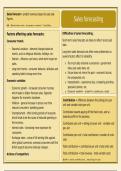
Sales forecast = predict revenues based on past sale
figures. Sales forecasting
HR - Production plan - Inventory control - Cash-flow
Factors affecting sales forecasts: Difficulties of sales forecasting:
Consumer trends Short-term sales forecasts are likely to reflect recent past
data.
- Seasonal variation – demand changes based on
Long-term sales forecasts are often more problematic as
events, such as religious festivals, holidays, etc.
several factors affect its reliability.
- Fashion – influence can have a short-term impact on
sales. o Too much data (internal vs external) - government
- Long term trends – consumer behavior, attitudes and data, past sales data, etc.
spending habits change over time. o Future does not mirror the past – economic factors,
the unexpected, etc.
Economic variables o Interpretation – experience bias, competing priorities,
- Economic growth – increased consumer incomes specialist opinion, etc.
which leads to higher forecast sales. Opposite o Dynamic markets – subject to continuous, rapid
happens for economic slowdown.
Contribution = difference between the selling price per
- Inflation – general increase in prices over time
unit and variable costs per unit.
reduces consumers’ spending power.
- Unemployment – often during periods of recession, Contributes towards paying off the fixed costs, and so
which tends to be the cause of reduced spending in towards profit for the business.
the economy. Contribution per unit = selling price per unit – variable cost
- Interest rates – borrowing more expensive for per unit
consumers.
Contribution per unit = total contribution / number of units
- Exchange rates – value of UK sterling falls against sold
other global currencies, overseas consumers will find
British exports become relatively cheaper. Total contribution = contribution per unit x total units sold.
Actions of competitors Total contribution = total revenue – total variable costs
- New competitors entering the market. Profit = total contribution – total fixed costs
figures. Sales forecasting
HR - Production plan - Inventory control - Cash-flow
Factors affecting sales forecasts: Difficulties of sales forecasting:
Consumer trends Short-term sales forecasts are likely to reflect recent past
data.
- Seasonal variation – demand changes based on
Long-term sales forecasts are often more problematic as
events, such as religious festivals, holidays, etc.
several factors affect its reliability.
- Fashion – influence can have a short-term impact on
sales. o Too much data (internal vs external) - government
- Long term trends – consumer behavior, attitudes and data, past sales data, etc.
spending habits change over time. o Future does not mirror the past – economic factors,
the unexpected, etc.
Economic variables o Interpretation – experience bias, competing priorities,
- Economic growth – increased consumer incomes specialist opinion, etc.
which leads to higher forecast sales. Opposite o Dynamic markets – subject to continuous, rapid
happens for economic slowdown.
Contribution = difference between the selling price per
- Inflation – general increase in prices over time
unit and variable costs per unit.
reduces consumers’ spending power.
- Unemployment – often during periods of recession, Contributes towards paying off the fixed costs, and so
which tends to be the cause of reduced spending in towards profit for the business.
the economy. Contribution per unit = selling price per unit – variable cost
- Interest rates – borrowing more expensive for per unit
consumers.
Contribution per unit = total contribution / number of units
- Exchange rates – value of UK sterling falls against sold
other global currencies, overseas consumers will find
British exports become relatively cheaper. Total contribution = contribution per unit x total units sold.
Actions of competitors Total contribution = total revenue – total variable costs
- New competitors entering the market. Profit = total contribution – total fixed costs


