

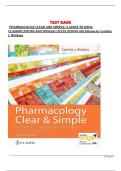
TEST BANK
PHARMACOLOGY CLEAR AND SIMPLE: A GUIDE TO DRUG
CLASSIFICATIONS AND DOSAGE CALCULATIONS 4th Edition by Cynthia
J. Watkins
At PrimeStudy Notes, we provide high-quality, exam-focused study materials, test banks, and practice exams
designed to help students succeed. Our resources are comprehensive, concise, and tailored to meet the needs
of learners in various fields including Business, Law, Nursing, Psychology, Accounting, and more. Whether
you're preparing for exams or need to practice with real-world questions, our materials are designed to help
certification prep, building confidence in safe administration through practical scenarios and error-prevention
tips. Simulate exams, master classifications, and calculate with ease—no more pharma fog.
2|Page
,Table of Contents
Chapter 1. History of Pharmacology 1
Chapter 2. Basics of Pharmacology 10
Chapter 3. Patient Safety in Medication Administration 19
Chapter 4. Regulations 30
Chapter 5. Prescriptions and Labels 42
Chapter 6. Review of Mathematics 49
Chapter 7. Measurement Systems 63
Chapter 8. Dosage Calculations 72
Chapter 9. Enteral Medications and Administration 80
Chapter 10. Parental Medications and Administration 87
Chapter 11. Integumentary System Medications 100
Chapter 12. Musculoskeletal System Medications 109
Chapter 13. Nervous System Medications 117
Chapter 14. Eye and Ear Medications 127
Chapter 15. Endocrine System Medications 133
Chapter 16. Cardiovascular System Medications 144
Chapter 17. Immunologic System Medications 156
Chapter 18. Pulmonary System Medications 167
Chapter 19. Gastrointestinal System Medications 175
Chapter 20. Reproductive and Urinary System Medications 184
, Chapter 1. History of Pharmacology
ni anda akan menemui bahan pembelajaran yang disusun dengan teliti
untuk membantu
MULTIPLE CHOICE
anda belajar dengan lebih mudah dan berkesan.
Setiap dokumen direka secara teratur supaya maklumat penting senang
difahami dan diingati.
1. The Greek wordBahan
pharmakonini sesuai
means which ofuntuk persediaan peperiksaan,
the following?
a. Medicine
ulang kaji, dan pengukuhan pengetahuan. Kualiti dan ketepatan sentiasa
b. Poison
menjadi keutamaan,
c. Remedy memastikan anda boleh belajar dengan yakin.
d. Medicine, poison, and remedy
Pelajar menghargai ringkasan yang jelas dan penerangan praktikal yang
ANS: D
menjimatkan Rationale:
masa serta mengurangkan tekanan. Matlamat saya adalah
The word pharmakon refers to the curing of illness, thus meaning medicine
untuk menjadikan pengalaman
and remedy, as well as poisonbelajar anda
because early lebih
medicines were teratur
toxic enoughdan
to killproduktif.
a patient
or enemy.
Muat turun dengan keyakinan dan gunakan sumber ini untuk
meningkatkanPTS: prestasi
1 akademik
DIF: Easyanda secara TOP: Unitkonsisten.
1: Introduction to Pharmacology
KEY: History
Czech (±130 words)
2. The Dutch word droog means which of the following?
a. Drop
b. Drug
Vítejte v mémc.obchodě
Dry na Stuvia! Najdete zde pečlivě připravené
studijní materiály navržené tak, aby bylo učení
d. Dirge jednodušší a efektivnější.
Každý dokument ANS: Cmá přehlednou strukturu, která usnadňuje pochopení
Rationale: Droog, which means“dry”, is the origin of the word drug, such as in the use
důležitých informací. Materiály jsou ideální pro přípravu na zkoušky,
of dry herbs as medications.
opakování i prohlubování znalostí. Důraz je kladen na kvalitu a
spolehlivost, takže můžete
PTS: 1 DIF: studovat
Intermediate TOP: Unit 1:sIntroduction
jistotou.to Studenti
Pharmacologyoceňují
KEY: Historyj
3. Most ancient societies treated illness based on which of the following?
a. Visions received by medicine men
b. Trial and error
c. Religion
d. Animal sacrifice
ANS: B
Rationale: Ancient societies had little knowledge of how the human body worked;
therefore, treating illness was often based on trial and error.
PTS: 1 DIF: Intermediate TOP: Unit 1: Introduction to Pharmacology KEY: History
4|Page
, 1|Page
4. Early records show that pharmacological treatments consisted of which of the
following? a. Plants
b. Minerals
c. Animal products
d. Plants, minerals, and animal products
ANS: D
Rationale: Early records show that plants, minerals, and animal products were the only
sources available; therefore, they were the only things used.
PTS: 1 DIF: Easy TOP: Unit 1: Introduction to Pharmacology
KEY: History
5. What did the Chinese document The Yellow Emperor's Inner Classic discuss for the first
time?
a. Yin and yang
b. Acupuncture
c. Meditation
d. Yin and yang and acupuncture
ANS: D
Rationale: This was a very early document discussing yin and yang and acupuncture.
PTS: 1 DIF: Intermediate TOP: Unit 1: Introduction to Pharmacology KEY: History
6. The first Chinese manual on pharmacology included 365 medicines and was written in
which of the following centuries? a. 1st century CE
b. 2nd century CE
c. 3rd century CE
d. 4th century CE
ANS: A
Rationale: The first Chinese manual on pharmacology was written in the 1st century CE
and included 365 medicines, 252 of which were herbs.
PTS: 1 DIF: Easy TOP: Unit 1: Introduction to Pharmacology
PHARMACOLOGY CLEAR AND SIMPLE: A GUIDE TO DRUG
CLASSIFICATIONS AND DOSAGE CALCULATIONS 4th Edition by Cynthia
J. Watkins
At PrimeStudy Notes, we provide high-quality, exam-focused study materials, test banks, and practice exams
designed to help students succeed. Our resources are comprehensive, concise, and tailored to meet the needs
of learners in various fields including Business, Law, Nursing, Psychology, Accounting, and more. Whether
you're preparing for exams or need to practice with real-world questions, our materials are designed to help
certification prep, building confidence in safe administration through practical scenarios and error-prevention
tips. Simulate exams, master classifications, and calculate with ease—no more pharma fog.
2|Page
,Table of Contents
Chapter 1. History of Pharmacology 1
Chapter 2. Basics of Pharmacology 10
Chapter 3. Patient Safety in Medication Administration 19
Chapter 4. Regulations 30
Chapter 5. Prescriptions and Labels 42
Chapter 6. Review of Mathematics 49
Chapter 7. Measurement Systems 63
Chapter 8. Dosage Calculations 72
Chapter 9. Enteral Medications and Administration 80
Chapter 10. Parental Medications and Administration 87
Chapter 11. Integumentary System Medications 100
Chapter 12. Musculoskeletal System Medications 109
Chapter 13. Nervous System Medications 117
Chapter 14. Eye and Ear Medications 127
Chapter 15. Endocrine System Medications 133
Chapter 16. Cardiovascular System Medications 144
Chapter 17. Immunologic System Medications 156
Chapter 18. Pulmonary System Medications 167
Chapter 19. Gastrointestinal System Medications 175
Chapter 20. Reproductive and Urinary System Medications 184
, Chapter 1. History of Pharmacology
ni anda akan menemui bahan pembelajaran yang disusun dengan teliti
untuk membantu
MULTIPLE CHOICE
anda belajar dengan lebih mudah dan berkesan.
Setiap dokumen direka secara teratur supaya maklumat penting senang
difahami dan diingati.
1. The Greek wordBahan
pharmakonini sesuai
means which ofuntuk persediaan peperiksaan,
the following?
a. Medicine
ulang kaji, dan pengukuhan pengetahuan. Kualiti dan ketepatan sentiasa
b. Poison
menjadi keutamaan,
c. Remedy memastikan anda boleh belajar dengan yakin.
d. Medicine, poison, and remedy
Pelajar menghargai ringkasan yang jelas dan penerangan praktikal yang
ANS: D
menjimatkan Rationale:
masa serta mengurangkan tekanan. Matlamat saya adalah
The word pharmakon refers to the curing of illness, thus meaning medicine
untuk menjadikan pengalaman
and remedy, as well as poisonbelajar anda
because early lebih
medicines were teratur
toxic enoughdan
to killproduktif.
a patient
or enemy.
Muat turun dengan keyakinan dan gunakan sumber ini untuk
meningkatkanPTS: prestasi
1 akademik
DIF: Easyanda secara TOP: Unitkonsisten.
1: Introduction to Pharmacology
KEY: History
Czech (±130 words)
2. The Dutch word droog means which of the following?
a. Drop
b. Drug
Vítejte v mémc.obchodě
Dry na Stuvia! Najdete zde pečlivě připravené
studijní materiály navržené tak, aby bylo učení
d. Dirge jednodušší a efektivnější.
Každý dokument ANS: Cmá přehlednou strukturu, která usnadňuje pochopení
Rationale: Droog, which means“dry”, is the origin of the word drug, such as in the use
důležitých informací. Materiály jsou ideální pro přípravu na zkoušky,
of dry herbs as medications.
opakování i prohlubování znalostí. Důraz je kladen na kvalitu a
spolehlivost, takže můžete
PTS: 1 DIF: studovat
Intermediate TOP: Unit 1:sIntroduction
jistotou.to Studenti
Pharmacologyoceňují
KEY: Historyj
3. Most ancient societies treated illness based on which of the following?
a. Visions received by medicine men
b. Trial and error
c. Religion
d. Animal sacrifice
ANS: B
Rationale: Ancient societies had little knowledge of how the human body worked;
therefore, treating illness was often based on trial and error.
PTS: 1 DIF: Intermediate TOP: Unit 1: Introduction to Pharmacology KEY: History
4|Page
, 1|Page
4. Early records show that pharmacological treatments consisted of which of the
following? a. Plants
b. Minerals
c. Animal products
d. Plants, minerals, and animal products
ANS: D
Rationale: Early records show that plants, minerals, and animal products were the only
sources available; therefore, they were the only things used.
PTS: 1 DIF: Easy TOP: Unit 1: Introduction to Pharmacology
KEY: History
5. What did the Chinese document The Yellow Emperor's Inner Classic discuss for the first
time?
a. Yin and yang
b. Acupuncture
c. Meditation
d. Yin and yang and acupuncture
ANS: D
Rationale: This was a very early document discussing yin and yang and acupuncture.
PTS: 1 DIF: Intermediate TOP: Unit 1: Introduction to Pharmacology KEY: History
6. The first Chinese manual on pharmacology included 365 medicines and was written in
which of the following centuries? a. 1st century CE
b. 2nd century CE
c. 3rd century CE
d. 4th century CE
ANS: A
Rationale: The first Chinese manual on pharmacology was written in the 1st century CE
and included 365 medicines, 252 of which were herbs.
PTS: 1 DIF: Easy TOP: Unit 1: Introduction to Pharmacology


