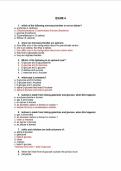
, b. Glycoside
c. Hemiacetal
d. Lactone
e. Oligosaccharide
9. Which of the following pairs is intercoverted in the process of mutarotation?
a. D-glucose and D-fructose
b. D-glucose and D-galactose
c. D-glucose and D-glucosamine
d. D-glucose and L-glucose
e. Alpha D- glucose and Beta D-glucose
9. amylose and amylopectin are both polymers of:
a. alpha-D-glucose
b. beta-D-glucose
c. galactose
d. idose
e. maltose
*starch, glycogen, amylose, and amylopectin = alpha-D-glucose
10. which statement about starch and glycogen is false?
a. amylose is unbranched; amylopectin and glycogen contain many branches (T)
b. both are heteropolymers of glucose
c. both have many -OH groups in their structures (T)
d. both starch and glycogen are energy storage polysaccharides (T)
e. glycogen is more extensively branched than starch (T)
11. Which of the following is not a reducing sugar?
a. Fructose
b. Glucose
c. Glyceraldehyde
d. Ribose
e. Sucrose
12. which statement about starch and glycogen is false?
a. both have beta-D-glucose monomers
b. both starch and glycogen are energy storage polysaccharides
c. both are homopolymers of glucose
d. glycogen is more extensively branched that starch
e. both have O-glycosidic linkages
*starch and glycogen have alpha-D-glucose monomers
13. which monosaccharide is not a 6-carbon monosaccharide?
a. idose
b. glucose
c. galactose
d. dihydroxyacetone
e. Allose
14. which monosaccharide is not a 6-carbon monosaccharide?
a. fructose
c. Hemiacetal
d. Lactone
e. Oligosaccharide
9. Which of the following pairs is intercoverted in the process of mutarotation?
a. D-glucose and D-fructose
b. D-glucose and D-galactose
c. D-glucose and D-glucosamine
d. D-glucose and L-glucose
e. Alpha D- glucose and Beta D-glucose
9. amylose and amylopectin are both polymers of:
a. alpha-D-glucose
b. beta-D-glucose
c. galactose
d. idose
e. maltose
*starch, glycogen, amylose, and amylopectin = alpha-D-glucose
10. which statement about starch and glycogen is false?
a. amylose is unbranched; amylopectin and glycogen contain many branches (T)
b. both are heteropolymers of glucose
c. both have many -OH groups in their structures (T)
d. both starch and glycogen are energy storage polysaccharides (T)
e. glycogen is more extensively branched than starch (T)
11. Which of the following is not a reducing sugar?
a. Fructose
b. Glucose
c. Glyceraldehyde
d. Ribose
e. Sucrose
12. which statement about starch and glycogen is false?
a. both have beta-D-glucose monomers
b. both starch and glycogen are energy storage polysaccharides
c. both are homopolymers of glucose
d. glycogen is more extensively branched that starch
e. both have O-glycosidic linkages
*starch and glycogen have alpha-D-glucose monomers
13. which monosaccharide is not a 6-carbon monosaccharide?
a. idose
b. glucose
c. galactose
d. dihydroxyacetone
e. Allose
14. which monosaccharide is not a 6-carbon monosaccharide?
a. fructose