
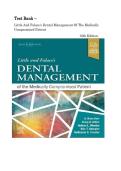
Test Bank –
Little And Falace's Dental Management Of The Medically
Compromised Patient
10th Edition.
,Table Of Contents
1 Patient Evaluation, Risk Assessment, And The Diagnostic Process
2 Infective Endocarditis
3 Hypertension
4 Ischemic Heart Disease
5 Cardiac Arrhythmias
6 Heart Failure (Congestive Heart Failure)
7 Pulmonary Disease
8 Smoking And Tobacco Use Cessation
9 Sleep Disordered Breathing
10 Liver Disease
11 Gastrointestinal Diseases
12 Chronic Kidney Disease And Dialysis
13 Sexually Transmitted Diseases
14 Diabetes Mellitus
15 Adrenal Insufficiency
16 Thyroid Diseases
17 Women’s Health Issues
18 Aids, Hiv Infection, And Related Conditions
19 Allergy
20 Rheumatologic Disorders
21 Organ Transplantation
22 Disorders Of Red Blood Cells
23 Disorders Of White Blood Cells
24 Acquired Bleeding Disorders
25 Congenital Bleeding And Hypercoagulable Disorders
26 Cancer And Oral Care Of Patients With Cancer
27 Neurologic Disorders
,28 Psychiatric Disorders
29 Substance Use Disorders
, Chapter 01: Patient Evaluation And Risk Assessment
Little: Dental Management Of The Medically Compromised Patient, 9th Edition
Multiple Choice
1. Elective Dental Care Should Be Deferred For Patients With Severe, Uncontrolled
Hypertension, Meaning That The Blood Pressure Is Greater Than Or Equal To Mm Hg.
A. 200/140
B. 180/140
C. 180/110
D. 160/110
ANSWER: C
Elective Dental Care Should Be Deferred For Patients With Severe, Uncontrolled
Hypertension, Which Is Blood Pressure Greater Than Or Equal To 180/110 Mm Hg, Until
The Condition Can Be Brought Under Control.
2. The American Heart Association Currently Recommends Antibiotic Prophylaxis For
A Patient With Which Of The Following Cardiac Conditions?
A. Mitral Valve Prolapse
B. Prosthetic Heart Valve
C. Rheumatic Heart Disease
D. Pacemakers For Cardiac Arrhythmias
ANSWER: B
Previously, The American Heart Association (Aha) Recommended Antibiotic Prophylaxis
For Many Patients With Heart Murmurs Caused By Valvular Disease (E.G., Mitral Valve
Prolapse, Rheumatic Heart Disease) In An Effort To Prevent Infective Endocarditis;
However, Current Guidelines Omit This Recommendation On The Basis Of Accumulated
Scientific Evidence. If A Murmur Is Due To Certain Specific Cardiac Conditions (E.G.,
Previous Endocarditis, Prosthetic Heart Valve, Complex Congenital Cyanotic Heart
Disease), The Aha Continues To Recommend Antibiotic Prophylaxis For Most Dental
Procedures.
3. One Consequence Of Chronic Hepatitis (B Or C) Or Cirrhosis Of The Liver Is
Decreased Ability Of The Body To Certain Drugs, Including Local Anesthetics And
Analgesics.
Little And Falace's Dental Management Of The Medically
Compromised Patient
10th Edition.
,Table Of Contents
1 Patient Evaluation, Risk Assessment, And The Diagnostic Process
2 Infective Endocarditis
3 Hypertension
4 Ischemic Heart Disease
5 Cardiac Arrhythmias
6 Heart Failure (Congestive Heart Failure)
7 Pulmonary Disease
8 Smoking And Tobacco Use Cessation
9 Sleep Disordered Breathing
10 Liver Disease
11 Gastrointestinal Diseases
12 Chronic Kidney Disease And Dialysis
13 Sexually Transmitted Diseases
14 Diabetes Mellitus
15 Adrenal Insufficiency
16 Thyroid Diseases
17 Women’s Health Issues
18 Aids, Hiv Infection, And Related Conditions
19 Allergy
20 Rheumatologic Disorders
21 Organ Transplantation
22 Disorders Of Red Blood Cells
23 Disorders Of White Blood Cells
24 Acquired Bleeding Disorders
25 Congenital Bleeding And Hypercoagulable Disorders
26 Cancer And Oral Care Of Patients With Cancer
27 Neurologic Disorders
,28 Psychiatric Disorders
29 Substance Use Disorders
, Chapter 01: Patient Evaluation And Risk Assessment
Little: Dental Management Of The Medically Compromised Patient, 9th Edition
Multiple Choice
1. Elective Dental Care Should Be Deferred For Patients With Severe, Uncontrolled
Hypertension, Meaning That The Blood Pressure Is Greater Than Or Equal To Mm Hg.
A. 200/140
B. 180/140
C. 180/110
D. 160/110
ANSWER: C
Elective Dental Care Should Be Deferred For Patients With Severe, Uncontrolled
Hypertension, Which Is Blood Pressure Greater Than Or Equal To 180/110 Mm Hg, Until
The Condition Can Be Brought Under Control.
2. The American Heart Association Currently Recommends Antibiotic Prophylaxis For
A Patient With Which Of The Following Cardiac Conditions?
A. Mitral Valve Prolapse
B. Prosthetic Heart Valve
C. Rheumatic Heart Disease
D. Pacemakers For Cardiac Arrhythmias
ANSWER: B
Previously, The American Heart Association (Aha) Recommended Antibiotic Prophylaxis
For Many Patients With Heart Murmurs Caused By Valvular Disease (E.G., Mitral Valve
Prolapse, Rheumatic Heart Disease) In An Effort To Prevent Infective Endocarditis;
However, Current Guidelines Omit This Recommendation On The Basis Of Accumulated
Scientific Evidence. If A Murmur Is Due To Certain Specific Cardiac Conditions (E.G.,
Previous Endocarditis, Prosthetic Heart Valve, Complex Congenital Cyanotic Heart
Disease), The Aha Continues To Recommend Antibiotic Prophylaxis For Most Dental
Procedures.
3. One Consequence Of Chronic Hepatitis (B Or C) Or Cirrhosis Of The Liver Is
Decreased Ability Of The Body To Certain Drugs, Including Local Anesthetics And
Analgesics.



