

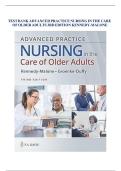
TEST BANK ADVANCED PRACTICE NURSING IN THE CARE
b b b b b b b
OF OLDER ADULTS 3RD EDITION KENNEDY-MALONE
b b b b b b
,1. Mrs. Smith, 75 years old, reports that she is weak, has difficulty urinating, and is dehydrated.
b b b b b b b b b b b b b b b
Although she is afebrile, the nursing attendant conducts a thorough physical examination, including
b b b b b b b b b b b b b
urinalysisand complete blood count (CBC). The total assessment is necessary because:
b b b b b b b b b b b b
1. All body systems interact, and symptoms could indicate a variety of diagnoses.
b b b b b b b b b b b
2. The symptoms are vague and may be signs of aging.
b b b b b b b b b
3. There may be other signs or symptoms more indicative of the condition.
b b b b b b b b b b b
4. Mrs. Smith may not be reporting all significant information. - 1.
b b b b b b b b b b b
ACCURATE ANSWER:->1 Pg: 2
b b b b
Reasoning
:->>> 1. b
The clinician must be aware that all the systems interact and, in doing so, can increase the olderperson's
b b b b b b b b b b b b b b b b b b
bvulnerability to illness/disease. b b
2.
The nursing attendant must not attribute symptoms only to the
b b b b b b b b b
agingprocess. 3.
b b b
There may be comorbidities accompanying this condition.
b b b b b b
4.
b
Assumptions of not reporting properly may not be true. b b b b b b b b
2. A hospital client with renal disease has blood work drawn, and the results show an increase in
b b b b b b b b b b b b b b b b
serum creatinine. The nursing attendant practitioner needs to know which of the following
b b b b b b b b b b b b b
laboratory values before ordering medications?
b b b b b
1. CBC
2. Culture and sensitivity of the urine b b b b b
3. Creatinine clearance b
4. Uric acid levels - 2. ACCURATE
b b b b bb
ANSWER:->3Pg: 3
b b b
Reasoning
:->>> 1. b
A CBC will not evaluate kidney function for a hospital client with renal
b b b b b b b b b b b b
disease.2.
b b
,A culture and sensitivity test reflects the presence of an infection and the antibiotic to which the
b b b b b b b b b b b b b b b b
organism is sensitive.
b b b
3.
The calculation of creatinine clearance provides an estimation of renal function.4.
b b b b b b b b b b b
Uric acid level is elevated in the presence of gout.
b b b b b b b b b
3. Which of the following statements is true regarding diagnostic testing?
b b b b b b b b b b
1. A test is ordered for a specific purpose.
b b b b b b b
2. A test is the most invasive available.
b b b b b b
3. There is no need to discuss results with the hospital client.
b b b b b b b b b b
4. If a test is needed, it should be ordered regardless of risk to the hospital client. –
b b b b b b b b b b b b b b b b
5. 3. ACCURATE ANSWER:->1 Pg: 3
bb b b b
Reasoning
:->>> 1. b
The nursing attendant practitioner should have a plan for the use of each test
b b b b b b b b b b b b b
bresult valueobtained. 2. b b b
When considering which laboratory tests to order, it is worth remembering the doctrine primum no nnocere—
b b b b b b b b b b b b b b b
first, do no harm.
b b b b
3.
Once laboratory tests are available for review, tests results should be discussed with the hospital
b b b b b b b b b b b b b b
bclient, with abnormal test results interpreted for the aging individual and addressed with the hospital
b b b b b b b b b b b b b b
bclient and nursing attendants.4.
b b b b
Any risks involved in laboratory testing must be considered concerning the hospital client's clinical
b b b b b b b b b b b b b
conditionand weighed against the test's expected benefits.
b b b b b b b b
4. Janey, 25 years old, may experience arthritis differently than 65-year-old Mrs. Johnson because:
b b b b b b b b b b b b b
1. The body undergoes physiological changes with aging.
b b b b b b
2. A healthy body does not experience significant changes as one gets older.
b b b b b b b b b b b
3. Older hospital clients do not feel any systemic symptoms, such as malaise and weight loss.
b b b b b b b b b b b b b b
4. Even though the same joints are usually affected, age makes it feel different. - 4.
b b b b b b b b b b b b b b b
ACCURATE ANSWER:->1 Pg: 5
b b b b
Reasoning
:->>> 1. b
Knowledge of the bimodality of age onset of certain disease conditions will aid the advanced practicenursing
b b b b b b b b b b b b b b b b
battendant in avoiding misdiagnosis or delay in diagnosis due to lack of recognition.
b b b b b b b b b b b b
2.
Symptoms of rheumatoid arthritis may be different depending on the age of the hospital client.
b b b b b b b b b b b b b b
, 3.
Younger hospital clients may not experience constitutional symptoms such as fever, malaise, weight loss, and
b b b b b b b b b b b b b b
depression.
b
4.
In late-onset rheumatoid arthritis, the joint involvement is more often in the larger joints.
b b b b b b b b b b b b b
5. The nursing attendant practitioner is examining an 85-year-old man with reports of
b b b b b b b b b b b
abdominal pain, weakness, and loss of appetite. Which is the most likely condition to be tested
b b b b b b b b b b b b b b b b
for and ruled out?
b b b b
1. Neoplasms and carcinomas b b
2. Partial seizure b
3. Sarcopenia
4. Hirschsprung's disease - 5. ACCURATE b b b bb
ANSWER:->1Pg: 4
b b b
Reasoning
:->>> 1. b
Certain diseases, such as neoplasms and carcinomas, are more common in the elderly, and an
b b b b b b b b b b b b b b
understanding of the epidemiology is critical in the interpretation.
b b b b b b b b b
2.
Partial seizure is more common in early old age.
b b b b b b b b
3.
b
Sarcopenia is more common in early old age. b b b b b b b
4.
b
Hirschsprung's disease is most common in infancy. b b b b b b
6. For individuals over 65 years old, the most common morbidities are related to:
b b b b b b b b b b b b
1. Heart disease, arthritis b b
2. Respiratory problems, cancer b b
3. Diabetes, stroke b
4. All of these are common morbidities. - 6.
b b b b b b b b
ACCURATE ANSWER:->4 Pg: 5
b b b b
Reasoning
:->>> 1. b
Heart disease is one of the common morbidities.
b b b b b b b
2.
b
Cancer is common in the general population; however, specific types are more common in the older
b b b b b b b b b b b b b b b
hospital client.
b b
3.
Diabetes is common in hospital clients over 40 years of age.
b b b b b b b b b b
b b b b b b b
OF OLDER ADULTS 3RD EDITION KENNEDY-MALONE
b b b b b b
,1. Mrs. Smith, 75 years old, reports that she is weak, has difficulty urinating, and is dehydrated.
b b b b b b b b b b b b b b b
Although she is afebrile, the nursing attendant conducts a thorough physical examination, including
b b b b b b b b b b b b b
urinalysisand complete blood count (CBC). The total assessment is necessary because:
b b b b b b b b b b b b
1. All body systems interact, and symptoms could indicate a variety of diagnoses.
b b b b b b b b b b b
2. The symptoms are vague and may be signs of aging.
b b b b b b b b b
3. There may be other signs or symptoms more indicative of the condition.
b b b b b b b b b b b
4. Mrs. Smith may not be reporting all significant information. - 1.
b b b b b b b b b b b
ACCURATE ANSWER:->1 Pg: 2
b b b b
Reasoning
:->>> 1. b
The clinician must be aware that all the systems interact and, in doing so, can increase the olderperson's
b b b b b b b b b b b b b b b b b b
bvulnerability to illness/disease. b b
2.
The nursing attendant must not attribute symptoms only to the
b b b b b b b b b
agingprocess. 3.
b b b
There may be comorbidities accompanying this condition.
b b b b b b
4.
b
Assumptions of not reporting properly may not be true. b b b b b b b b
2. A hospital client with renal disease has blood work drawn, and the results show an increase in
b b b b b b b b b b b b b b b b
serum creatinine. The nursing attendant practitioner needs to know which of the following
b b b b b b b b b b b b b
laboratory values before ordering medications?
b b b b b
1. CBC
2. Culture and sensitivity of the urine b b b b b
3. Creatinine clearance b
4. Uric acid levels - 2. ACCURATE
b b b b bb
ANSWER:->3Pg: 3
b b b
Reasoning
:->>> 1. b
A CBC will not evaluate kidney function for a hospital client with renal
b b b b b b b b b b b b
disease.2.
b b
,A culture and sensitivity test reflects the presence of an infection and the antibiotic to which the
b b b b b b b b b b b b b b b b
organism is sensitive.
b b b
3.
The calculation of creatinine clearance provides an estimation of renal function.4.
b b b b b b b b b b b
Uric acid level is elevated in the presence of gout.
b b b b b b b b b
3. Which of the following statements is true regarding diagnostic testing?
b b b b b b b b b b
1. A test is ordered for a specific purpose.
b b b b b b b
2. A test is the most invasive available.
b b b b b b
3. There is no need to discuss results with the hospital client.
b b b b b b b b b b
4. If a test is needed, it should be ordered regardless of risk to the hospital client. –
b b b b b b b b b b b b b b b b
5. 3. ACCURATE ANSWER:->1 Pg: 3
bb b b b
Reasoning
:->>> 1. b
The nursing attendant practitioner should have a plan for the use of each test
b b b b b b b b b b b b b
bresult valueobtained. 2. b b b
When considering which laboratory tests to order, it is worth remembering the doctrine primum no nnocere—
b b b b b b b b b b b b b b b
first, do no harm.
b b b b
3.
Once laboratory tests are available for review, tests results should be discussed with the hospital
b b b b b b b b b b b b b b
bclient, with abnormal test results interpreted for the aging individual and addressed with the hospital
b b b b b b b b b b b b b b
bclient and nursing attendants.4.
b b b b
Any risks involved in laboratory testing must be considered concerning the hospital client's clinical
b b b b b b b b b b b b b
conditionand weighed against the test's expected benefits.
b b b b b b b b
4. Janey, 25 years old, may experience arthritis differently than 65-year-old Mrs. Johnson because:
b b b b b b b b b b b b b
1. The body undergoes physiological changes with aging.
b b b b b b
2. A healthy body does not experience significant changes as one gets older.
b b b b b b b b b b b
3. Older hospital clients do not feel any systemic symptoms, such as malaise and weight loss.
b b b b b b b b b b b b b b
4. Even though the same joints are usually affected, age makes it feel different. - 4.
b b b b b b b b b b b b b b b
ACCURATE ANSWER:->1 Pg: 5
b b b b
Reasoning
:->>> 1. b
Knowledge of the bimodality of age onset of certain disease conditions will aid the advanced practicenursing
b b b b b b b b b b b b b b b b
battendant in avoiding misdiagnosis or delay in diagnosis due to lack of recognition.
b b b b b b b b b b b b
2.
Symptoms of rheumatoid arthritis may be different depending on the age of the hospital client.
b b b b b b b b b b b b b b
, 3.
Younger hospital clients may not experience constitutional symptoms such as fever, malaise, weight loss, and
b b b b b b b b b b b b b b
depression.
b
4.
In late-onset rheumatoid arthritis, the joint involvement is more often in the larger joints.
b b b b b b b b b b b b b
5. The nursing attendant practitioner is examining an 85-year-old man with reports of
b b b b b b b b b b b
abdominal pain, weakness, and loss of appetite. Which is the most likely condition to be tested
b b b b b b b b b b b b b b b b
for and ruled out?
b b b b
1. Neoplasms and carcinomas b b
2. Partial seizure b
3. Sarcopenia
4. Hirschsprung's disease - 5. ACCURATE b b b bb
ANSWER:->1Pg: 4
b b b
Reasoning
:->>> 1. b
Certain diseases, such as neoplasms and carcinomas, are more common in the elderly, and an
b b b b b b b b b b b b b b
understanding of the epidemiology is critical in the interpretation.
b b b b b b b b b
2.
Partial seizure is more common in early old age.
b b b b b b b b
3.
b
Sarcopenia is more common in early old age. b b b b b b b
4.
b
Hirschsprung's disease is most common in infancy. b b b b b b
6. For individuals over 65 years old, the most common morbidities are related to:
b b b b b b b b b b b b
1. Heart disease, arthritis b b
2. Respiratory problems, cancer b b
3. Diabetes, stroke b
4. All of these are common morbidities. - 6.
b b b b b b b b
ACCURATE ANSWER:->4 Pg: 5
b b b b
Reasoning
:->>> 1. b
Heart disease is one of the common morbidities.
b b b b b b b
2.
b
Cancer is common in the general population; however, specific types are more common in the older
b b b b b b b b b b b b b b b
hospital client.
b b
3.
Diabetes is common in hospital clients over 40 years of age.
b b b b b b b b b b



