

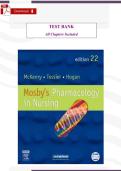
TEST BANK
All Chapters Included
,Mosby's Pharmacology in Nursing - Elsevier eBook on VitalSource, 22nd Edition
Author : By Leda M. McKenry
Chapter 1 Orientation to Pharmacology
1. The nurse is explaining pharmacology to a group of students. What does pharmacology
primarily study?
A) How drugs are administered
B) The therapeutic uses of drugs
C) The effects of drugs on the body
D) The cost-effectiveness of medications
Answer: C
Rationale: Pharmacology is the study of how drugs affect the body, including
mechanisms of action, therapeutic effects, and side effects. NCLEX Focus: Basics of
pharmacology
2. A patient asks the nurse how medications are classified. Which of the following is
the best description of drug classification?
A) Drugs are classified based on their chemical properties
B) Drugs are classified based on their therapeutic uses
C) Drugs are classified based on the pharmacy where they are made
D) Drugs are classified based on patient age
Answer: B
Rationale: Drugs are typically classified by their therapeutic use or their effects on
particular body systems.
NCLEX Focus: Drug classification
3. The nurse is preparing to administer a drug to a patient. What is the first step in
ensuring medication safety?
A) Checking the patient's ID band
B) Reviewing the patient's allergy history
C) Confirming the drug dosage
D) Reading the medication label
Answer: B
Rationale: Reviewing a patient’s allergy history is critical to prevent
allergic reactions.
NCLEX Focus: Safety - medication administration
4. Which of the following is an important nursing responsibility when
administering medications?
A) Determining the drug's cost
B) Documenting the administration of the medication
C) Calculating the pharmacy's profit
D) Choosing the manufacturer
, Answer: B
Rationale: Proper documentation of medication administration is a crucial nursing
responsibility to ensure patient safety and legal accuracy.
NCLEX Focus: Medication administration
5. A nurse is explaining the difference between generic and brand-name drugs. What
is the key difference?
A) Generic drugs have different active ingredients
B) Brand-name drugs are less effective
C) Generic drugs are usually less expensive
D) Brand-name drugs are safer
Answer: C
Rationale: Generic drugs typically cost less but have the same active ingredients as brand-
name drugs.
NCLEX Focus: Drug classification
6. The nurse is assessing a patient who is taking multiple medications. What term
is used to describe the use of multiple medications by a patient?
A) Monotherapy
B) Polypharmacy
C) Drug synergy
D) Tolerance
Answer: B
Rationale: Polypharmacy refers to the use of multiple medications, often seen in older
adults or patients with chronic conditions.
NCLEX Focus: Safety - polypharmacy
7. Which of the following factors is most likely to affect a drug's absorption?
A) The patient's gender
B) The route of administration
C) The patient's eye color
D) The patient's job
Answer: B
Rationale: The route of administration (oral, IV, etc.) has a significant impact on the
absorption rate of a drug.
NCLEX Focus: Pharmacokinetics - absorption
8. A nurse is reviewing the concept of bioavailability with a patient. What does
bioavailability refer to?
A) The time it takes for a drug to work
B) The percentage of the drug that reaches the bloodstream
C) The amount of the drug metabolized by the liver
, D) The effect of the drug on target cells
Answer: B
Rationale: Bioavailability refers to the proportion of a drug that enters the bloodstream
and is available for action.
NCLEX Focus: Pharmacokinetics - bioavailability
9. The nurse is caring for a patient who has taken an overdose of a medication.
What term describes the harmful effects of a drug when taken in excessive
amounts?
A) Tolerance
B) Toxicity
C) Dependence
D) Resistance
Answer: B
Rationale: Toxicity occurs when a drug is taken in excessive amounts, leading to harmful
effects.
NCLEX Focus: Safety - overdose and toxicity
10. The nurse is explaining drug distribution to a patient. Which of the following is
most important for drug distribution in the body?
A) The drug’s half-life
B) Blood flow to tissues
C) The color of the drug
D) The route of administration
Answer: B
Rationale: Blood flow to tissues is essential for proper distribution of the drug throughout
the body.
NCLEX Focus: Pharmacokinetics - distribution
11. A nurse is caring for a patient with liver disease. How might liver disease
affect drug metabolism?
A) The drug will be excreted faster
B) The drug will be metabolized slower
C) The drug will have no effect on the body
D) The drug will work faster
Answer: B
Rationale: Liver disease can impair drug metabolism, leading to a slower breakdown of
drugs and potential drug accumulation.
NCLEX Focus: Pharmacokinetics - metabolism
12. Which of the following describes the process of a drug being broken down and
converted to an inactive form in the body?
A) Absorption
B) Distribution
All Chapters Included
,Mosby's Pharmacology in Nursing - Elsevier eBook on VitalSource, 22nd Edition
Author : By Leda M. McKenry
Chapter 1 Orientation to Pharmacology
1. The nurse is explaining pharmacology to a group of students. What does pharmacology
primarily study?
A) How drugs are administered
B) The therapeutic uses of drugs
C) The effects of drugs on the body
D) The cost-effectiveness of medications
Answer: C
Rationale: Pharmacology is the study of how drugs affect the body, including
mechanisms of action, therapeutic effects, and side effects. NCLEX Focus: Basics of
pharmacology
2. A patient asks the nurse how medications are classified. Which of the following is
the best description of drug classification?
A) Drugs are classified based on their chemical properties
B) Drugs are classified based on their therapeutic uses
C) Drugs are classified based on the pharmacy where they are made
D) Drugs are classified based on patient age
Answer: B
Rationale: Drugs are typically classified by their therapeutic use or their effects on
particular body systems.
NCLEX Focus: Drug classification
3. The nurse is preparing to administer a drug to a patient. What is the first step in
ensuring medication safety?
A) Checking the patient's ID band
B) Reviewing the patient's allergy history
C) Confirming the drug dosage
D) Reading the medication label
Answer: B
Rationale: Reviewing a patient’s allergy history is critical to prevent
allergic reactions.
NCLEX Focus: Safety - medication administration
4. Which of the following is an important nursing responsibility when
administering medications?
A) Determining the drug's cost
B) Documenting the administration of the medication
C) Calculating the pharmacy's profit
D) Choosing the manufacturer
, Answer: B
Rationale: Proper documentation of medication administration is a crucial nursing
responsibility to ensure patient safety and legal accuracy.
NCLEX Focus: Medication administration
5. A nurse is explaining the difference between generic and brand-name drugs. What
is the key difference?
A) Generic drugs have different active ingredients
B) Brand-name drugs are less effective
C) Generic drugs are usually less expensive
D) Brand-name drugs are safer
Answer: C
Rationale: Generic drugs typically cost less but have the same active ingredients as brand-
name drugs.
NCLEX Focus: Drug classification
6. The nurse is assessing a patient who is taking multiple medications. What term
is used to describe the use of multiple medications by a patient?
A) Monotherapy
B) Polypharmacy
C) Drug synergy
D) Tolerance
Answer: B
Rationale: Polypharmacy refers to the use of multiple medications, often seen in older
adults or patients with chronic conditions.
NCLEX Focus: Safety - polypharmacy
7. Which of the following factors is most likely to affect a drug's absorption?
A) The patient's gender
B) The route of administration
C) The patient's eye color
D) The patient's job
Answer: B
Rationale: The route of administration (oral, IV, etc.) has a significant impact on the
absorption rate of a drug.
NCLEX Focus: Pharmacokinetics - absorption
8. A nurse is reviewing the concept of bioavailability with a patient. What does
bioavailability refer to?
A) The time it takes for a drug to work
B) The percentage of the drug that reaches the bloodstream
C) The amount of the drug metabolized by the liver
, D) The effect of the drug on target cells
Answer: B
Rationale: Bioavailability refers to the proportion of a drug that enters the bloodstream
and is available for action.
NCLEX Focus: Pharmacokinetics - bioavailability
9. The nurse is caring for a patient who has taken an overdose of a medication.
What term describes the harmful effects of a drug when taken in excessive
amounts?
A) Tolerance
B) Toxicity
C) Dependence
D) Resistance
Answer: B
Rationale: Toxicity occurs when a drug is taken in excessive amounts, leading to harmful
effects.
NCLEX Focus: Safety - overdose and toxicity
10. The nurse is explaining drug distribution to a patient. Which of the following is
most important for drug distribution in the body?
A) The drug’s half-life
B) Blood flow to tissues
C) The color of the drug
D) The route of administration
Answer: B
Rationale: Blood flow to tissues is essential for proper distribution of the drug throughout
the body.
NCLEX Focus: Pharmacokinetics - distribution
11. A nurse is caring for a patient with liver disease. How might liver disease
affect drug metabolism?
A) The drug will be excreted faster
B) The drug will be metabolized slower
C) The drug will have no effect on the body
D) The drug will work faster
Answer: B
Rationale: Liver disease can impair drug metabolism, leading to a slower breakdown of
drugs and potential drug accumulation.
NCLEX Focus: Pharmacokinetics - metabolism
12. Which of the following describes the process of a drug being broken down and
converted to an inactive form in the body?
A) Absorption
B) Distribution


