
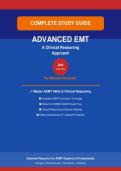
COMPLETE STUDY GUIDE
ADVANCED EMT
A Clinical Reasoning
Approach
2nd
EDITION
by Melissa Alexander
✓ Master AEMT Skills & Clinical Reasoning
■ Complete AEMT Curriculum Coverage
■ Perfect for NREMT-AEMT Exam Prep
■ Clinical Reasoning & Decision-Making
■ Patient Assessment & Treatment Protocols
Essential Resource for AEMT Students & Professionals
Emergency Medical Services • Paramedicine • Healthcare
, Complete AEMT Curriculum Coverage
■ Comprehensive Topic Coverage:
✓ Advanced Airway Management & Ventilation
✓ Patient Assessment & Clinical Decision-Making
✓ Advanced Pharmacology & Medication Administration
✓ IV Therapy & Vascular Access
✓ Cardiac Emergencies & ECG Interpretation
✓ Trauma Assessment & Management
✓ Medical Emergencies (Respiratory, Cardiac, Neuro)
✓ Obstetric & Pediatric Emergencies
✓ Environmental & Toxicological Emergencies
✓ Special Populations & Geriatrics
✓ EMS Operations & Safety
✓ Clinical Reasoning & Critical Thinking Skills
■ Essential AEMT Skills:
• Advanced Patient Assessment Techniques
• Critical Thinking & Clinical Reasoning
• IV/IO Access & Fluid Administration
• Advanced Medication Administration
• Cardiac Monitoring & 12-Lead ECG
• Advanced Airway Devices & Techniques
• Scene Safety & Risk Assessment
■ Perfect For:
• AEMT Students in Certificate/Degree Programs
• NREMT-AEMT Exam Preparation
• EMT-Basics Advancing Their Careers
• Paramedic Students Reviewing Fundamentals
• EMS Professionals Seeking Recertification
• Emergency Department Technicians
• Anyone Pursuing Advanced EMS Education
Educational Study Material • Copyright-Free Content
For AEMT Education & Professional Development
,Advanced EMT, 2e (Alexander)
Chapter 1 Introduction to Advanced Emergency Medical Technician Practice
1) Training to be an Advanced EMT includes all the knowledge and skills of:
A) Emergency Medical Responders and Emergency Medical Technicians.
B) Emergency Medical Technicians and Paramedics.
C) any EMS professional.
D) Paramedics and Emergency Medical Responders.
Answer: A
Page Ref: 8
Objective: 1.2 Describe the competencies, roles, responsibilities, and professional characteristics
of the Advanced EMT.
2) Self-motivation means doing things that need to be done:
A) based on standing orders.
B) because you are told.
C) on your own initiative.
D) to earn certification.
Answer: C
Page Ref: 12
Objective: 1.2 Describe the competencies, roles, responsibilities, and professional characteristics
of the Advanced EMT.
3) What is conveyed through adherence to a set of values and behavior that are accepted as
defining features of a given occupation?
A) Evidence-based practice
B) Confidence
C) Motivation
D) Professionalism
Answer: D
Page Ref: 11
Objective: 1.2 Describe the competencies, roles, responsibilities, and professional characteristics
of the Advanced EMT.
4) By the time Advanced EMT training is completed, the AEMT will have completed how many
hours of education as a health care provider?
A) 150 to 250
B) 240 to 350
C) 300 to 440
D) 400 to 640
Answer: C
Page Ref: 8
Objective: 1.2 Describe the competencies, roles, responsibilities, and professional characteristics
of the Advanced EMT.
1
Copyright © 2017 Pearson Education, Inc.
, 5) Which of the following statements is CORRECT?
A) An EMR license is a prerequisite for EMT.
B) EMT training is a prerequisite for Advanced EMT.
C) AEMTs provide complex patient assessments.
D) The AEMT core program includes 1000 hours of education.
Answer: B
Page Ref: 8
Objective: 1.2 Describe the competencies, roles, responsibilities, and professional characteristics
of the Advanced EMT.
6) Before you can render care to a patient, you MUST:
A) ensure your emergency vehicle is in good working order.
B) compile a list of the patient's medications.
C) call medical direction for orders.
D) wait to have a paramedic on scene.
Answer: A
Page Ref: 8-9
Objective: 1.4 Place the roles and responsibilities of the Advanced EMT in the larger contexts of
emergency medical services (EMS), health care, and public health.
7) All of the following are important to providing medical care safely, EXCEPT:
A) using appropriate personal protective equipment.
B) double checking medication doses.
C) driving with "due regard."
D) wearing a N-95 respirator during extrication.
Answer: D
Page Ref: 9
Objective: 1.5 Discuss key issues in the contemporary practice of the Advanced EMT, including
professionalism, the focus on patient safety, research, and evidence-based practice.
8) Who is responsible for on-scene safety of EMS providers?
A) Traffic director
B) Law enforcement
C) All crew members
D) Triage officer
Answer: C
Page Ref: 9
Objective: 1.5 Discuss key issues in the contemporary practice of the Advanced EMT, including
professionalism, the focus on patient safety, research, and evidence-based practice.
2
Copyright © 2017 Pearson Education, Inc.
ADVANCED EMT
A Clinical Reasoning
Approach
2nd
EDITION
by Melissa Alexander
✓ Master AEMT Skills & Clinical Reasoning
■ Complete AEMT Curriculum Coverage
■ Perfect for NREMT-AEMT Exam Prep
■ Clinical Reasoning & Decision-Making
■ Patient Assessment & Treatment Protocols
Essential Resource for AEMT Students & Professionals
Emergency Medical Services • Paramedicine • Healthcare
, Complete AEMT Curriculum Coverage
■ Comprehensive Topic Coverage:
✓ Advanced Airway Management & Ventilation
✓ Patient Assessment & Clinical Decision-Making
✓ Advanced Pharmacology & Medication Administration
✓ IV Therapy & Vascular Access
✓ Cardiac Emergencies & ECG Interpretation
✓ Trauma Assessment & Management
✓ Medical Emergencies (Respiratory, Cardiac, Neuro)
✓ Obstetric & Pediatric Emergencies
✓ Environmental & Toxicological Emergencies
✓ Special Populations & Geriatrics
✓ EMS Operations & Safety
✓ Clinical Reasoning & Critical Thinking Skills
■ Essential AEMT Skills:
• Advanced Patient Assessment Techniques
• Critical Thinking & Clinical Reasoning
• IV/IO Access & Fluid Administration
• Advanced Medication Administration
• Cardiac Monitoring & 12-Lead ECG
• Advanced Airway Devices & Techniques
• Scene Safety & Risk Assessment
■ Perfect For:
• AEMT Students in Certificate/Degree Programs
• NREMT-AEMT Exam Preparation
• EMT-Basics Advancing Their Careers
• Paramedic Students Reviewing Fundamentals
• EMS Professionals Seeking Recertification
• Emergency Department Technicians
• Anyone Pursuing Advanced EMS Education
Educational Study Material • Copyright-Free Content
For AEMT Education & Professional Development
,Advanced EMT, 2e (Alexander)
Chapter 1 Introduction to Advanced Emergency Medical Technician Practice
1) Training to be an Advanced EMT includes all the knowledge and skills of:
A) Emergency Medical Responders and Emergency Medical Technicians.
B) Emergency Medical Technicians and Paramedics.
C) any EMS professional.
D) Paramedics and Emergency Medical Responders.
Answer: A
Page Ref: 8
Objective: 1.2 Describe the competencies, roles, responsibilities, and professional characteristics
of the Advanced EMT.
2) Self-motivation means doing things that need to be done:
A) based on standing orders.
B) because you are told.
C) on your own initiative.
D) to earn certification.
Answer: C
Page Ref: 12
Objective: 1.2 Describe the competencies, roles, responsibilities, and professional characteristics
of the Advanced EMT.
3) What is conveyed through adherence to a set of values and behavior that are accepted as
defining features of a given occupation?
A) Evidence-based practice
B) Confidence
C) Motivation
D) Professionalism
Answer: D
Page Ref: 11
Objective: 1.2 Describe the competencies, roles, responsibilities, and professional characteristics
of the Advanced EMT.
4) By the time Advanced EMT training is completed, the AEMT will have completed how many
hours of education as a health care provider?
A) 150 to 250
B) 240 to 350
C) 300 to 440
D) 400 to 640
Answer: C
Page Ref: 8
Objective: 1.2 Describe the competencies, roles, responsibilities, and professional characteristics
of the Advanced EMT.
1
Copyright © 2017 Pearson Education, Inc.
, 5) Which of the following statements is CORRECT?
A) An EMR license is a prerequisite for EMT.
B) EMT training is a prerequisite for Advanced EMT.
C) AEMTs provide complex patient assessments.
D) The AEMT core program includes 1000 hours of education.
Answer: B
Page Ref: 8
Objective: 1.2 Describe the competencies, roles, responsibilities, and professional characteristics
of the Advanced EMT.
6) Before you can render care to a patient, you MUST:
A) ensure your emergency vehicle is in good working order.
B) compile a list of the patient's medications.
C) call medical direction for orders.
D) wait to have a paramedic on scene.
Answer: A
Page Ref: 8-9
Objective: 1.4 Place the roles and responsibilities of the Advanced EMT in the larger contexts of
emergency medical services (EMS), health care, and public health.
7) All of the following are important to providing medical care safely, EXCEPT:
A) using appropriate personal protective equipment.
B) double checking medication doses.
C) driving with "due regard."
D) wearing a N-95 respirator during extrication.
Answer: D
Page Ref: 9
Objective: 1.5 Discuss key issues in the contemporary practice of the Advanced EMT, including
professionalism, the focus on patient safety, research, and evidence-based practice.
8) Who is responsible for on-scene safety of EMS providers?
A) Traffic director
B) Law enforcement
C) All crew members
D) Triage officer
Answer: C
Page Ref: 9
Objective: 1.5 Discuss key issues in the contemporary practice of the Advanced EMT, including
professionalism, the focus on patient safety, research, and evidence-based practice.
2
Copyright © 2017 Pearson Education, Inc.


