

TCI (Therapeutic Crisis Intervention) Training
STUDY GUIDE EXAM Questions and Answers
(Verified Answers) Most Recent exam COMPLETE
(2026) (Latest Update 2026) UPDATE!!
Leave the first rating
Save
Terms in this set (25)
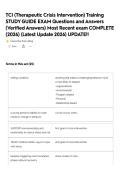
setting condition anything that makes a challenging behavior more
or less likely to happen
-organizational
-environmental
-Program related
-Personal
-Relationship based
a young person's inability to cope a crisis occurs when....
results in change in behavior
SUPPORT environmentally and first goal of crisis intervention
emotionally to reduce stress and risk
TEACH children better ways to cope 2nd goal of crisis intervention
with stress
baseline triggering event escalation stress model of crisis
phase outburst recovery
, baseline, agitation, aggression, stress model of crisis behaviors/staff intervention
violence
higher order no change lower order types of recovery phase
higher order recovery phase where we are educators, we teach
how to cope (educator)
no change recovery phase where we are fire fighters, we
resolve immediate situation but there is no long-
term change (fire fighter).
lower recovery phase where we are abusers, the person
is less able to manage/cope and there is more
distrust toward others (abuser)
what am i feeling now? four questions we ask ourselves in a crisis
what does this young person feel, intervention
need, or want?
how is the environment affecting the
young person?
how do i best respond?
impulsive outbursts pain-based behavior includes (a few examples):
aggression
running away
self-injury
defiance
inability to regulate emotions
trauma re-enectment
STUDY GUIDE EXAM Questions and Answers
(Verified Answers) Most Recent exam COMPLETE
(2026) (Latest Update 2026) UPDATE!!
Leave the first rating
Save
Terms in this set (25)
setting condition anything that makes a challenging behavior more
or less likely to happen
-organizational
-environmental
-Program related
-Personal
-Relationship based
a young person's inability to cope a crisis occurs when....
results in change in behavior
SUPPORT environmentally and first goal of crisis intervention
emotionally to reduce stress and risk
TEACH children better ways to cope 2nd goal of crisis intervention
with stress
baseline triggering event escalation stress model of crisis
phase outburst recovery
, baseline, agitation, aggression, stress model of crisis behaviors/staff intervention
violence
higher order no change lower order types of recovery phase
higher order recovery phase where we are educators, we teach
how to cope (educator)
no change recovery phase where we are fire fighters, we
resolve immediate situation but there is no long-
term change (fire fighter).
lower recovery phase where we are abusers, the person
is less able to manage/cope and there is more
distrust toward others (abuser)
what am i feeling now? four questions we ask ourselves in a crisis
what does this young person feel, intervention
need, or want?
how is the environment affecting the
young person?
how do i best respond?
impulsive outbursts pain-based behavior includes (a few examples):
aggression
running away
self-injury
defiance
inability to regulate emotions
trauma re-enectment


