

HCR 240 - Exam 2 Blue Print
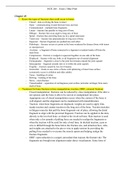
Chapter 45 - Know the types of fractures that could occur in bones - Closed – skin overlying the bone is intact - Open – communicating wound between bone and skin - Communicated – multiple bone fragments - Linear – fracture line parallel to long axis of bone - Oblique – fracture line at an angle to long axis of bone - Spiral – fracture line encircling bone (as in a spiral staircases) - Transverse – fracture line perpendicular to long axis of bone - Impacted – fracture fragments are pushed into each other - Pathologic – fracture occurs at a point in the bone weakened by disease (bone with tumor or osteoporosis) - Avulsion – a fragment of bone connected to a ligament or tendon breaks off from the main bone - Compression – fracture is wedged or squeezed together on one side of the bone - Displaced – fracture with one, both, or all fragments out of normal alignment - Extracapsular – fragment is close to the joint but remains outside the joint capsule - Intracapsular – fragment extends into or is within the joint capsule - Fragility – fracture caused by low-level trauma - Greenstick – break on one cortex of bone with splintering of inner bone surface (commonly occurs in children and older adults) - Torus – buckling of cortex - Bowing – bending of the bone - Stress – microfracture - Transchondral – separation of cartilaginous joint surface (articular cartilage) from main shaft of bone - Treatment for bone fractures (close manipulation, traction, ORIF, external fixation) - Closed manipulation: fractures can be reduced by close manipulation if the skin is not opened, and the bone is able to be moved or manipulated into place. Appropriate use of closed manipulation occurs when the contour of the bone is well aligned, and the alignment can be maintained with immobilization - Traction: when bone fragments are displaced, weights are used to apply firm, steady traction and counter traction to the long axis of the bone. Traction stretches in fatigues muscles that pull the bone fragments out of place, allowing the distal fragment to align with the proximal fragment. Traction can be applied to the skin, directly to the involved bone, or distal to the involved bone. Skin traction is used when only a few pounds of pulling force are needed to realign the fragments or when the traction will be used for only a brief time. In skeletal traction, a pin or wire is drilled through the bone below the fracture site, and attraction bow, robe, and weights are attached to the pin or wire to apply tension by providing the pulling force needed to overcome the muscle spasm and helping realign the fracture fragments. - ORIF: open reduction is a surgery procedure that exposes the fracture site; The fragments are brought into alignment under direct visualization. Some form of
Document information
- Uploaded on
- March 31, 2021
- Number of pages
- 25
- Written in
- 2020/2021
- Type
- Other
- Person
- Unknown


