

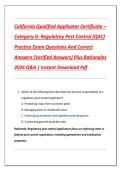
California Qualified Applicator Certificate –
Category G: Regulatory Pest Control (QAC)
Practice Exam Questions And Correct
Answers (Verified Answers) Plus Rationales
2026 Q&A | Instant Download Pdf
1. Which of the following best describes the primary responsibility of a
regulatory pest control applicator?
A. Protecting crops from economic pests
B. Managing pests in residential areas
C. Enforcing quarantines and regulatory pest programs
D. Conducting general pesticide sales
Rationale: Regulatory pest control applicators focus on enforcing state or
federal pest control regulations, including quarantines and eradication
programs.
, 2. What is the main purpose of a quarantine in regulatory pest control?
A. Increase pesticide sales
B. Control wildlife populations
C. Prevent the spread of harmful pests to uninfested areas
D. Monitor pesticide residues
Rationale: Quarantines restrict movement of plants, soil, or materials to
stop pest spread.
3. Which of the following pests is commonly associated with regulatory
programs in California?
A. Aphids
B. Mediterranean fruit fly (Medfly)
C. Grasshoppers
D. Houseflies
Rationale: The Medfly is a major regulatory pest in California, subject to
eradication and quarantine programs.
4. When performing a regulatory inspection, what is the first step?
A. Apply pesticides immediately
B. Remove infested plants
C. Identify the pest accurately
D. Notify the public
,Rationale: Accurate pest identification is crucial before any regulatory
action is taken.
5. Which federal agency oversees interstate pest regulation and
quarantines in the U.S.?
A. FDA
B. EPA
C. USDA-APHIS
D. CDC
Rationale: The USDA Animal and Plant Health Inspection Service manages
quarantines and pest regulations across state lines.
6. What is a key safety requirement when using pesticides for regulatory
control?
A. Use only indoors
B. Apply at night
C. Follow label instructions and wear PPE
D. Dilute pesticides with water only
Rationale: Regulatory applicators must always follow label directions and
wear required personal protective equipment.
, 7. Which of the following is an example of a biological regulatory pest
control method?
A. Spraying insecticides
B. Soil fumigation
C. Releasing sterile insects
D. Heat treatment
Rationale: Sterile insect technique is a biological method used in regulatory
programs to control pest populations.
8. What is the recommended action if a pest is detected outside a
quarantined area?
A. Ignore it
B. Apply home remedies
C. Report it to the appropriate regulatory authority
D. Spray pesticides immediately
Rationale: Detecting pests outside quarantines requires prompt reporting
to prevent spread.
9. Which type of trap is commonly used to monitor fruit fly populations
in regulatory programs?
A. Sticky traps for aphids
B. Protein bait traps
Category G: Regulatory Pest Control (QAC)
Practice Exam Questions And Correct
Answers (Verified Answers) Plus Rationales
2026 Q&A | Instant Download Pdf
1. Which of the following best describes the primary responsibility of a
regulatory pest control applicator?
A. Protecting crops from economic pests
B. Managing pests in residential areas
C. Enforcing quarantines and regulatory pest programs
D. Conducting general pesticide sales
Rationale: Regulatory pest control applicators focus on enforcing state or
federal pest control regulations, including quarantines and eradication
programs.
, 2. What is the main purpose of a quarantine in regulatory pest control?
A. Increase pesticide sales
B. Control wildlife populations
C. Prevent the spread of harmful pests to uninfested areas
D. Monitor pesticide residues
Rationale: Quarantines restrict movement of plants, soil, or materials to
stop pest spread.
3. Which of the following pests is commonly associated with regulatory
programs in California?
A. Aphids
B. Mediterranean fruit fly (Medfly)
C. Grasshoppers
D. Houseflies
Rationale: The Medfly is a major regulatory pest in California, subject to
eradication and quarantine programs.
4. When performing a regulatory inspection, what is the first step?
A. Apply pesticides immediately
B. Remove infested plants
C. Identify the pest accurately
D. Notify the public
,Rationale: Accurate pest identification is crucial before any regulatory
action is taken.
5. Which federal agency oversees interstate pest regulation and
quarantines in the U.S.?
A. FDA
B. EPA
C. USDA-APHIS
D. CDC
Rationale: The USDA Animal and Plant Health Inspection Service manages
quarantines and pest regulations across state lines.
6. What is a key safety requirement when using pesticides for regulatory
control?
A. Use only indoors
B. Apply at night
C. Follow label instructions and wear PPE
D. Dilute pesticides with water only
Rationale: Regulatory applicators must always follow label directions and
wear required personal protective equipment.
, 7. Which of the following is an example of a biological regulatory pest
control method?
A. Spraying insecticides
B. Soil fumigation
C. Releasing sterile insects
D. Heat treatment
Rationale: Sterile insect technique is a biological method used in regulatory
programs to control pest populations.
8. What is the recommended action if a pest is detected outside a
quarantined area?
A. Ignore it
B. Apply home remedies
C. Report it to the appropriate regulatory authority
D. Spray pesticides immediately
Rationale: Detecting pests outside quarantines requires prompt reporting
to prevent spread.
9. Which type of trap is commonly used to monitor fruit fly populations
in regulatory programs?
A. Sticky traps for aphids
B. Protein bait traps


