
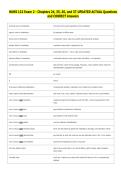
NURS 122 Exam 2 - Chapters 24, 35, 36, and 37 UPDATED ACTUAL Questions
and CORRECT Answers
chemical name of medication the name of the exact ingredients of the medication
generic name of medication Its assigned or official name.
brand name of medication a medication name made by a specific pharmaceutical company
desired effect of medication medication does what it's supposed to do
side effects of medication unintended outcome - may or may not be expected
adverse effects of medication unintended outcome more severe than side effects - not expected
all medication orders must include date and time, name of med, dosage, frequency, route, patients name, reason for
administration, signature of prescriber
PO by mouth
q every
three ways of obtaining medications computerized cabinets, medication cart, locked bins in patient rooms
seven rights of med administration right med, dose, route, patient, indication/reason, date and time, documentation
how to ensure right medication reading the label and comparing it with the MAR - not by characteristics of the
med
how to ensure right dose pay attention to placement of decimals
how to ensure right route pay attention to the ordered route
how to ensure right patient use two methods of identification
how to ensure right indication/reason know why the patient is getting the medication, vital signs, and laboratory values
how to ensure right date and time pay attention to when the meds are due and administer them in the 1 hour window
how to ensure right documentation document all medications, given or not given
the three patients rights right to know what med is, for, and its affects, right to refuse, right to question
their meds
1st safety check verify the 7 rights as you remove the meds from the cart, bin, or computerized
cabinet
, 2nd safety check verify the 7 rights against the MAR before placing the meds in cups
3rd safety check verify the 7 rights at the bedside of the patient before opening it and
administering it
sublingual route under the tongue
buccal route between the cheek and gum
tablet powder compressed into different shapes and sizes
caplets like tablets but easier to swallow
chewable tablets for those with difficulty swallowing pills
enteric-coated tablets have an outer coating that doesn't dissolve until it reaches the intestines
film-coated tablets has a coating that prevents contact with the active ingredient while handling the
med
sustained-release tablets designed to slow the absorption of the drug
oral disintegrating tablets (ODT) a drug form that dissolves on top of the tongue
capsules gelatin shell containing a powder or pellets of medication
elixir liquid med that may contain sweeteners or flavorings and/or water and alcohol
solution liquid med that contains a dissolved substance
suspension liquid med that contains fine particles of medication not dissolved in the liquid
syrup liquid med that is thicker containing sugar
administering tablets through enteral tube route crushed mixed with 20 mL of water
administering capsules through enteral tube route most can be opened and mixed with 20 mL of water
consideration with administration of capsules through some capsules need to be mixed with juice rather than water to prevent clumping
enteral tube route
when administering multiple meds through enteral tube flush the tube between meds with 20 to 30 mL of water
route
Luer-Lok tip of a syringe has threaded grooves that screw onto the needle hub and lock into place
Slip-tip of a syringe has a smooth tip that inserts into the needle hub needing a slight twist to make
sure its snug
and CORRECT Answers
chemical name of medication the name of the exact ingredients of the medication
generic name of medication Its assigned or official name.
brand name of medication a medication name made by a specific pharmaceutical company
desired effect of medication medication does what it's supposed to do
side effects of medication unintended outcome - may or may not be expected
adverse effects of medication unintended outcome more severe than side effects - not expected
all medication orders must include date and time, name of med, dosage, frequency, route, patients name, reason for
administration, signature of prescriber
PO by mouth
q every
three ways of obtaining medications computerized cabinets, medication cart, locked bins in patient rooms
seven rights of med administration right med, dose, route, patient, indication/reason, date and time, documentation
how to ensure right medication reading the label and comparing it with the MAR - not by characteristics of the
med
how to ensure right dose pay attention to placement of decimals
how to ensure right route pay attention to the ordered route
how to ensure right patient use two methods of identification
how to ensure right indication/reason know why the patient is getting the medication, vital signs, and laboratory values
how to ensure right date and time pay attention to when the meds are due and administer them in the 1 hour window
how to ensure right documentation document all medications, given or not given
the three patients rights right to know what med is, for, and its affects, right to refuse, right to question
their meds
1st safety check verify the 7 rights as you remove the meds from the cart, bin, or computerized
cabinet
, 2nd safety check verify the 7 rights against the MAR before placing the meds in cups
3rd safety check verify the 7 rights at the bedside of the patient before opening it and
administering it
sublingual route under the tongue
buccal route between the cheek and gum
tablet powder compressed into different shapes and sizes
caplets like tablets but easier to swallow
chewable tablets for those with difficulty swallowing pills
enteric-coated tablets have an outer coating that doesn't dissolve until it reaches the intestines
film-coated tablets has a coating that prevents contact with the active ingredient while handling the
med
sustained-release tablets designed to slow the absorption of the drug
oral disintegrating tablets (ODT) a drug form that dissolves on top of the tongue
capsules gelatin shell containing a powder or pellets of medication
elixir liquid med that may contain sweeteners or flavorings and/or water and alcohol
solution liquid med that contains a dissolved substance
suspension liquid med that contains fine particles of medication not dissolved in the liquid
syrup liquid med that is thicker containing sugar
administering tablets through enteral tube route crushed mixed with 20 mL of water
administering capsules through enteral tube route most can be opened and mixed with 20 mL of water
consideration with administration of capsules through some capsules need to be mixed with juice rather than water to prevent clumping
enteral tube route
when administering multiple meds through enteral tube flush the tube between meds with 20 to 30 mL of water
route
Luer-Lok tip of a syringe has threaded grooves that screw onto the needle hub and lock into place
Slip-tip of a syringe has a smooth tip that inserts into the needle hub needing a slight twist to make
sure its snug


