

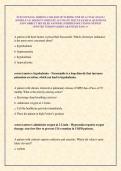
NUR 215 EXAM / ARIZONA COLLEGE OF NURSING NUR 215 ACTUAL EXAM 2
(MODULE 3-5) 2026/2027 COMPLETE ACCURATE TEST EXAM REAL QUESTIONS
AND CORRECT DETAILED ANSWERS (VERIFIED SOLUTIONS) NEWEST
UPDATED VERSION 2026|GUARANTEED PASS A+
A patient with heart failure is prescribed furosemide. Which electrolyte imbalance
is the nurse most concerned about?
a. hyperkalemia
b. hypernatremia
c. hypokalemia
d. hypocalcemia
correct answer: hypokalemia – Furosemide is a loop diuretic that increases
potassium excretion, which can lead to hypokalemia.
A patient with chronic obstructive pulmonary disease (COPD) has a Paso₂ of 55
mmHg. What is the priority nursing action?
a. Encourage deep breathing exercises
b. Administer oxygen at 2 L/min
c. Call the healthcare provider immediately
d. Place the patient in high Fowler’s position
correct answer: administer oxygen at 2 L/min – Hypoxemia requires oxygen
therapy; start low flow to prevent CO₂ retention in COPD patients.
A patient with cirrhosis reports confusion and asterisks. Which lab value is most
likely elevated?
a. sodium
,b. ammonia
c. albumin
d. bilirubin
correct answer: ammonia – Hepatic encephalopathy is associated with
elevated ammonia levels, leading to neurologic symptoms.
A patient is admitted with acute pancreatitis. Which serum lab finding supports this
diagnosis?
a. decreased amylase
b. elevated lipase
c. low glucose
d. elevated potassium
correct answer: elevated lipase – Lipase is more specific than amylase for
pancreatitis and rises within 24–48 hours of onset.
A patient with chronic kidney disease has hyperkalemia. Which intervention is
priority?
a. administers kayexalate
b. restricts dietary potassium
c. prepares for dialysis
d. encourages fluid intake
correct answer: prepare for dialysis – Severe hyperkalemia can be life-
threatening; emergent dialysis may be required if potassium is dangerously
high.
, A patient with diabetes mellitus reports fatigue, polyuria, and polydipsia. Which
type of diabetes is most likely?
a. type 1
b. type 2
c. gestational
d. secondary
correct answer: type 1 – Sudden onset with polyuria, polydipsia, and fatigue is
typical for type 1 diabetes.
A patient with a new ileostomy asks about skin care. What is the best nursing
response?
a. cleans the skin with alcohol
b. applies stoma paste to the skin
c. use warm water and mild soap
d. leaves the skin dry
correct answer: use warm water and mild soap – Gentle cleansing prevents
irritation; avoid harsh chemicals that can damage peristome skin.
A patient receiving hydrochlorothiazide should be monitored for which electrolyte
imbalance?
a. hypokalemia
b. hyperkalemia
c. hypomagnesemia
d. hypercalcemia
(MODULE 3-5) 2026/2027 COMPLETE ACCURATE TEST EXAM REAL QUESTIONS
AND CORRECT DETAILED ANSWERS (VERIFIED SOLUTIONS) NEWEST
UPDATED VERSION 2026|GUARANTEED PASS A+
A patient with heart failure is prescribed furosemide. Which electrolyte imbalance
is the nurse most concerned about?
a. hyperkalemia
b. hypernatremia
c. hypokalemia
d. hypocalcemia
correct answer: hypokalemia – Furosemide is a loop diuretic that increases
potassium excretion, which can lead to hypokalemia.
A patient with chronic obstructive pulmonary disease (COPD) has a Paso₂ of 55
mmHg. What is the priority nursing action?
a. Encourage deep breathing exercises
b. Administer oxygen at 2 L/min
c. Call the healthcare provider immediately
d. Place the patient in high Fowler’s position
correct answer: administer oxygen at 2 L/min – Hypoxemia requires oxygen
therapy; start low flow to prevent CO₂ retention in COPD patients.
A patient with cirrhosis reports confusion and asterisks. Which lab value is most
likely elevated?
a. sodium
,b. ammonia
c. albumin
d. bilirubin
correct answer: ammonia – Hepatic encephalopathy is associated with
elevated ammonia levels, leading to neurologic symptoms.
A patient is admitted with acute pancreatitis. Which serum lab finding supports this
diagnosis?
a. decreased amylase
b. elevated lipase
c. low glucose
d. elevated potassium
correct answer: elevated lipase – Lipase is more specific than amylase for
pancreatitis and rises within 24–48 hours of onset.
A patient with chronic kidney disease has hyperkalemia. Which intervention is
priority?
a. administers kayexalate
b. restricts dietary potassium
c. prepares for dialysis
d. encourages fluid intake
correct answer: prepare for dialysis – Severe hyperkalemia can be life-
threatening; emergent dialysis may be required if potassium is dangerously
high.
, A patient with diabetes mellitus reports fatigue, polyuria, and polydipsia. Which
type of diabetes is most likely?
a. type 1
b. type 2
c. gestational
d. secondary
correct answer: type 1 – Sudden onset with polyuria, polydipsia, and fatigue is
typical for type 1 diabetes.
A patient with a new ileostomy asks about skin care. What is the best nursing
response?
a. cleans the skin with alcohol
b. applies stoma paste to the skin
c. use warm water and mild soap
d. leaves the skin dry
correct answer: use warm water and mild soap – Gentle cleansing prevents
irritation; avoid harsh chemicals that can damage peristome skin.
A patient receiving hydrochlorothiazide should be monitored for which electrolyte
imbalance?
a. hypokalemia
b. hyperkalemia
c. hypomagnesemia
d. hypercalcemia


