

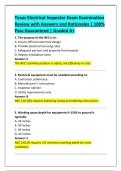
Texas Electrical Inspector Exam Examination
Review with Answers and Rationales | 100%
Pass Guaranteed | Graded A+
1. The purpose of the NEC is to:
A. Ensure efficient electrical design
B. Provide electrical licensing rules
C. Safeguard persons and property from hazards
D. Reduce installation costs
Answer: C
The NEC’s primary purpose is safety, not efficiency or cost.
2. Electrical equipment must be installed according to:
A. Contractor preference
B. Manufacturer’s instructions
C. Inspector opinion
D. Utility requirements only
Answer: B
NEC 110.3(B) requires following listing and labeling instructions.
3. Working space depth for equipment 0–150V to ground is
typically:
A. 24 inches
B. 30 inches
C. 36 inches
D. 42 inches
Answer: C
NEC 110.26 requires 3 ft minimum working depth for most
conditions.
,4. Minimum working space width in front of equipment is:
A. 24 inches
B. 30 inches or equipment width
C. 36 inches
D. 48 inches
Answer: B
Width must be at least 30 inches or the equipment width, whichever
is greater.
5. Electrical rooms must have headroom of at least:
A. 6 ft
B. 6.5 ft
C. 6.5 ft or equipment height
D. 7 ft
Answer: C
NEC requires minimum headroom of 6.5 ft or the height of the
equipment.
Grounding & Bonding (Article 250)
6. The primary purpose of grounding is to:
A. Improve efficiency
B. Stabilize voltage and clear faults
C. Reduce energy usage
D. Prevent corrosion
Answer: B
Grounding provides a reference and fault current path.
7. A metal underground water pipe can be used as a grounding
electrode if it is in contact with earth for at least:
A. 5 ft
, B. 8 ft
C. 10 ft
D. 20 ft
Answer: C
NEC requires 10 feet of metal pipe contact with earth.
8. Ground rods must be driven to a depth of at least:
A. 6 ft
B. 7 ft
C. 8 ft
D. 10 ft
Answer: C
Standard grounding electrode rod length is 8 ft.
9. When a single ground rod measures more than 25 ohms
resistance, the inspector should require:
A. Larger wire
B. Bond to water pipe
C. A second rod
D. Concrete encasement
Answer: C
Two rods are required if resistance exceeds 25 ohms.
10. Equipment grounding conductors are intended to:
A. Carry normal load current
B. Provide a fault current path
C. Increase voltage stability
D. Replace neutral conductors
Answer: B
They carry fault current to clear overcurrent devices.
Review with Answers and Rationales | 100%
Pass Guaranteed | Graded A+
1. The purpose of the NEC is to:
A. Ensure efficient electrical design
B. Provide electrical licensing rules
C. Safeguard persons and property from hazards
D. Reduce installation costs
Answer: C
The NEC’s primary purpose is safety, not efficiency or cost.
2. Electrical equipment must be installed according to:
A. Contractor preference
B. Manufacturer’s instructions
C. Inspector opinion
D. Utility requirements only
Answer: B
NEC 110.3(B) requires following listing and labeling instructions.
3. Working space depth for equipment 0–150V to ground is
typically:
A. 24 inches
B. 30 inches
C. 36 inches
D. 42 inches
Answer: C
NEC 110.26 requires 3 ft minimum working depth for most
conditions.
,4. Minimum working space width in front of equipment is:
A. 24 inches
B. 30 inches or equipment width
C. 36 inches
D. 48 inches
Answer: B
Width must be at least 30 inches or the equipment width, whichever
is greater.
5. Electrical rooms must have headroom of at least:
A. 6 ft
B. 6.5 ft
C. 6.5 ft or equipment height
D. 7 ft
Answer: C
NEC requires minimum headroom of 6.5 ft or the height of the
equipment.
Grounding & Bonding (Article 250)
6. The primary purpose of grounding is to:
A. Improve efficiency
B. Stabilize voltage and clear faults
C. Reduce energy usage
D. Prevent corrosion
Answer: B
Grounding provides a reference and fault current path.
7. A metal underground water pipe can be used as a grounding
electrode if it is in contact with earth for at least:
A. 5 ft
, B. 8 ft
C. 10 ft
D. 20 ft
Answer: C
NEC requires 10 feet of metal pipe contact with earth.
8. Ground rods must be driven to a depth of at least:
A. 6 ft
B. 7 ft
C. 8 ft
D. 10 ft
Answer: C
Standard grounding electrode rod length is 8 ft.
9. When a single ground rod measures more than 25 ohms
resistance, the inspector should require:
A. Larger wire
B. Bond to water pipe
C. A second rod
D. Concrete encasement
Answer: C
Two rods are required if resistance exceeds 25 ohms.
10. Equipment grounding conductors are intended to:
A. Carry normal load current
B. Provide a fault current path
C. Increase voltage stability
D. Replace neutral conductors
Answer: B
They carry fault current to clear overcurrent devices.


