

FYSIOLOGIE : INLEIDING
waarom seksuele voortplanting ? genetische diversiteit
interindividuele variabiliteit + omgevingsfactoren natuurlijke selectie
eicel en zaadcel = haploide cellen (n)
gametogenese man : vorming 4 functionele spermatozoa
gametogenese vrouw : 1 vd 4 dochtercellen functionele oocyt
NIET-ZWANGERE VROUW
A. GONADOTROPINEN
= kleine glycoproteinen die gonaden stimuleren maken vrouw vruchtbaar
= LH en FSH aangemaakt id adenohypofyse oiv GnRH (= gonadotroop releasing
hormoon)
FSH = follikel stimulerend hormoon
stimuleert groei primaire follikels
ontwikkeling finale follikels
LH = luteiniserend hormoon
ontwikkeling finale follikels
ovulatie
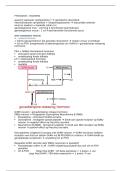
GnRH-neuron : gonadotropine release hormone
KNDy-neuron = Kisspeptine Dynorphine Neurokinine B (NKB)
Kisspeptine : stimuleert GnRH secretie
Dynorphine : endogeen opioid peptide bindt aan opioid receptor op KDNy
neuron negatief effect op freq Kiss secretie
Neurokinine B (NKB) : tachykinin peptide bindt aan NK3 receptor op KDNy
neuron positief effect op freq kiss secretie
Kiss-peptines vrijgezet id synaps met GnRH-neuron GnRH neuronen hebben
receptor voor Kiss en zetten GnRH vrij IN PULSEN (nt continu) GnRH bindt op
gonadotrope receptoren vrijzetting LH en FSH
Regulatie GnRH secretie door KNDy-neuronen is pulsatief:
Gonadotrope cellen in aP : GnRH vrijzetting pulsatiel dus ook LH en FSH
pulsatiel
LH & FSH: Hoge freq GnRH : LH-beta expressie = 1 pulse / 1 uur
Lage freq GnRH : FSH-beta expressive = 1 pulse / 4 uur
,Oestrogeen (E) heeft inhibitief effect op KNDy neuron + inhibitief effect op de
vrijzetting v FSH
+ stimulerend effect op GnRH vrijzetting op 2 voorwaarden:
- Concentratie v oestrogeen moet voldoende hoog zijn
- Verhoogde E concentraties moeten minstens 50u aanwezig zijn
Progesteron (P) heeft stimulerend effect op Dyn inhibitief effect op Kiss
vrijzetting
Inhibine heeft inhiberend effect op FSH vrijzetting
Stress en borstvoeding hebben inhibitorisch effect op GnRH vrijzetting +
inhibitorisch effect op Kiss vrijzetting
B. FOLLIKELS
In utero ontwikkeling wanneer embryo = 5 weken pc
- vorming v gonadale ribbels
- vorming primordiale stamcellen
- universele ontwikkeling tot gonaden
1. primordiale follikel
embryonaal (~ 20 weken pc) onveranderd gedurende 30-40 jaar
functie pre-granulosa cellen :
- ondersteuning eicelgroei
- vorming vh basale lamina
2. primair pre-antraal follikel
eicel +zona pellucida + 1-laag granulosacellen
zona pellucida = glycoproteine : DNA afschermen vd buitenwereld nt onder
invloed v hormonale veranderingen + selectie v zaadcellen
3. secundaire pre-antraal follikel
eicel + zona pellucida + meerlagig granulosacellen + 1-laag thecacellen +
vascularisatie tot basale lamina
4. secundarie pre-antraal follikel 2.0
eicel + zona pellucida + granulosacellen (secretie v follikelvocht) + 2-lagig
thecacellen + vascularisatie tot basale lamina + expressie FSH receptoren
+ FSH folliculogenese
- FSH atresie
, Puberteit: verandering in eetpatroon vetcellen aanwezig met leptine
Leptine neemt het inhiberend effect v NPY weg waardoor GnRH neuronen actief
worden en GnRH vrijzetten LH en FSH vrijzetting
5. antraal follikel
ovariele cyclus
+ FSH : recrutering
Antrum = holte met follikelvocht (vocht afkomstig v granulosacellen)
voedings- en afvalstoffen
facilitatie loskomen eicel bij ovulatie
6. pre-ovulatoire = Graafse follikel
ovariele cyclus
LH eicel : afwerken v Meiose I (vorming 1e poollichaam)
Cumulus granulosacellen:
geen LH receptor
geen synthese steroid hormoon (E2 + P)
antrale granulosacellen:
LH receptor
Synthese steroid hormoon (E2 + P)
Atresie = het stukgaan vd follikels en eicel tijdens de ontwikkeling door [FSH] =
constant of dalen
Granulosacellen > apoptose
Thecacellen > fibroblast cellen
Collaps antrum
C. OVARIELE CYCLUS
1. folliculaire fase : dag 1-14
a) recrutering : dag 1-5 (dag 1 = 1e dag vd menstruatie)
[FSH] ↑
+ 20 pre-antrale follikels + 20 antrale follikels
Thecalaag LH-R
Stimuleert granulosacellen tot metabolisatie v A E2 (androgenen
oestrogeen)
Aanmaak inhibine in granulosacellen
[LH] ↑
Door inhibine en E : inhibitorisch effect op FSH vrijzetting
b) Selectie : dag 5-10
waarom seksuele voortplanting ? genetische diversiteit
interindividuele variabiliteit + omgevingsfactoren natuurlijke selectie
eicel en zaadcel = haploide cellen (n)
gametogenese man : vorming 4 functionele spermatozoa
gametogenese vrouw : 1 vd 4 dochtercellen functionele oocyt
NIET-ZWANGERE VROUW
A. GONADOTROPINEN
= kleine glycoproteinen die gonaden stimuleren maken vrouw vruchtbaar
= LH en FSH aangemaakt id adenohypofyse oiv GnRH (= gonadotroop releasing
hormoon)
FSH = follikel stimulerend hormoon
stimuleert groei primaire follikels
ontwikkeling finale follikels
LH = luteiniserend hormoon
ontwikkeling finale follikels
ovulatie
GnRH-neuron : gonadotropine release hormone
KNDy-neuron = Kisspeptine Dynorphine Neurokinine B (NKB)
Kisspeptine : stimuleert GnRH secretie
Dynorphine : endogeen opioid peptide bindt aan opioid receptor op KDNy
neuron negatief effect op freq Kiss secretie
Neurokinine B (NKB) : tachykinin peptide bindt aan NK3 receptor op KDNy
neuron positief effect op freq kiss secretie
Kiss-peptines vrijgezet id synaps met GnRH-neuron GnRH neuronen hebben
receptor voor Kiss en zetten GnRH vrij IN PULSEN (nt continu) GnRH bindt op
gonadotrope receptoren vrijzetting LH en FSH
Regulatie GnRH secretie door KNDy-neuronen is pulsatief:
Gonadotrope cellen in aP : GnRH vrijzetting pulsatiel dus ook LH en FSH
pulsatiel
LH & FSH: Hoge freq GnRH : LH-beta expressie = 1 pulse / 1 uur
Lage freq GnRH : FSH-beta expressive = 1 pulse / 4 uur
,Oestrogeen (E) heeft inhibitief effect op KNDy neuron + inhibitief effect op de
vrijzetting v FSH
+ stimulerend effect op GnRH vrijzetting op 2 voorwaarden:
- Concentratie v oestrogeen moet voldoende hoog zijn
- Verhoogde E concentraties moeten minstens 50u aanwezig zijn
Progesteron (P) heeft stimulerend effect op Dyn inhibitief effect op Kiss
vrijzetting
Inhibine heeft inhiberend effect op FSH vrijzetting
Stress en borstvoeding hebben inhibitorisch effect op GnRH vrijzetting +
inhibitorisch effect op Kiss vrijzetting
B. FOLLIKELS
In utero ontwikkeling wanneer embryo = 5 weken pc
- vorming v gonadale ribbels
- vorming primordiale stamcellen
- universele ontwikkeling tot gonaden
1. primordiale follikel
embryonaal (~ 20 weken pc) onveranderd gedurende 30-40 jaar
functie pre-granulosa cellen :
- ondersteuning eicelgroei
- vorming vh basale lamina
2. primair pre-antraal follikel
eicel +zona pellucida + 1-laag granulosacellen
zona pellucida = glycoproteine : DNA afschermen vd buitenwereld nt onder
invloed v hormonale veranderingen + selectie v zaadcellen
3. secundaire pre-antraal follikel
eicel + zona pellucida + meerlagig granulosacellen + 1-laag thecacellen +
vascularisatie tot basale lamina
4. secundarie pre-antraal follikel 2.0
eicel + zona pellucida + granulosacellen (secretie v follikelvocht) + 2-lagig
thecacellen + vascularisatie tot basale lamina + expressie FSH receptoren
+ FSH folliculogenese
- FSH atresie
, Puberteit: verandering in eetpatroon vetcellen aanwezig met leptine
Leptine neemt het inhiberend effect v NPY weg waardoor GnRH neuronen actief
worden en GnRH vrijzetten LH en FSH vrijzetting
5. antraal follikel
ovariele cyclus
+ FSH : recrutering
Antrum = holte met follikelvocht (vocht afkomstig v granulosacellen)
voedings- en afvalstoffen
facilitatie loskomen eicel bij ovulatie
6. pre-ovulatoire = Graafse follikel
ovariele cyclus
LH eicel : afwerken v Meiose I (vorming 1e poollichaam)
Cumulus granulosacellen:
geen LH receptor
geen synthese steroid hormoon (E2 + P)
antrale granulosacellen:
LH receptor
Synthese steroid hormoon (E2 + P)
Atresie = het stukgaan vd follikels en eicel tijdens de ontwikkeling door [FSH] =
constant of dalen
Granulosacellen > apoptose
Thecacellen > fibroblast cellen
Collaps antrum
C. OVARIELE CYCLUS
1. folliculaire fase : dag 1-14
a) recrutering : dag 1-5 (dag 1 = 1e dag vd menstruatie)
[FSH] ↑
+ 20 pre-antrale follikels + 20 antrale follikels
Thecalaag LH-R
Stimuleert granulosacellen tot metabolisatie v A E2 (androgenen
oestrogeen)
Aanmaak inhibine in granulosacellen
[LH] ↑
Door inhibine en E : inhibitorisch effect op FSH vrijzetting
b) Selectie : dag 5-10


