
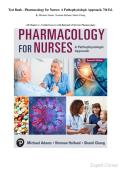
Test Bank - Pharmacology for Nurses: A Pathophysiologic Approach, 7th Ed.
By Michael Adams, Norman Holland, Shanti Chang
(All Chapters 1-, Verified Answers with Rationale, Perfect for Pharmacology)
,Table of Contents
Unit 1 — Core Concepts in Pharmacology
1. Introduction to Pharmacology — 2
2. Drug Approval and Regulation — 11
3. Principles of Drug Administration — 21
4. Pharmacokinetics — 39
5. Pharmacodynamics — 51
Unit 2 — Pharmacology and the Nurse–Patient Relationship (p. 61)
6. The Nursing Process and Clinical Judgment Measurement Model in Pharmacology — 62
7. Medication Errors and Risk Reduction — 71
8. Drug Administration Throughout the Lifespan — 83
9. Individual Variations in Drug Response — 95
10. The Role of Complementary and Alternative Therapies in Pharmacology — 105
11. Emergency Preparedness and Poisonings — 115
Unit 3 — The Nervous System (p. 127)
12. Cholinergic Drugs Affecting the Autonomic Nervous System — 128
13. Adrenergic Drugs Affecting the Autonomic Nervous System — 143
14. Drugs for Anxiety and Sleep Disorders — 155
15. Drugs for Mood and Behavioral Disorders — 169
16. Drugs for Psychoses — 189
17. Drugs for Seizures — 203
18. Drugs for Pain Management — 221
19. Drugs for Local and General Anesthesia — 243
20. Drugs for Degenerative Diseases of the Nervous System — 259
21. Drugs for Muscle Spasms and Spasticity — 277
22. Substance Use Disorder — 289
Unit 4 — The Cardiovascular and Urinary Systems (p. 301)
23. Drugs for Lipid Disorders — 302
24. Diuretic Therapy and Drugs for Chronic Kidney Disease — 317
25. Drugs for Fluid Balance, Electrolyte, and Acid–Base Disorders — 331
26. Drugs for Hypertension — 345
27. Drugs for Heart Failure — 365
28. Drugs for Angina Pectoris and Myocardial Infarction — 379
29. Drugs for Shock — 395
30. Drugs for Dysrhythmias — 407
31. Drugs for Coagulation Disorders — 423
32. Drugs for Hematopoietic Disorders — 441
Unit 5 — The Immune System (p. 455)
33. Drugs for Inflammation and Fever — 456
34. Drugs for Immune System Modulation — 471
35. Drugs for Bacterial Infections — 491
36. Drugs for Tubercular, Fungal, Protozoan, and Helminthic Infections — 517
37. Drugs for Viral Infections — 537
38. Drugs for Neoplasia — 557
,Unit 6 — The Respiratory System (p. 581)
39. Drugs for Allergic Rhinitis and the Common Cold — 582
40. Drugs for Asthma and Other Pulmonary Disorders — 597
Unit 7 — The Gastrointestinal System (p. 613)
41. Drugs for Peptic Ulcer Disease — 614
42. Drugs for Bowel Disorders and Other Gastrointestinal Conditions — 629
43. Drugs for Nutritional Disorders — 647
Unit 8 — The Endocrine System (p. 667)
44. Drugs for Pituitary, Thyroid, and Adrenal Disorders — 668
45. Drugs for Diabetes Mellitus — 689
46. Drugs for Disorders and Conditions of the Female Reproductive System — 705
47. Drugs for Disorders and Conditions of the Male Reproductive System — 727
Unit 9 — The Integumentary System, Eyes, and Ears (p. 741)
48. Drugs for Bone and Joint Disorders — 742
49. Drugs for Skin Disorders — 765
50. Drugs for Eye and Ear Disorders — 783
, Unit 1 — Core Concepts in Pharmacology
Chapter 1: Introduction to Pharmacology
The nurse is teaching a pharmacology class to student nurses. What does the nurse include as key events in the
history of pharmacology?
Note: Credit will be given only if all correct choices and no incorrect choices are selected. Standard Text: Select
all that apply.
1. Initial drugs included morphine, cocaine, and penicillin.
2. Early researchers used themselves as test subjects.
3. The initial intention of pharmacology was to relieve human suffering.
4. Modern pharmacology began in the early 1600s.
5. Pharmacologists synthesized drugs in the laboratory in the twentieth century.
Answers: 2,3,5
Rationale 1: Initial drugs isolated from complex mixtures included morphine, colchicine, curare, and cocaine,
but not penicillin.
Rationale 2: Some early researchers, such as Friedrich Serturner, used themselves as test subjects.
Rationale 3: The early roots of pharmacology included the application of products to relieve human suffering.
Rationale 4: Modern pharmacology began in the early 1800s, not the 1600s
Rationale 5: By the twentieth century, pharmacologists could synthesize drugs in the laboratory.
Global Rationale: The early roots of pharmacology included the application of products to relieve human
suffering, and early researchers used themselves as test subjects. Initial drugs
included morphine, colchicines, curare, and cocaine, but not penicillin. Modern pharmacology began in the
early 1800s, not the 1600s. By the twentieth century, pharmacologists could
synthesize drugs in the laboratory.
Cognitive Level: Applying
By Michael Adams, Norman Holland, Shanti Chang
(All Chapters 1-, Verified Answers with Rationale, Perfect for Pharmacology)
,Table of Contents
Unit 1 — Core Concepts in Pharmacology
1. Introduction to Pharmacology — 2
2. Drug Approval and Regulation — 11
3. Principles of Drug Administration — 21
4. Pharmacokinetics — 39
5. Pharmacodynamics — 51
Unit 2 — Pharmacology and the Nurse–Patient Relationship (p. 61)
6. The Nursing Process and Clinical Judgment Measurement Model in Pharmacology — 62
7. Medication Errors and Risk Reduction — 71
8. Drug Administration Throughout the Lifespan — 83
9. Individual Variations in Drug Response — 95
10. The Role of Complementary and Alternative Therapies in Pharmacology — 105
11. Emergency Preparedness and Poisonings — 115
Unit 3 — The Nervous System (p. 127)
12. Cholinergic Drugs Affecting the Autonomic Nervous System — 128
13. Adrenergic Drugs Affecting the Autonomic Nervous System — 143
14. Drugs for Anxiety and Sleep Disorders — 155
15. Drugs for Mood and Behavioral Disorders — 169
16. Drugs for Psychoses — 189
17. Drugs for Seizures — 203
18. Drugs for Pain Management — 221
19. Drugs for Local and General Anesthesia — 243
20. Drugs for Degenerative Diseases of the Nervous System — 259
21. Drugs for Muscle Spasms and Spasticity — 277
22. Substance Use Disorder — 289
Unit 4 — The Cardiovascular and Urinary Systems (p. 301)
23. Drugs for Lipid Disorders — 302
24. Diuretic Therapy and Drugs for Chronic Kidney Disease — 317
25. Drugs for Fluid Balance, Electrolyte, and Acid–Base Disorders — 331
26. Drugs for Hypertension — 345
27. Drugs for Heart Failure — 365
28. Drugs for Angina Pectoris and Myocardial Infarction — 379
29. Drugs for Shock — 395
30. Drugs for Dysrhythmias — 407
31. Drugs for Coagulation Disorders — 423
32. Drugs for Hematopoietic Disorders — 441
Unit 5 — The Immune System (p. 455)
33. Drugs for Inflammation and Fever — 456
34. Drugs for Immune System Modulation — 471
35. Drugs for Bacterial Infections — 491
36. Drugs for Tubercular, Fungal, Protozoan, and Helminthic Infections — 517
37. Drugs for Viral Infections — 537
38. Drugs for Neoplasia — 557
,Unit 6 — The Respiratory System (p. 581)
39. Drugs for Allergic Rhinitis and the Common Cold — 582
40. Drugs for Asthma and Other Pulmonary Disorders — 597
Unit 7 — The Gastrointestinal System (p. 613)
41. Drugs for Peptic Ulcer Disease — 614
42. Drugs for Bowel Disorders and Other Gastrointestinal Conditions — 629
43. Drugs for Nutritional Disorders — 647
Unit 8 — The Endocrine System (p. 667)
44. Drugs for Pituitary, Thyroid, and Adrenal Disorders — 668
45. Drugs for Diabetes Mellitus — 689
46. Drugs for Disorders and Conditions of the Female Reproductive System — 705
47. Drugs for Disorders and Conditions of the Male Reproductive System — 727
Unit 9 — The Integumentary System, Eyes, and Ears (p. 741)
48. Drugs for Bone and Joint Disorders — 742
49. Drugs for Skin Disorders — 765
50. Drugs for Eye and Ear Disorders — 783
, Unit 1 — Core Concepts in Pharmacology
Chapter 1: Introduction to Pharmacology
The nurse is teaching a pharmacology class to student nurses. What does the nurse include as key events in the
history of pharmacology?
Note: Credit will be given only if all correct choices and no incorrect choices are selected. Standard Text: Select
all that apply.
1. Initial drugs included morphine, cocaine, and penicillin.
2. Early researchers used themselves as test subjects.
3. The initial intention of pharmacology was to relieve human suffering.
4. Modern pharmacology began in the early 1600s.
5. Pharmacologists synthesized drugs in the laboratory in the twentieth century.
Answers: 2,3,5
Rationale 1: Initial drugs isolated from complex mixtures included morphine, colchicine, curare, and cocaine,
but not penicillin.
Rationale 2: Some early researchers, such as Friedrich Serturner, used themselves as test subjects.
Rationale 3: The early roots of pharmacology included the application of products to relieve human suffering.
Rationale 4: Modern pharmacology began in the early 1800s, not the 1600s
Rationale 5: By the twentieth century, pharmacologists could synthesize drugs in the laboratory.
Global Rationale: The early roots of pharmacology included the application of products to relieve human
suffering, and early researchers used themselves as test subjects. Initial drugs
included morphine, colchicines, curare, and cocaine, but not penicillin. Modern pharmacology began in the
early 1800s, not the 1600s. By the twentieth century, pharmacologists could
synthesize drugs in the laboratory.
Cognitive Level: Applying


