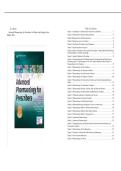
Test Bank: Table of Contents
Advanced Pharmacology for Prescribers 1st Edition Luu Kayingo Latest Chapter 1: An Introduction to Evidence-Based Clinical Practice Guidelines ........................................... 3
Edition, 2024 Chapter 2: Pharmacokinetics /Chapter3: Pharmacodynamics ................................................................. 13
Chapter4: Pharmacogenetics and Pharmacogenomics ............................................................................ 25
Chapter 5: Pharmacology Across the Life Span ..................................................................................... 30
Chapter 6: Drug-Therapy Prescribing in Special Populations................................................................. 36
Chapter 7: Drug Development and Approval ......................................................................................... 45
Chapter 8-Chapter 10: Foundations of Prescription Writing Chapter 9: ResponsibleControlled-Substance
Prescribing Chapter 10: Antibiotic Stewardship ..................................................................................... 51
Chapter 11: Applied Calculations for Prescribing .................................................................................. 58
Chapter 12-: Promoting Adherence With Pharmacotherapy II: System-Specific and Patient-Focused
Prescribing Chapter 13: Pharmacotherapy for Ear, Nose, Mouth, andThroat Conditions /Chapter 14:
Pharmacotherapy for Eye Conditions ..................................................................................................... 67
Chapter 15: Pharmacotherapy for Skin Conditions ................................................................................ 74
Chapter 16: Pharmacotherapy for Neurologic Conditions ...................................................................... 81
Chapter 17: Pharmacotherapy for Cardiovascular Conditions ................................................................ 94
Chapter 18: Pharmacotherapy for Respiratory Conditions ................................................................... 106
Chapter 19: Pharmacotherapy for Gastrointestinal Conditions and Conditions RequiringNutritional
Support ................................................................................................................................................ 117
Chapter 20: Pharmacotherapy for Genitourinary Conditions ................................................................ 128
Chapter 21: Pharmacotherapy for Renal, Acid–Base, Fluid, and Electrolyte Disorders ........................ 133
Chapter 22: Pharmacotherapy for Musculoskeletal and Rheumatologic Conditions ............................. 146
Chapter 23: Therapeutic Applications of Immunology and Vaccines .................................................. 158
Chapter 24: Pharmacotherapy for Endocrine Disorders ....................................................................... 163
Chapter 25: Pharmacotherapy for Hematologic Disorders ................................................................... 174
Chapter 26: Hematology/Oncology and Supportive Care for the Nononcologist .................................. 190
Chapter 27: Pharmacotherapy Related to Women’s Health Conditions ............................................... 196
Chapter 28: Pharmacotherapy Related to Men’s Health Conditions ..................................................... 211
Chapter 29: Pharmacotherapy Related to Transgender Care ................................................................ 217
Chapter 30: Antimicrobial Pharmacotherapy ....................................................................................... 224
Chapter 31: Antiretroviral Pharmacotherapy ........................................................................................ 235
Chapter 32: Psychopharmacology and Integrative Health: Combined Treatment ofPsychiatric and
Neurocognitive Conditions .................................................................................................................. 247
Chapter 33: Pharmacotherapy for Pain Management ........................................................................... 257
Chapter 34: Substance Use Disorder III: Health Promotion and Maintenance...................................... 267
Chapter 35: Over-the-Counter Medications ......................................................................................... 283
Chapter 36: Pharmacotherapy for Obesity ........................................................................................... 291
Advanced Pharmacology for Prescribers 1st Edition Luu Kayingo Latest Chapter 1: An Introduction to Evidence-Based Clinical Practice Guidelines ........................................... 3
Edition, 2024 Chapter 2: Pharmacokinetics /Chapter3: Pharmacodynamics ................................................................. 13
Chapter4: Pharmacogenetics and Pharmacogenomics ............................................................................ 25
Chapter 5: Pharmacology Across the Life Span ..................................................................................... 30
Chapter 6: Drug-Therapy Prescribing in Special Populations................................................................. 36
Chapter 7: Drug Development and Approval ......................................................................................... 45
Chapter 8-Chapter 10: Foundations of Prescription Writing Chapter 9: ResponsibleControlled-Substance
Prescribing Chapter 10: Antibiotic Stewardship ..................................................................................... 51
Chapter 11: Applied Calculations for Prescribing .................................................................................. 58
Chapter 12-: Promoting Adherence With Pharmacotherapy II: System-Specific and Patient-Focused
Prescribing Chapter 13: Pharmacotherapy for Ear, Nose, Mouth, andThroat Conditions /Chapter 14:
Pharmacotherapy for Eye Conditions ..................................................................................................... 67
Chapter 15: Pharmacotherapy for Skin Conditions ................................................................................ 74
Chapter 16: Pharmacotherapy for Neurologic Conditions ...................................................................... 81
Chapter 17: Pharmacotherapy for Cardiovascular Conditions ................................................................ 94
Chapter 18: Pharmacotherapy for Respiratory Conditions ................................................................... 106
Chapter 19: Pharmacotherapy for Gastrointestinal Conditions and Conditions RequiringNutritional
Support ................................................................................................................................................ 117
Chapter 20: Pharmacotherapy for Genitourinary Conditions ................................................................ 128
Chapter 21: Pharmacotherapy for Renal, Acid–Base, Fluid, and Electrolyte Disorders ........................ 133
Chapter 22: Pharmacotherapy for Musculoskeletal and Rheumatologic Conditions ............................. 146
Chapter 23: Therapeutic Applications of Immunology and Vaccines .................................................. 158
Chapter 24: Pharmacotherapy for Endocrine Disorders ....................................................................... 163
Chapter 25: Pharmacotherapy for Hematologic Disorders ................................................................... 174
Chapter 26: Hematology/Oncology and Supportive Care for the Nononcologist .................................. 190
Chapter 27: Pharmacotherapy Related to Women’s Health Conditions ............................................... 196
Chapter 28: Pharmacotherapy Related to Men’s Health Conditions ..................................................... 211
Chapter 29: Pharmacotherapy Related to Transgender Care ................................................................ 217
Chapter 30: Antimicrobial Pharmacotherapy ....................................................................................... 224
Chapter 31: Antiretroviral Pharmacotherapy ........................................................................................ 235
Chapter 32: Psychopharmacology and Integrative Health: Combined Treatment ofPsychiatric and
Neurocognitive Conditions .................................................................................................................. 247
Chapter 33: Pharmacotherapy for Pain Management ........................................................................... 257
Chapter 34: Substance Use Disorder III: Health Promotion and Maintenance...................................... 267
Chapter 35: Over-the-Counter Medications ......................................................................................... 283
Chapter 36: Pharmacotherapy for Obesity ........................................................................................... 291