

Part 2 PEDIatrIC, MatErnIty, anD WoMEn’S HEaltH
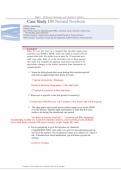
Case Study 131 Normal Newborn
DifÏculty: Intermediate
Setting: Nursery
Index Words: reactivity, phenylketonuria (PKu), colostrum, areola, vitamin K, newborn care,
breastfeeding, parent education
Giddens Concepts: Caregiving, Development, Health Promotion, Patient education
HESI Concepts: Assessment, Caregiving, Developmental, Health Promotion, Patient education
Scenario
Baby H. was just born in a hospital that provides single-room
maternity care (SRMC). SRMC allows the infant to remain with the
parents after birth. H.'s mother was in labor for 12 hours and gave
birth vagi- nally. Baby H. is the first baby born to these parents.
The nurse will complete the physical assessment and observe for
physiologic changes in the infant's transition from intrauterine to
extrauterine life.
1. Name the three phases that occur during this transition period
and state an approximate time frame for each.
1st period of reactivity- 30minutes
Period of inactivity-sleep phase, 2-3hrs after birth
2nd period of reactivity, 4-6hrs after birth
2. What care is specific to the first period of reactivity?
1st breast feed, APGAR score 1 & 5 minutes, VS-q 15min, Dry off & wrap up
3. The sleep phase and second reactive phase might occur in the SRMC
or in the nursery. Identify eight assessments or tasks that the nurse
needs to do during the transitional care period.
VS, Baby in warmer, watch for 1 st urination and BM, attempting
breastfeeding, healthy cry, watch for respiratory distress, assess umbilical cord, Ballards
score, birth meds, vitamin k IM, hep b vaccine, weight, length, HC, bath
4. You are preparing to give the injection of vitamin K
(AquaMEPHYTON). The order is to give 0.5 mg subcutaneously on
arrival in the nursery. The medication comes in a solution of 1 mg/0.5
mL. Calculate how much medication you will draw up into the
syringe.
0.5x0.5/1=0.25mL
Copyright © 2016 by Mosby, Inc., an imprint of Elsevier Inc. All rights
, Part 2 PEDIatrIC, MatErnIty, anD WoMEn’S HEaltH
5. Erythromycin ointment is instilled in both eyes to prevent which of these
infections?
a. Chlamydia
b. Herpes simplex virus infection
c. Gonorrhea
d. Human papillomavirus (HPV) infection
6. Once the transitional care and documentation are completed, the
infant might be transferred to the normal newborn nursery if the
hospital does not use SRMC. The newborn nursery nurse is
responsible for what ongoing care of the newborn infant?
VS, Diaper changes, input & output, find out if baby is breastfeeding
or bottle-support, education feeding, baby sleep on back, car seat,
cord care, q-4 head to toe assessment
7. The laboratory performs a Coombs test on Baby H. What is the purpose of the
Coombs test?
a. It is done to identify the infant's blood type.
b. It tests for damage to the red blood cells (RBCs) from maternal antibodies.
c. It checks the RBCs for anemia.
d. It is a test for immunity to the hepatitis virus.
8. True or False: A phenylketonuria (PKU) blood test can be done any
time before an infant is discharged to home. If false, explain your
rationale.
False, needs to be done once baby has started feeding 2-5 days pp. Heal
stick to see if body can properly break down the proteins
CaSE StuDy ProGrESS
Baby H.'s mother has decided to breastfeed her infant. She asks for
assistance.
9. Identify six important points to include in your teaching plan.
-Feed on each side 15min, q 2hrs
-Wake baby to feed
-Mom adds 500 calories to diet, and stay hydrated
-Breast pads to catch excess
-Cabbage leaves for breast pains
-Ointment to prevent nipple cracking
-Supportive bra
-Prenatal vitamin
Copyright © 2016 by Mosby, Inc., an imprint of Elsevier Inc. All rights
Case Study 131 Normal Newborn
DifÏculty: Intermediate
Setting: Nursery
Index Words: reactivity, phenylketonuria (PKu), colostrum, areola, vitamin K, newborn care,
breastfeeding, parent education
Giddens Concepts: Caregiving, Development, Health Promotion, Patient education
HESI Concepts: Assessment, Caregiving, Developmental, Health Promotion, Patient education
Scenario
Baby H. was just born in a hospital that provides single-room
maternity care (SRMC). SRMC allows the infant to remain with the
parents after birth. H.'s mother was in labor for 12 hours and gave
birth vagi- nally. Baby H. is the first baby born to these parents.
The nurse will complete the physical assessment and observe for
physiologic changes in the infant's transition from intrauterine to
extrauterine life.
1. Name the three phases that occur during this transition period
and state an approximate time frame for each.
1st period of reactivity- 30minutes
Period of inactivity-sleep phase, 2-3hrs after birth
2nd period of reactivity, 4-6hrs after birth
2. What care is specific to the first period of reactivity?
1st breast feed, APGAR score 1 & 5 minutes, VS-q 15min, Dry off & wrap up
3. The sleep phase and second reactive phase might occur in the SRMC
or in the nursery. Identify eight assessments or tasks that the nurse
needs to do during the transitional care period.
VS, Baby in warmer, watch for 1 st urination and BM, attempting
breastfeeding, healthy cry, watch for respiratory distress, assess umbilical cord, Ballards
score, birth meds, vitamin k IM, hep b vaccine, weight, length, HC, bath
4. You are preparing to give the injection of vitamin K
(AquaMEPHYTON). The order is to give 0.5 mg subcutaneously on
arrival in the nursery. The medication comes in a solution of 1 mg/0.5
mL. Calculate how much medication you will draw up into the
syringe.
0.5x0.5/1=0.25mL
Copyright © 2016 by Mosby, Inc., an imprint of Elsevier Inc. All rights
, Part 2 PEDIatrIC, MatErnIty, anD WoMEn’S HEaltH
5. Erythromycin ointment is instilled in both eyes to prevent which of these
infections?
a. Chlamydia
b. Herpes simplex virus infection
c. Gonorrhea
d. Human papillomavirus (HPV) infection
6. Once the transitional care and documentation are completed, the
infant might be transferred to the normal newborn nursery if the
hospital does not use SRMC. The newborn nursery nurse is
responsible for what ongoing care of the newborn infant?
VS, Diaper changes, input & output, find out if baby is breastfeeding
or bottle-support, education feeding, baby sleep on back, car seat,
cord care, q-4 head to toe assessment
7. The laboratory performs a Coombs test on Baby H. What is the purpose of the
Coombs test?
a. It is done to identify the infant's blood type.
b. It tests for damage to the red blood cells (RBCs) from maternal antibodies.
c. It checks the RBCs for anemia.
d. It is a test for immunity to the hepatitis virus.
8. True or False: A phenylketonuria (PKU) blood test can be done any
time before an infant is discharged to home. If false, explain your
rationale.
False, needs to be done once baby has started feeding 2-5 days pp. Heal
stick to see if body can properly break down the proteins
CaSE StuDy ProGrESS
Baby H.'s mother has decided to breastfeed her infant. She asks for
assistance.
9. Identify six important points to include in your teaching plan.
-Feed on each side 15min, q 2hrs
-Wake baby to feed
-Mom adds 500 calories to diet, and stay hydrated
-Breast pads to catch excess
-Cabbage leaves for breast pains
-Ointment to prevent nipple cracking
-Supportive bra
-Prenatal vitamin
Copyright © 2016 by Mosby, Inc., an imprint of Elsevier Inc. All rights


