

NUR 426 EXAM 1 QUESTIONS AND CORRECT RATIONALES
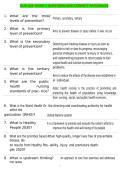
1. What are the three
Primary, secondary, tertiary
levels of prevention?
2. What is the primary
Aims to prevent disease or injury before it ever occurs
level of prevention?
3. What is the secondary
Detecting and treating disease or injury as soon as
level of prevention?
possible to halt or slow its progress, encouraging
personal strategies to prevent re-injury or recurrence,
and implementing programs to return people to their
original health and function to prevent long-term
4. What is the tertiary problems.
level of prevention?
Aims to reduce the ettects of the disease once established in
5. What are the public an individual.
health nursing
Public health nursing is the practice of promoting and
standards of prac- tice?
protecting the health of populations using knowledge
from nursing, social, and public health sciences.
6. What is the World Health Or- the directing and coordinating authority for health
within the
ganization (WHO)? United Nations system
7. What is Healthy It is a framework to promote and evaluate the nation's ettorts to
People 2030? improve the health and well being of its people
8. What are the priorities based Attain high-quality, longer lives free of preventable
disease, dis-
on results from Healthy Peo- ability, injury, and premature death.
ple 2020?
9. What is upstream thinking? An approach to care that examines and addresses
root causes
1/
17
, NUR 426 EXAM 1 QUESTIONS AND CORRECT RATIONALES
rather than symptoms. Upstream thinking focuses on
change at the community level
10.
2/
17
, NUR 426 EXAM 1 QUESTIONS AND CORRECT RATIONALES
What is downstream think- diabetic patient?
ing?
18. What type of prevention is
11. What is the capacity developing a portable im-
for a client to locate,
understand, and apply
healthcare infor-
mation.
12. This means valuing
every- one equally to
address avoidable
inequalities
13. Differences in health
and healthcare between
popula- tions.
14. Avoidable gaps in
health outcomes
15. Includes a range of
person- al, social,
economic, and en-
vironmental factors
16. What type of prevention
is offering healthy cooking
classes for families in
the community
17. What type of
prevention is an annual
vision screening for a
3/
17
1. What are the three
Primary, secondary, tertiary
levels of prevention?
2. What is the primary
Aims to prevent disease or injury before it ever occurs
level of prevention?
3. What is the secondary
Detecting and treating disease or injury as soon as
level of prevention?
possible to halt or slow its progress, encouraging
personal strategies to prevent re-injury or recurrence,
and implementing programs to return people to their
original health and function to prevent long-term
4. What is the tertiary problems.
level of prevention?
Aims to reduce the ettects of the disease once established in
5. What are the public an individual.
health nursing
Public health nursing is the practice of promoting and
standards of prac- tice?
protecting the health of populations using knowledge
from nursing, social, and public health sciences.
6. What is the World Health Or- the directing and coordinating authority for health
within the
ganization (WHO)? United Nations system
7. What is Healthy It is a framework to promote and evaluate the nation's ettorts to
People 2030? improve the health and well being of its people
8. What are the priorities based Attain high-quality, longer lives free of preventable
disease, dis-
on results from Healthy Peo- ability, injury, and premature death.
ple 2020?
9. What is upstream thinking? An approach to care that examines and addresses
root causes
1/
17
, NUR 426 EXAM 1 QUESTIONS AND CORRECT RATIONALES
rather than symptoms. Upstream thinking focuses on
change at the community level
10.
2/
17
, NUR 426 EXAM 1 QUESTIONS AND CORRECT RATIONALES
What is downstream think- diabetic patient?
ing?
18. What type of prevention is
11. What is the capacity developing a portable im-
for a client to locate,
understand, and apply
healthcare infor-
mation.
12. This means valuing
every- one equally to
address avoidable
inequalities
13. Differences in health
and healthcare between
popula- tions.
14. Avoidable gaps in
health outcomes
15. Includes a range of
person- al, social,
economic, and en-
vironmental factors
16. What type of prevention
is offering healthy cooking
classes for families in
the community
17. What type of
prevention is an annual
vision screening for a
3/
17


