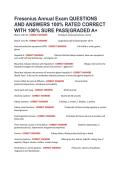
Fresenius Annual Exam QUESTIONS
AND ANSWERS 100% RATED CORRECT
WITH 100% SURE PASS|GRADED A+
Bleach :100. 60 - CORRECT ANSWERS All dialysis surfaces(machines, chairs)
bleach 1:10. 80 - CORRECT ANSWERS Large blood spill of blood greater 10 ml
Personal protective equipment (PPE) - CORRECT ANSWERS Full shield or mask, gowns ,
gloves
Hepatitis B - CORRECT ANSWERS Patients infected dialyze isolation, have own equipment
such as BP cuff and stethoscope , torniquete. etc.
Blood test indicate infection with Hepatitis B - CORRECT ANSWERS HbsAg is the test for the
hepatitis B antigen this indicates actual viral presence " aggressive "
Blood test indicates the presence of immunity against hepatitis B - CORRECT ANSWERS
HbsAb "bore" is the test for antibodies indicates presence of immunity against hepatitis B
Factors affect the rate of diffusion - CORRECT ANSWERS Concentración
gradients,temperature, membrane permeability
Hand wash with soap - CORRECT ANSWERS 40-60 seconds
Hands be sanitizer - CORRECT ANSWERS Alcohol 20-30 seconds
Kidney anatomy - CORRECT ANSWERS 2 kidneys, 2 ureters, 1 bladder, 1 urethra
Kidney some functions - CORRECT ANSWERS Producción of Renin to help regulate or control
blood pressure
Erythropoietin hormone - CORRECT ANSWERS Stimulates the bone marrow to produce red
blood cells
Three common causes of renal failure - CORRECT ANSWERS Diabetes nephropaty, or
glomerulosclerosis, hipertensión and glomerulonephritid.
Uremia - CORRECT ANSWERS Kidney failure; Waste product build up in blood
Uremia symptoms - CORRECT ANSWERS Yellow gray skin, edema, high BP, itching, loss of
appetite, fatigue, nausea, restless, metals change.
Electrolytes in uremia patients - CORRECT ANSWERS Potassium, calcium, phosphates,
magnesium and bicarbonate
, Symptoms of uremia - CORRECT ANSWERS Yellow gray skin, peripheral edema, high blood
pressure, itching, loss appetite, fatigue, nausea, restlessness
Why are renal failure patients aciditic - CORRECT ANSWERS Kidney control acid/base
balances of the blood by excreting hydrogen by produce a buffers know as bicarbonate
Dialysate contains... - CORRECT ANSWERS Sodium, bicarbonate "buffer", pure water
Electrolytes found in the dialysate - CORRECT ANSWERS Na,k,calcium, magnesium and
chloride. Glucose" Dextrose" a non electrolyte is also to dialysate for Dr Rx
Phosphate binders take with meals - CORRECT ANSWERS Tums, amphojel, renagel
Hemoglobin levels for hemodialysis patients - CORRECT ANSWERS According to FMS 10-11
g/dL
What is diabetes? - CORRECT ANSWERS Body either doesn't produce or does not properly
use insulin
End stage renal disease modalities - CORRECT ANSWERS Vascular access to draw blood from
the access to the dialyzer into semipermeable membrane where process of diffusion removes the waste
and ultrafiltration removes fluid
Peritoneal Dialysis - CORRECT ANSWERS Permanently catheter, surrounding the abdominals
organs allowed to dwell on the cavity
Electrolytes to consider in the uremic patients - CORRECT ANSWERS Sodium, potassium,
calcium, phosphate, magnesium and bicarbonate
Blood pH maintain by - CORRECT ANSWERS Buffer and normal pH of blood is 7.35 to 7.45
Metabolic acidosis is - CORRECT ANSWERS A state of too much acid in blood
Dehydration - CORRECT ANSWERS Thirst, dry mucous membranes, sunken eyes, poor skin
turbot, decreased urine output, cramping
Symptoms of hemolysis - CORRECT ANSWERS Light translucent cranberry or cherry, back
pain, chest pain access pain
Crenation symptoms - CORRECT ANSWERS Shortness of breath, thirst, chest, suddenly fall in
bp, flushed face and dark opaque blood
Embolism symptoms - CORRECT ANSWERS Chest pain, shortness of breath and coughing
Fluid overload - CORRECT ANSWERS Edema, productive cough shortness breath, increasing
BP, retlessness, confusing
AND ANSWERS 100% RATED CORRECT
WITH 100% SURE PASS|GRADED A+
Bleach :100. 60 - CORRECT ANSWERS All dialysis surfaces(machines, chairs)
bleach 1:10. 80 - CORRECT ANSWERS Large blood spill of blood greater 10 ml
Personal protective equipment (PPE) - CORRECT ANSWERS Full shield or mask, gowns ,
gloves
Hepatitis B - CORRECT ANSWERS Patients infected dialyze isolation, have own equipment
such as BP cuff and stethoscope , torniquete. etc.
Blood test indicate infection with Hepatitis B - CORRECT ANSWERS HbsAg is the test for the
hepatitis B antigen this indicates actual viral presence " aggressive "
Blood test indicates the presence of immunity against hepatitis B - CORRECT ANSWERS
HbsAb "bore" is the test for antibodies indicates presence of immunity against hepatitis B
Factors affect the rate of diffusion - CORRECT ANSWERS Concentración
gradients,temperature, membrane permeability
Hand wash with soap - CORRECT ANSWERS 40-60 seconds
Hands be sanitizer - CORRECT ANSWERS Alcohol 20-30 seconds
Kidney anatomy - CORRECT ANSWERS 2 kidneys, 2 ureters, 1 bladder, 1 urethra
Kidney some functions - CORRECT ANSWERS Producción of Renin to help regulate or control
blood pressure
Erythropoietin hormone - CORRECT ANSWERS Stimulates the bone marrow to produce red
blood cells
Three common causes of renal failure - CORRECT ANSWERS Diabetes nephropaty, or
glomerulosclerosis, hipertensión and glomerulonephritid.
Uremia - CORRECT ANSWERS Kidney failure; Waste product build up in blood
Uremia symptoms - CORRECT ANSWERS Yellow gray skin, edema, high BP, itching, loss of
appetite, fatigue, nausea, restless, metals change.
Electrolytes in uremia patients - CORRECT ANSWERS Potassium, calcium, phosphates,
magnesium and bicarbonate
, Symptoms of uremia - CORRECT ANSWERS Yellow gray skin, peripheral edema, high blood
pressure, itching, loss appetite, fatigue, nausea, restlessness
Why are renal failure patients aciditic - CORRECT ANSWERS Kidney control acid/base
balances of the blood by excreting hydrogen by produce a buffers know as bicarbonate
Dialysate contains... - CORRECT ANSWERS Sodium, bicarbonate "buffer", pure water
Electrolytes found in the dialysate - CORRECT ANSWERS Na,k,calcium, magnesium and
chloride. Glucose" Dextrose" a non electrolyte is also to dialysate for Dr Rx
Phosphate binders take with meals - CORRECT ANSWERS Tums, amphojel, renagel
Hemoglobin levels for hemodialysis patients - CORRECT ANSWERS According to FMS 10-11
g/dL
What is diabetes? - CORRECT ANSWERS Body either doesn't produce or does not properly
use insulin
End stage renal disease modalities - CORRECT ANSWERS Vascular access to draw blood from
the access to the dialyzer into semipermeable membrane where process of diffusion removes the waste
and ultrafiltration removes fluid
Peritoneal Dialysis - CORRECT ANSWERS Permanently catheter, surrounding the abdominals
organs allowed to dwell on the cavity
Electrolytes to consider in the uremic patients - CORRECT ANSWERS Sodium, potassium,
calcium, phosphate, magnesium and bicarbonate
Blood pH maintain by - CORRECT ANSWERS Buffer and normal pH of blood is 7.35 to 7.45
Metabolic acidosis is - CORRECT ANSWERS A state of too much acid in blood
Dehydration - CORRECT ANSWERS Thirst, dry mucous membranes, sunken eyes, poor skin
turbot, decreased urine output, cramping
Symptoms of hemolysis - CORRECT ANSWERS Light translucent cranberry or cherry, back
pain, chest pain access pain
Crenation symptoms - CORRECT ANSWERS Shortness of breath, thirst, chest, suddenly fall in
bp, flushed face and dark opaque blood
Embolism symptoms - CORRECT ANSWERS Chest pain, shortness of breath and coughing
Fluid overload - CORRECT ANSWERS Edema, productive cough shortness breath, increasing
BP, retlessness, confusing