
Review Guide for A&P II- Test #4
Chapter 26- Urinary System
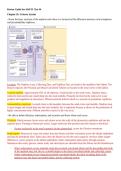
- Know the basic structure of the nephron and where it is located and the difference between cortical nephrons
and juxtamedullary nephrons.
Location: The Nephron Loop, Collecting Duct, and Papillary Duct are found in the medulla of the kidney. The
Renal Corpuscle, the Proximal and Distal Convoluted Tubules are located in the renal cortex of the kidney.
Cortical nephron: Approximately 85% of all nephrons. Found mainly in the renal cortex. Nephron loop is
relatively short and do not extend deep into the renal medulla. Primarily involved in the removal of waste
products and regulation of electrolytes. Efferent arteriole delivers blood to a network of peritubular capillaries.
Juxtamedullary nephrons: Located closer to the boundary between the renal cortex and medulla. Nephron loop
is much longer and extend deep into the renal medulla, this is important because it allows for the production of
highly concentrated urine. Efferent arterioles connect to the vasa recta.
- Be able to define filtration, reabsorption, and secretion and know where each occur.
Filtration: Blood pressure forces water and solutes across the walls of the glomerular capillaries and into the
capsular space. Forming a filtrate (pre-urine). Larger molecules like proteins and cells remain in the blood.
- Occurs exclusively in the renal corpuscle (in the glomerulus), across the filtration membrane
Reabsorption: Removal of water and solutes from the filtrate, and their movement across the tubular epithelium
and into the peritubular fluid. Takes place after the filtrate has left the renal corpuscle. Involves either simple
diffusion or carrier proteins in the tubular epithelium. Water reabsorption takes places through osmosis.
Substances like water, glucose, amino acids, and electrolytes are absorbed from the filtrate into the bloodstream.
- Water reabsorption occurs primarily along the proximal convoluted tubule and the descending thin limb
of the nephron loop, but also to a variable degree in the distal convoluted tubule and collecting system
- Solute reabsorption occurs along the proximal convoluted tubule, the thick ascending limb of the
nephron loop, the distal convoluted tubule, and the collecting system
, Secretion: Transport of solutes from the peritubular fluid, across the tubular epithelium, and into the tubular
fluid. Necessary because filtration does not force all the dissolved substances out of the plasma. Active transport
of waste products and toxins (H+, K+, and drugs) from the blood into the nephron to be eliminated in urine.
- Mostly occurs in the distal convoluted tubule and collecting duct, some also occurs in the proximal
convoluted tubule
- Know the function of the Loop of Henle’. Plays a crucial role in concentrating urine and conserving water in
the body.
- Creates a gradient of solute concentration in the renal medulla that allows the kidneys to produce
concentrated urine when needed, helping conserve water
- Selective reabsorption:
o Descending limb: water is reabsorbed into the bloodstream, making the filtrate more
concentrated
o Ascending limb: Na+ and Cl- ions are actively transported out of the filtrate, but water cannot
follow, making the filtrate more dilute
- Be able to explain how Starling forces apply to filtration and how changes to these forces changes filtration.
- Hydrostatic Pressure: Pressure exerted by fluid.
o Glomerular capillary hydrostatic pressure pushes water and solutes out of the capillaries into
Bowman’s capsule, promoting filtration
Increased (due to higher blood pressure): Leads to greater filtration as the forced
pushing fluid out of the capillaries increases
Decreased (due to low blood pressure or narrowing of afferent arterioles): Reduces
filtration
Opposed by Bowman’s capsule hydrostatic pressure by pushing fluid back into the
capillaries
Increased (due to obstruction in the urinary tract): Decrease filtration as it
opposes fluid flow out of the capillaries
- Oncotic (Colloid Osmotic) Pressure: Results from proteins like albumin in the blood plasma, which
draw water back into the capillaries.
o Reduced (due to lower plasma protein levels): Increases filtration because there’s less
resistance pulling fluid back into the capillaries
o Glomerular capillary oncotic pressure resists filtration
- Understand the concept of obligatory and facultative water loss and their relationship with the concentration of
urine.
Obligatory water loss: Minimum amount of water that must be excreted to eliminate waste products such as
urea and excess electrolytes. Occurs regardless of hydration status.
- Results in more dilute urine if the body has excess water, but if the water is limited, this process still
contributes to a baseline amount of urine production.
Facultative water loss: Variable amount of water excreted depending on the body’s hydration status and the
action of hormones like ADH
- When ADH levels are high (during dehydration), more water is reabsorbed into the bloodstream,
resulting in more concentrated urine.
- When ADH levels are low (during overhydration), less water is reabsorbed, resulting in dilute urine.
Chapter 26- Urinary System
- Know the basic structure of the nephron and where it is located and the difference between cortical nephrons
and juxtamedullary nephrons.
Location: The Nephron Loop, Collecting Duct, and Papillary Duct are found in the medulla of the kidney. The
Renal Corpuscle, the Proximal and Distal Convoluted Tubules are located in the renal cortex of the kidney.
Cortical nephron: Approximately 85% of all nephrons. Found mainly in the renal cortex. Nephron loop is
relatively short and do not extend deep into the renal medulla. Primarily involved in the removal of waste
products and regulation of electrolytes. Efferent arteriole delivers blood to a network of peritubular capillaries.
Juxtamedullary nephrons: Located closer to the boundary between the renal cortex and medulla. Nephron loop
is much longer and extend deep into the renal medulla, this is important because it allows for the production of
highly concentrated urine. Efferent arterioles connect to the vasa recta.
- Be able to define filtration, reabsorption, and secretion and know where each occur.
Filtration: Blood pressure forces water and solutes across the walls of the glomerular capillaries and into the
capsular space. Forming a filtrate (pre-urine). Larger molecules like proteins and cells remain in the blood.
- Occurs exclusively in the renal corpuscle (in the glomerulus), across the filtration membrane
Reabsorption: Removal of water and solutes from the filtrate, and their movement across the tubular epithelium
and into the peritubular fluid. Takes place after the filtrate has left the renal corpuscle. Involves either simple
diffusion or carrier proteins in the tubular epithelium. Water reabsorption takes places through osmosis.
Substances like water, glucose, amino acids, and electrolytes are absorbed from the filtrate into the bloodstream.
- Water reabsorption occurs primarily along the proximal convoluted tubule and the descending thin limb
of the nephron loop, but also to a variable degree in the distal convoluted tubule and collecting system
- Solute reabsorption occurs along the proximal convoluted tubule, the thick ascending limb of the
nephron loop, the distal convoluted tubule, and the collecting system
, Secretion: Transport of solutes from the peritubular fluid, across the tubular epithelium, and into the tubular
fluid. Necessary because filtration does not force all the dissolved substances out of the plasma. Active transport
of waste products and toxins (H+, K+, and drugs) from the blood into the nephron to be eliminated in urine.
- Mostly occurs in the distal convoluted tubule and collecting duct, some also occurs in the proximal
convoluted tubule
- Know the function of the Loop of Henle’. Plays a crucial role in concentrating urine and conserving water in
the body.
- Creates a gradient of solute concentration in the renal medulla that allows the kidneys to produce
concentrated urine when needed, helping conserve water
- Selective reabsorption:
o Descending limb: water is reabsorbed into the bloodstream, making the filtrate more
concentrated
o Ascending limb: Na+ and Cl- ions are actively transported out of the filtrate, but water cannot
follow, making the filtrate more dilute
- Be able to explain how Starling forces apply to filtration and how changes to these forces changes filtration.
- Hydrostatic Pressure: Pressure exerted by fluid.
o Glomerular capillary hydrostatic pressure pushes water and solutes out of the capillaries into
Bowman’s capsule, promoting filtration
Increased (due to higher blood pressure): Leads to greater filtration as the forced
pushing fluid out of the capillaries increases
Decreased (due to low blood pressure or narrowing of afferent arterioles): Reduces
filtration
Opposed by Bowman’s capsule hydrostatic pressure by pushing fluid back into the
capillaries
Increased (due to obstruction in the urinary tract): Decrease filtration as it
opposes fluid flow out of the capillaries
- Oncotic (Colloid Osmotic) Pressure: Results from proteins like albumin in the blood plasma, which
draw water back into the capillaries.
o Reduced (due to lower plasma protein levels): Increases filtration because there’s less
resistance pulling fluid back into the capillaries
o Glomerular capillary oncotic pressure resists filtration
- Understand the concept of obligatory and facultative water loss and their relationship with the concentration of
urine.
Obligatory water loss: Minimum amount of water that must be excreted to eliminate waste products such as
urea and excess electrolytes. Occurs regardless of hydration status.
- Results in more dilute urine if the body has excess water, but if the water is limited, this process still
contributes to a baseline amount of urine production.
Facultative water loss: Variable amount of water excreted depending on the body’s hydration status and the
action of hormones like ADH
- When ADH levels are high (during dehydration), more water is reabsorbed into the bloodstream,
resulting in more concentrated urine.
- When ADH levels are low (during overhydration), less water is reabsorbed, resulting in dilute urine.


