
NSG5003- Advanced Patho Week 1
Study online at https://quizlet.com/_gl92p2
1. Nucleus: contains genetic information and regulates cell growth, metabolism, and reproduction.
2. Mitochondria: breaks down glucose producing energy (ATP)
3. Ribosome: synthesizes proteins
4. Endoplasmic Reticulum: production of phospholipids
5. Lysosome: Digest materials engulfed by cells
6. Cytoskeleton: Helps transport molecules inside cell and binds to enzymes of metabolic pathways
7. Golgi: sorts, chemically modifies and packages proteins
8. Diffusion: Movement of molecules from an area of higher concentration to an area of lower concentration.
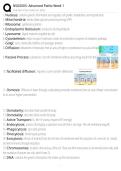
9. Passive Process: substances cross the membrane without any energy input from the cell
10. facilitated diffusion: requires a carrier protein (Molecule)
11. Osmosis: Diffusion of water through a selectively permeable membrane from an area of lower concentration
to an area of higher concentration
12. Osmolarity: describes fluid outside the body
13. Osmolality: describes fluids inside the body
14. Active Transport: Ex. NA+ K+ pump, requires ATP (energy)
15. Endocytosis: process of bringing a substance into cell that is too large. The cell membrane engulfs.
16. Phagocytosis: eats solid particles
17. Pinocytosis: drinks liquid particles
18. Exocytosis: release of material from the cell into cell membrane with the assistance of a vessicle. Ex. Glands
secrete hormones through exocytosis
19. Chromosomes: located in the nucleus of the cell. There are 46 chromosomes in all normal human cells, with
the exception of mature sex cells, which have 23.
20. DNA: contains the genetic information that makes up the chromosomes.
1/8
, NSG5003- Advanced Patho Week 1
Study online at https://quizlet.com/_gl92p2
21. Chromatin: Clusters of DNA, RNA, and proteins in the nucleus of a cell that is wrapped around histone proteins
22. base pairing: Adenine+ Thymine, Cytosine+ Guanine
23. Genes: DNA segments that serve as the key functional units in hereditary transmission.
24. Genotype: genetic makeup of an organism
25. Karotype: Gene blueprint
26. Genome: the complete instructions for making an organism, consisting of all the genetic material in that
organism's chromosomes
27. Phenotype: An organism's physical appearance, or visible traits.
28. proliferation: The regulated process by which cells divide and reproduce.
29. Mitosis: cell division in which the nucleus divides into nuclei containing the same number of chromosomes.
(Creates Diploid)
30. Meosis: The process that occurs in the formation of sex cells (sperm and egg) by which the number of
chromosomes is reduced by half. (creates haploid)
31. Differentiation: process in which cells become specialized in structure and function (cell maturation)
32. epithelial tissue: Tissue that covers outside of the body and lines organs and cavities.
33. connective tissue: A body tissue that provides support for the body and connects all of its parts. Fibroblast
cells create fiber: collagen, elastic, and reticular
34. muscle tissue: A body tissue that contracts or shortens, making body parts move. Myocytes, action potential
leades to depolarization and release of calcium
35. neural tissue: conducts electrical impulses, carries information.
36. atrophy: cellular work decreases and cells decrease in size and number
37. hypertrophy: increase in cell size. Can be normal or abnormal. Abnormal changes to the heart can lead to
heart failure and disease.
38. Hyperplasia: increase in number of cells, leading to an increase in the organ size. Normal= menstration, liver
regeneration, wound healing. Abnormal= abnormal hormonal stimulation, endometerial hyperplasia
39. Metaplasia: Mature cell type is replaced by a different mature cell type. Usually caused by chronic inflamation
or irritation
2/8
Study online at https://quizlet.com/_gl92p2
1. Nucleus: contains genetic information and regulates cell growth, metabolism, and reproduction.
2. Mitochondria: breaks down glucose producing energy (ATP)
3. Ribosome: synthesizes proteins
4. Endoplasmic Reticulum: production of phospholipids
5. Lysosome: Digest materials engulfed by cells
6. Cytoskeleton: Helps transport molecules inside cell and binds to enzymes of metabolic pathways
7. Golgi: sorts, chemically modifies and packages proteins
8. Diffusion: Movement of molecules from an area of higher concentration to an area of lower concentration.
9. Passive Process: substances cross the membrane without any energy input from the cell
10. facilitated diffusion: requires a carrier protein (Molecule)
11. Osmosis: Diffusion of water through a selectively permeable membrane from an area of lower concentration
to an area of higher concentration
12. Osmolarity: describes fluid outside the body
13. Osmolality: describes fluids inside the body
14. Active Transport: Ex. NA+ K+ pump, requires ATP (energy)
15. Endocytosis: process of bringing a substance into cell that is too large. The cell membrane engulfs.
16. Phagocytosis: eats solid particles
17. Pinocytosis: drinks liquid particles
18. Exocytosis: release of material from the cell into cell membrane with the assistance of a vessicle. Ex. Glands
secrete hormones through exocytosis
19. Chromosomes: located in the nucleus of the cell. There are 46 chromosomes in all normal human cells, with
the exception of mature sex cells, which have 23.
20. DNA: contains the genetic information that makes up the chromosomes.
1/8
, NSG5003- Advanced Patho Week 1
Study online at https://quizlet.com/_gl92p2
21. Chromatin: Clusters of DNA, RNA, and proteins in the nucleus of a cell that is wrapped around histone proteins
22. base pairing: Adenine+ Thymine, Cytosine+ Guanine
23. Genes: DNA segments that serve as the key functional units in hereditary transmission.
24. Genotype: genetic makeup of an organism
25. Karotype: Gene blueprint
26. Genome: the complete instructions for making an organism, consisting of all the genetic material in that
organism's chromosomes
27. Phenotype: An organism's physical appearance, or visible traits.
28. proliferation: The regulated process by which cells divide and reproduce.
29. Mitosis: cell division in which the nucleus divides into nuclei containing the same number of chromosomes.
(Creates Diploid)
30. Meosis: The process that occurs in the formation of sex cells (sperm and egg) by which the number of
chromosomes is reduced by half. (creates haploid)
31. Differentiation: process in which cells become specialized in structure and function (cell maturation)
32. epithelial tissue: Tissue that covers outside of the body and lines organs and cavities.
33. connective tissue: A body tissue that provides support for the body and connects all of its parts. Fibroblast
cells create fiber: collagen, elastic, and reticular
34. muscle tissue: A body tissue that contracts or shortens, making body parts move. Myocytes, action potential
leades to depolarization and release of calcium
35. neural tissue: conducts electrical impulses, carries information.
36. atrophy: cellular work decreases and cells decrease in size and number
37. hypertrophy: increase in cell size. Can be normal or abnormal. Abnormal changes to the heart can lead to
heart failure and disease.
38. Hyperplasia: increase in number of cells, leading to an increase in the organ size. Normal= menstration, liver
regeneration, wound healing. Abnormal= abnormal hormonal stimulation, endometerial hyperplasia
39. Metaplasia: Mature cell type is replaced by a different mature cell type. Usually caused by chronic inflamation
or irritation
2/8


