

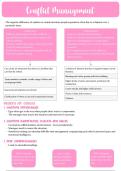
Conflict Management
• The negative di erence of opinion or varied emotions people experience often due to a dispute over a
particular issue.
Functional Dysfunctional
• Di erent parties deal with the con ict in a • Leads to a decline in productivity.
manner that is healthy and they respect each • Often as a result of misconceptions, ambitions,
others opinions. egos or an unwillingness to compromise.
• Positive con ict that leads to more innovation, • Misunderstandings and a lack of communication
creativity and productivity. is central.
• Devils advocate: someone that points out the • Has a negative impact on the business.
aws in a concept or task. • If a comrpomise can’t be reached, the manager
must intervene.
Can create an awareness that there is a problem that A climate of mistrust that has a negative impact on the
can then be solved. business.
Blaming each other, gossip and back stabbing.
Team members consider a wider range of ideas and
Higher levels of stress and anxiety and lower job
avoid group-think.
satisfaction.
Lower morale and higher sta turnover.
Inaccurate perceptions are cleared.
Waste of time and resources.
Clari cation of views occurs and cooperation ensues.
Violence
Reasons for conflict
1. Different personalities
• Egos often get in the way when people don’t want to compromise.
• The manager must assess the situation and intervene if necessary.
2. Different backgrounds, cultures and values
• Can lead to ru ed feathers and irritations = lower producitivity.
• Managers need to assess the situation.
• Sensitivity training can develop skills like time management, respspecting each other’s personal space and
emotional intelligence.
3. Poor communication
• Leads to misunderstandings.
Role Overload: Role Con ict: Role Ambiguity:
One person has to do All team members Team members don’t
moere than they can want to perform a know what role they
cope with. certain task. play.
fl ff fi
fl fl fflff ff fl
• The negative di erence of opinion or varied emotions people experience often due to a dispute over a
particular issue.
Functional Dysfunctional
• Di erent parties deal with the con ict in a • Leads to a decline in productivity.
manner that is healthy and they respect each • Often as a result of misconceptions, ambitions,
others opinions. egos or an unwillingness to compromise.
• Positive con ict that leads to more innovation, • Misunderstandings and a lack of communication
creativity and productivity. is central.
• Devils advocate: someone that points out the • Has a negative impact on the business.
aws in a concept or task. • If a comrpomise can’t be reached, the manager
must intervene.
Can create an awareness that there is a problem that A climate of mistrust that has a negative impact on the
can then be solved. business.
Blaming each other, gossip and back stabbing.
Team members consider a wider range of ideas and
Higher levels of stress and anxiety and lower job
avoid group-think.
satisfaction.
Lower morale and higher sta turnover.
Inaccurate perceptions are cleared.
Waste of time and resources.
Clari cation of views occurs and cooperation ensues.
Violence
Reasons for conflict
1. Different personalities
• Egos often get in the way when people don’t want to compromise.
• The manager must assess the situation and intervene if necessary.
2. Different backgrounds, cultures and values
• Can lead to ru ed feathers and irritations = lower producitivity.
• Managers need to assess the situation.
• Sensitivity training can develop skills like time management, respspecting each other’s personal space and
emotional intelligence.
3. Poor communication
• Leads to misunderstandings.
Role Overload: Role Con ict: Role Ambiguity:
One person has to do All team members Team members don’t
moere than they can want to perform a know what role they
cope with. certain task. play.
fl ff fi
fl fl fflff ff fl


