NR507- Advanced Pathophysiology Final Exam Chamberlain
University-Illinois COMPLETE VERSION WITH UPDATED
QUESTIONS AND ACCURATE DETAILED ANSWERS\VERIFIED
100% GRADED A+
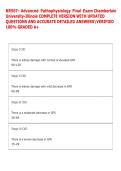
Stage I CKD
There is kidney damage with normal or elevated GFR
90-120
Stage II CKD
There is kidney damage with mild decrease in GFR
60-89
Stage III CKD
There is a moderate decrease in GFR
30-59
Stage IV CKD
There is a severe decrease in GFR
15-29
,Stage V CKD
Kidney failure- End-stage renal disease
<15 (dialysis) Once Stage IV is reached, progression to Stage V is inevitable as
well as dialysis or kidney transplant
Complications of Decreased GFR
Anemia
Hypertension
Decreased calcium absorption
Hyperlipidemia
Heart failure
Left ventricular hypertrophy
Fluid volume overload
Hyperkalemia
Hyperparathyroidism
Hyperphosphatemia
Metabolic acidosis
Malnutrition (late complication)
, GERD
Warning signs include: Symptoms over age of 50:
-Dysphagia (difficulty swallowing)
-Odynophagia (pain on swallowing)
-Nausea and vomiting
-Weight loss
-Melena
-Early satiety (feeling full after eating very little food
Hiatal Hernia
Often asymptomatic
Generally, a wide variety of symptoms develop later in life and are associated
with other GI disorders, primarily GERD
--Sliding hiatal hernia: treatment usually conservative. Individuals can diminish
reflux by eating small, frequent meals and avoiding the recumbent position after
eating. Abdominal supports and tight clothing are avoided and weight control
recommended for obese individuals.
University-Illinois COMPLETE VERSION WITH UPDATED
QUESTIONS AND ACCURATE DETAILED ANSWERS\VERIFIED
100% GRADED A+
Stage I CKD
There is kidney damage with normal or elevated GFR
90-120
Stage II CKD
There is kidney damage with mild decrease in GFR
60-89
Stage III CKD
There is a moderate decrease in GFR
30-59
Stage IV CKD
There is a severe decrease in GFR
15-29
,Stage V CKD
Kidney failure- End-stage renal disease
<15 (dialysis) Once Stage IV is reached, progression to Stage V is inevitable as
well as dialysis or kidney transplant
Complications of Decreased GFR
Anemia
Hypertension
Decreased calcium absorption
Hyperlipidemia
Heart failure
Left ventricular hypertrophy
Fluid volume overload
Hyperkalemia
Hyperparathyroidism
Hyperphosphatemia
Metabolic acidosis
Malnutrition (late complication)
, GERD
Warning signs include: Symptoms over age of 50:
-Dysphagia (difficulty swallowing)
-Odynophagia (pain on swallowing)
-Nausea and vomiting
-Weight loss
-Melena
-Early satiety (feeling full after eating very little food
Hiatal Hernia
Often asymptomatic
Generally, a wide variety of symptoms develop later in life and are associated
with other GI disorders, primarily GERD
--Sliding hiatal hernia: treatment usually conservative. Individuals can diminish
reflux by eating small, frequent meals and avoiding the recumbent position after
eating. Abdominal supports and tight clothing are avoided and weight control
recommended for obese individuals.