-
EEG -
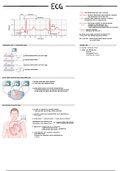
P Wave : atrial depolarisation before atrial contract on
QRS complex : ventricular depolarisation before ventricular contract on
atrial repolarization occurs Within QRS
T wave : ventricvlar repolarization after ventricular contract on
pro long ed Wave with less voltage than QRS
PQIPR intervall : time between ex citation of atria and ventricles
0,16 sec beginning Of P Until beginning of QIR
potential remains in AV node for 0,08 sec
↳ all OWS atrial con traction before ventricular con traction
QT Intervall : ventricular contract on
0,35 sec beginning of QIR until end Of T
no potential during complete polarisation and depolarization
↳ current flows only in partia lly ( de ) paar ited ventricles
rate of heartbeat =
reciprocal of time Intervall between two beats
I see on ECGE 60 bpm
depolarisation Waves vs . repolarization Waves calibration lines
* horizontal :
10 sma II lines I 1mV
* vertical : time calibration lines
25mm / sec
± 0,2
5mm segment sec
}
Jsmall thin lines E 0,04 sec
half way depolarisation from left to right
} completed depolarization
} half way re polarisation from left to right
} completed repolarization
flow of current around the heart during cardiac cycle
* partially depolarized cardiacsynctium
* current flows from negative to positive
* depolarisation spread s in all directions through the heart
↳ potential difference Pers ist for only a few thou sands of a second
↳ actual voltage can only be measure d by a high speed recorder -
flow in the chest around the hear t
* the heart is svspended in a conductiue medium
↳ Ivngs and fluids around hear t conduct electricity
* electrical current flows from depolarit.ec/areatopoIaritEdarea
↳ in circuits
* cardiac impulse → ventricular septum → inside sur faces of ventricles
electro negative inner ventricular Parts
electrical current flows through
= >
Electro positive Outer ventricular parts fluids surround ing the ventric als
* elliptisch lines :
average of all lines of current Flow
negative towards base of heart
Positive towards apex of heart } Positive ECG
* current back flow after complete d depolarisation
l) from apex to base
↳ because Outer ventricular wat Is are depolarized last
L) 0,01 sec