

Dystopian analysis activity:
— Colour palette
— Setting
— Light
— Characters
— Overall tonality
— Society is evident
— Props and objects
— Power dynamics.
— Class/social structure.
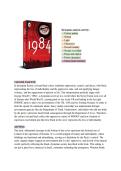
COLOUR PALETTE:
In dystopian fiction, red and black colors symbolize oppression, control, and decay, with black
representing the loss of individuality and the oppressive state, and red signifying danger,
violence, and the suppression of passion or life. This interpretation perfectly aligns with
George Orwell’s ‘1984’, a dystopian novel set in a world where the Soviet Union took over all
of Europe after World War II, causing panic to rise in the UK and leading to the far right
INSOGC party to take over governments of the UK, USA and etc forming Oceania. In order to
limit the spread of communist ideals, heavy media censorship was implemented through
government agencies like the Department of Truth. Furthermore, individuals who did not abide
by the party's decisions faced brutal consequences through the Department of Love. Therefore,
the colours red and black reflect the oppressive control of INSOGC and how freedom of
expression was limited just like how black in the cover represents the loss of individuality.
SETTING:
The dark, silhouetted cityscape at the bottom of the cover represents the fictional city of
London in the superstate of Oceania. It's a world stripped of beauty and individuality, where
buildings are functional and intimidating, serving as a backdrop for the Party's control. The
stark, angular shapes suggest an environment that is cold, oppressive, and devoid of the natural
world, perfectly reflecting the bleak, dystopian society described in the book. This setting is
not just a place but a character in itself, constantly reminding the protagonist, Winston Smith,
— Colour palette
— Setting
— Light
— Characters
— Overall tonality
— Society is evident
— Props and objects
— Power dynamics.
— Class/social structure.
COLOUR PALETTE:
In dystopian fiction, red and black colors symbolize oppression, control, and decay, with black
representing the loss of individuality and the oppressive state, and red signifying danger,
violence, and the suppression of passion or life. This interpretation perfectly aligns with
George Orwell’s ‘1984’, a dystopian novel set in a world where the Soviet Union took over all
of Europe after World War II, causing panic to rise in the UK and leading to the far right
INSOGC party to take over governments of the UK, USA and etc forming Oceania. In order to
limit the spread of communist ideals, heavy media censorship was implemented through
government agencies like the Department of Truth. Furthermore, individuals who did not abide
by the party's decisions faced brutal consequences through the Department of Love. Therefore,
the colours red and black reflect the oppressive control of INSOGC and how freedom of
expression was limited just like how black in the cover represents the loss of individuality.
SETTING:
The dark, silhouetted cityscape at the bottom of the cover represents the fictional city of
London in the superstate of Oceania. It's a world stripped of beauty and individuality, where
buildings are functional and intimidating, serving as a backdrop for the Party's control. The
stark, angular shapes suggest an environment that is cold, oppressive, and devoid of the natural
world, perfectly reflecting the bleak, dystopian society described in the book. This setting is
not just a place but a character in itself, constantly reminding the protagonist, Winston Smith,

