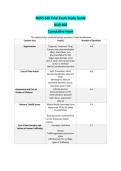
NURS 660 Final Exam Study Guide
NUR 660
Cumulative Exam
75 multiple choice, multiple/multiple questions, Photo identification
Content Area Details Number of Questions
Hypertension Diagnosis, Treatment- Drug 6-8
Classes, their pharmacological
effect, Side effects, non-
pharmacological tx, diet
Target organ damage- what
does it mean, how do you know
pt has it, workup?
Special ConsiderationsGeriatric
Care of Older Adults Falls- Prevention, safety 6-8
Geriatric Syndromes- what are
they?
dementia vs. delirium
Dementia- common causes,
education, plan of care
Assessment and Care of Intimate partner 4-5
Victims of Violence violenceindicators in HX,
communication approach
Elder abuse, assessment,
referrals
Veterans’ Health Issues Mental Health Associated issue 3-4
(depression, PTSD, SI), safety
considerations
Toxic exposures, assessment of
service (veterans) related
injuries
Care of the Homeless and Homeless- definition 5-7
Victims of Human Trafficking
Human
Traffickingbehaviors/scenarios
place
individuals at risk, red flags,
types of Trafficking
, Pulmonary Disorders Asthma- symptoms (both 8-10
reported and seen on
exam), diagnosis, classes of
medications- pharmacological
effect, tx based on current
guidelines, triggers
Pneumonia- physical exam
findings
Viral vs Bacterial
Common Pulmonary Disorders-
COPD
Cardiovascular Disorders CAD- risk factors 7-8
Emergent Signs and Symptoms
MI testing
Angina- stable vs unstable,
presentation.
CHF- Signs and Symptoms, what
do you see on exam?
Education, TX
Genitourinary Disorders Incontinence 6-8
Kidney stones- educations
Chronic Kidney Disease-
Subjective, PE and Objective
testing findings, stages, plan of
care, education
UTI- complicated vs
uncomplicated, male vs female
Urinalysis- results interpretation
Prevention/Screening/CV Levels of Health Prevention- 6-8
disease prevention Primary, Secondary, Tertiary.
Immunizations- special
considerations, HPV
Cancer screening, TB-
PPD, how to interpret
results, next steps if test
is
positive, education, latent TB
Hyperlipidemia- secondary
causes
, EENT Common disorders, diagnosis 4-5
and management, pharyngitis,
sinusitis, otitis
Sinusitis -Viral vs Bacterial
Mental Health Common problems: 8-10
Anxiety- R/O medical,
screening, treatment long term
vs short term, acuity of
symptoms
Depression- screening, SI
screening
Bipolar- Signs and Symptoms,
Screening questions
PTSD
ETOH/Substance
abusescreening tools
GI Disorders Common problems- 6-8
assessment
findings and what disease they
are associated with &
management
PUD- w/ H.Pylori and the
standard treatment, education
IBS- symptoms
GERD- symptoms, tx
Celiac dz- education diet
Endocrine Disorders Diabetes: 6-8
PO vs Insulin, Short acting vs
long acting insulin,
pharmacological effect, Side
effects, how do you know
treatment is effective?
Thyroid- Hypo vs Hyper,
defining characteristics, exam
findings, blood tests (what they
measure, what they indicate),
medications and
pharmacological effect
Hypertension – What are guidelines for diagnosis? Does one high BP give you a diagnosis of HTN? Know
drug classes, s/e, pharm effect? Non-pharm treatment-Dash diet.
Guidelines for HTN:
, • Normal: Less than 120/80
• Elevated: Systolic 120-129 & diastolic less than 80
• Stage 1: Systolic 130-139 or diastolic between 80-89
• Stage 2: Systolic at least 140 or diastolic at least 90
• Hypertensive crisis: Systolic over 180 and/or diastolic over 120, with patients needing prompt
changes in medication if there are no other indication of problems, or immediate hospitalization
if there are signs of organ damage.
Pharmacological treatment:
• First-line (Primary agents):
o Thiazide diuretics o ACE
inhibitors or ARB o Calcium
Channel Blockers
Two first-line drugs recommended with Stage 2 HTN or average BP 20/10 mmHg above target BP
New treatment or adjusted regimen should be followed by monthly f/u to assess adherence and
response until control achieved.
-Not to used beta blockers as first line unless patient has heart failure
African Americans are higher risk for HTN. HTN contributes to ischemic heart disease, heart failure (HF),
diabetic complications, chronic kidney disease, and CVA disease.
AA including those with diabetes, initial antihypertensive tx should include any one of the four classes:
Thiazide-type diuretic, calcium channel blockers, (ACE, or ARB are shown to be less effective but can be
given if the first two tx unsuccessful).
With Chronic kidney disease, the initial agent of choice is the ACE or ARB.
Angiotensin-converting enzyme inhibitors (ACEIs—drugs with generic names typically ending
in -pril, such as captopril) are effective in the presence of HF and MI with systolic dysfunction to
help limit the effects of myocardial remodeling. ACEIs should be used when certain comorbid
conditions including renal insufficiency and diabetes mellitus are present, as these drugs may
assist in preserving or enhancing renal function.
Angiotensin II receptor blockers (ARBs) are helpful in antihypertensive individuals with comorbid
conditions such as HF and type 2 diabetes mellitus. Because they have a higher cost than ACEIs
and fewer long-term safety data,
ARBs should be reserved for patients who develop a cough when taking ACEIs or are otherwise
intolerant. However, some research suggests there is a risk of cross reactivity to ARBs in patients
who are anaphylactic to ACEIs; thus, there are clinicians who consider both classes of
medications contraindicated in these patients. Given their related mechanisms of action, an
ACEI and an ARB should not be used in combination.
Beta blockers (drugs with generic names ending in -lol, such as metoprolol) are no longer
commonly recommended for the primary management of HTN but may be used in the presence
of angina, post-MI (to reduce cardiac workload and enhance rhythm stability), atrial tachycardia,
NUR 660
Cumulative Exam
75 multiple choice, multiple/multiple questions, Photo identification
Content Area Details Number of Questions
Hypertension Diagnosis, Treatment- Drug 6-8
Classes, their pharmacological
effect, Side effects, non-
pharmacological tx, diet
Target organ damage- what
does it mean, how do you know
pt has it, workup?
Special ConsiderationsGeriatric
Care of Older Adults Falls- Prevention, safety 6-8
Geriatric Syndromes- what are
they?
dementia vs. delirium
Dementia- common causes,
education, plan of care
Assessment and Care of Intimate partner 4-5
Victims of Violence violenceindicators in HX,
communication approach
Elder abuse, assessment,
referrals
Veterans’ Health Issues Mental Health Associated issue 3-4
(depression, PTSD, SI), safety
considerations
Toxic exposures, assessment of
service (veterans) related
injuries
Care of the Homeless and Homeless- definition 5-7
Victims of Human Trafficking
Human
Traffickingbehaviors/scenarios
place
individuals at risk, red flags,
types of Trafficking
, Pulmonary Disorders Asthma- symptoms (both 8-10
reported and seen on
exam), diagnosis, classes of
medications- pharmacological
effect, tx based on current
guidelines, triggers
Pneumonia- physical exam
findings
Viral vs Bacterial
Common Pulmonary Disorders-
COPD
Cardiovascular Disorders CAD- risk factors 7-8
Emergent Signs and Symptoms
MI testing
Angina- stable vs unstable,
presentation.
CHF- Signs and Symptoms, what
do you see on exam?
Education, TX
Genitourinary Disorders Incontinence 6-8
Kidney stones- educations
Chronic Kidney Disease-
Subjective, PE and Objective
testing findings, stages, plan of
care, education
UTI- complicated vs
uncomplicated, male vs female
Urinalysis- results interpretation
Prevention/Screening/CV Levels of Health Prevention- 6-8
disease prevention Primary, Secondary, Tertiary.
Immunizations- special
considerations, HPV
Cancer screening, TB-
PPD, how to interpret
results, next steps if test
is
positive, education, latent TB
Hyperlipidemia- secondary
causes
, EENT Common disorders, diagnosis 4-5
and management, pharyngitis,
sinusitis, otitis
Sinusitis -Viral vs Bacterial
Mental Health Common problems: 8-10
Anxiety- R/O medical,
screening, treatment long term
vs short term, acuity of
symptoms
Depression- screening, SI
screening
Bipolar- Signs and Symptoms,
Screening questions
PTSD
ETOH/Substance
abusescreening tools
GI Disorders Common problems- 6-8
assessment
findings and what disease they
are associated with &
management
PUD- w/ H.Pylori and the
standard treatment, education
IBS- symptoms
GERD- symptoms, tx
Celiac dz- education diet
Endocrine Disorders Diabetes: 6-8
PO vs Insulin, Short acting vs
long acting insulin,
pharmacological effect, Side
effects, how do you know
treatment is effective?
Thyroid- Hypo vs Hyper,
defining characteristics, exam
findings, blood tests (what they
measure, what they indicate),
medications and
pharmacological effect
Hypertension – What are guidelines for diagnosis? Does one high BP give you a diagnosis of HTN? Know
drug classes, s/e, pharm effect? Non-pharm treatment-Dash diet.
Guidelines for HTN:
, • Normal: Less than 120/80
• Elevated: Systolic 120-129 & diastolic less than 80
• Stage 1: Systolic 130-139 or diastolic between 80-89
• Stage 2: Systolic at least 140 or diastolic at least 90
• Hypertensive crisis: Systolic over 180 and/or diastolic over 120, with patients needing prompt
changes in medication if there are no other indication of problems, or immediate hospitalization
if there are signs of organ damage.
Pharmacological treatment:
• First-line (Primary agents):
o Thiazide diuretics o ACE
inhibitors or ARB o Calcium
Channel Blockers
Two first-line drugs recommended with Stage 2 HTN or average BP 20/10 mmHg above target BP
New treatment or adjusted regimen should be followed by monthly f/u to assess adherence and
response until control achieved.
-Not to used beta blockers as first line unless patient has heart failure
African Americans are higher risk for HTN. HTN contributes to ischemic heart disease, heart failure (HF),
diabetic complications, chronic kidney disease, and CVA disease.
AA including those with diabetes, initial antihypertensive tx should include any one of the four classes:
Thiazide-type diuretic, calcium channel blockers, (ACE, or ARB are shown to be less effective but can be
given if the first two tx unsuccessful).
With Chronic kidney disease, the initial agent of choice is the ACE or ARB.
Angiotensin-converting enzyme inhibitors (ACEIs—drugs with generic names typically ending
in -pril, such as captopril) are effective in the presence of HF and MI with systolic dysfunction to
help limit the effects of myocardial remodeling. ACEIs should be used when certain comorbid
conditions including renal insufficiency and diabetes mellitus are present, as these drugs may
assist in preserving or enhancing renal function.
Angiotensin II receptor blockers (ARBs) are helpful in antihypertensive individuals with comorbid
conditions such as HF and type 2 diabetes mellitus. Because they have a higher cost than ACEIs
and fewer long-term safety data,
ARBs should be reserved for patients who develop a cough when taking ACEIs or are otherwise
intolerant. However, some research suggests there is a risk of cross reactivity to ARBs in patients
who are anaphylactic to ACEIs; thus, there are clinicians who consider both classes of
medications contraindicated in these patients. Given their related mechanisms of action, an
ACEI and an ARB should not be used in combination.
Beta blockers (drugs with generic names ending in -lol, such as metoprolol) are no longer
commonly recommended for the primary management of HTN but may be used in the presence
of angina, post-MI (to reduce cardiac workload and enhance rhythm stability), atrial tachycardia,