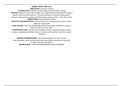
Pharmacology Drug Cards for HESI/ NURSING 1426 (Complete Guide)
GENERIC NAME: Fluticasone TRADE NAME: ( Flonase, Flovent ) CLASSIFICATION: Synthetic steroids of glucocorticoid family of drugs ACTIONS: Fluticasone mimics the naturally-occurring hormone produced by the adrenal glands, cortisol or hydrocortisone. The exact mechanism of action of fluticasone is unknown. Fluticasone has potent anti-inflammatory actions. Onset: 1-3 wk. Peak: 48 hr. INDIDCATIONS: Seasonal allergy rhinitis ROUTES OF ADMINISTRATION: Intranasal 100 mcg (1 inhalation) per nostril 1-2 times daily Max: 4 times daily USUAL DOSAGE: Adult and child INH 88-440 MCG twice daily; INH 88-220 mcg twice daily, max 440 mcg twice daily. ADVERSE REACTIONS: transient nasal irritation, burning, sneezing, epistaxis, bloody mucous, nasopharyngeal itching, dryness, crusting, and ulceration, headache, nausea, vomiting NURSING CONSIDERATIONS: oral and nasal inhalers are not to be used interchangeably, use of oral and nasal inhaler provided by manufacturer should be carefully reviewed with patient. GENERIC NAME: FLUTICASONE PROPIONATE AND SALMETEROL XINAFOATE TRADE NAME: Advair diskus CLASSIFICATION: Anti-asthmatic, combination drug ACTION: Fluticasone is an anti-inflammatory corticosteroid; precise mechanism unknown but corticosteroids inhibit multiple cell types and mediator production or secretion involved in asthmatic response; Salmeterol is a long-acting beta2-adrenergic agonist that catalyzes conversion of ATP to cyclic-AMP; increased cyclic-AMP levels cause relaxation of bronchial smooth muscle and inhibition of release of mediators of immediate hypersensitivity INDICATIONS: Long-term, twice-daily maintenance treatment of asthma in clients 12 years and older; not for relief of acute bronchospasms ROUTES OF ADMINISTRATION: Inhalation powder USUAL DOSAGE: One inhalation twice daily about 12 hours apart (morning and evening) ADVERSE REACTIONS: URTI, pharyngitis, headache, upper respiratory tract inflammation, hoarseness/dysphonia, bronchitis, cough, nausea & vomiting INTERACTIONS: Beta-adrenergic blockers – block pulmonary effects of salmeterol; also may produce severe brochospasms; diuretics – EKG change and/or hypokalemia may be worsened; MAO inhibitors/tricyclic antidepressants – action of salmeterol may be potentiated; administer with extreme caution or within 2 weeks of discontinuation of MAO inhibitors and tricyclic antidepressants CONTRAINDICATIONS: Hypersensitivity to any component of the product; primary treatment of status epilepticus or other acute episodes of asthma where intensive measures are needed NURSING CONSIDERATIONS: Do not use Advair Diskus for transferring clients from systemic corticosteroid therapy due to possibility of deaths due to adrenal insufficiency GENERIC NAME: TIOTROPIUM BROMIDE TRADE NAME: Spiriva CLASSIFICATION: Anticholinergic ACTION: Long-acting antimuscarinic (anticholinergic); in airways, it inhibits muscarinic M3 receptors at the smooth muscle, leading to bronchodilation INDICATIONS: Long-term once daily, maintenance treatment of bronchospasm associated with COPD, including chronic bronchitis and emphysema ROUTES OF ADMINISTRATION: Capsules containing powder for inhalation USUAL DOSAGE: Inhale contents of one capsule once daily using HandiHaler inhalation device ADVERSE REACTIONS: URTI, dry mouth, accidents, sinusitis, pharyngitis/rhinitis, abdominal pain, chest pain (non-specific), dependent edema, UTI INTERACTIONS: None specific CONTRAINDICATIONS: History of hypersensitivity to atropine or its derivatives; use for initial treatment of acute episodes of bronchospasm; use with other anticholinergics NURSING CONSIDERATIONS: Teach client how to use inhaling device; store capsules from 15-30ºC (59-86ºF); not to be used for acute bronchospasms; do not permit powder to enter eyes; may cause papillary dilation and blurred vision; do not swallow capsules; report any eye pain/discomfort, colored images, blurred vision, vision halos associated with red eyes (may indicate glaucoma) GENERIC NAME: Acetylcholine TRADE NAME: Miochol-E CLASSIFICATION: Cholinergic Agonist; Ophthalmic Agent, Miotic ACTION: Rapid INDICATIONS: ROUTES OF ADMINISTRATION: USUAL DOSAGE:) Causes contraction of the sphincter muscles of the iris, resulting in miosis and contraction of the ciliary muscle, leading to accommodation spasm ADVERSE REACTIONS: Bradycardia, flushing, hypotension, Diaphoresis INTERACTIONS: Acetylcholinesterase Inhibitors: May enhance the adverse/toxic effect of Cholinergic Agonists. Monitor therapy Beta-Blockers: May enhance the adverse/toxic effect of Cholinergic Agonists. Of particular concern are the potential for cardiac conduction abnormalities and bronchoconstriction. Management: Administer these agents in combination with caution, and monitor for conduction disturbances. Avoid methacholine with any beta blocker due to the potential for additive bronchoconstriction. Monitor therapy CONTRAINDICATIONS: Hypersensitivity to acetylcholine chloride or any component of
Document information
- Uploaded on
- March 11, 2021
- Number of pages
- 127
- Written in
- 2020/2021
- Type
- Other
- Person
- Unknown