

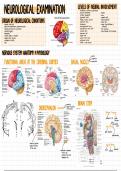
NELIROLOGICAL EXAMINATION LusnLINVOLVEMENT
>
-
level of involvement
Z
-
neuron
>
-
cerebral hemisphere -
axan
>
-
pyramidal tracts -
synaptic cleft
ORP NELROLOGICAL CONDITIONS higher function centers neurotransmitter
>
- -
pasterior fassa neural
>
pool
-
-
>
-
carebellum -
neural circuit /afferent 3
>
-
infective/inflammatory (subacute onset) >
-
extrapyramidal tracts efferent)
diensephalon brain stem
>
-
bleeding Strauma) non traumatis/ >
-
,
-
SNS Structure
>
-
seizuresStypes) >
-
cranial nerve -
links between CNS structures
>
-
myopathy >
-
autonomic NS
>
-
tumars(weeks to months) >
-
spinal said
>
-
degenerative process >
-
spinal neove roots
>
-
metabolic/ toxicity >
-
peripheral nerva
>
-
TBI >
-
UMN vs . LMN lesions
NERVOUS SYSTEM ANATOMY PHYSIOLOGY
>
- motor
> cognition
FLINCTIONAL AREAS OF THE CEREBRAL CORTEX BASAL NUCLE) emotional
= sensory BRAIN STEM
DIENGEPHALON higher functions
~
STHAJAMUS) of the brain
Reticular Formation
V
autonomic NS higher
functions
AKA
↑ pyrimidal
tracts
Long Tracts
V
motor function
V
somatosensary
↳
endocring system
higher functions Cranial Nerves
of the brain V
motor automatic
coordinates movement sensory
> motor plan
-
position sensein
. . .
, NERVOUS SYSTEM ANATOMY PHYSIOLOGY CONTINUED ...
SPINAL CORD Spinacerebellar Tracts SYNAPSES SYNAPTIC CLEFT :
INFORMATION TRANSFER
UPPER MOTOR NEURONS
of weakness/dysfunction
signs
, :
hyperreflexia
↳ ↑ muscle stretch reflexors
-
slonus
↳ rhythmic sontrastian of
antagonist muscles
hypertonia
-
↳> i tone of skeletal muscles
pain extensor plantar response
-
-
>
< temperature ( Babinski sign)
>
gross touch
Somatosensary Tracts
position sense vibration fine touch
sense
L
injury to one side of the brain will
show ↓ somatosensory on the
other side of the body
TYPES OF CIRCUITS IN NEURONAL
ALTONOMIC NERVOLS SYSTEM
efferent
POOLS
neuvans
>
-
divergent -
one incoming fiber stimulates ever increasing number of
fibers ,
often amplifying circuits
"fight or flight" "best digest"
>
-
level of involvement
Z
-
neuron
>
-
cerebral hemisphere -
axan
>
-
pyramidal tracts -
synaptic cleft
ORP NELROLOGICAL CONDITIONS higher function centers neurotransmitter
>
- -
pasterior fassa neural
>
pool
-
-
>
-
carebellum -
neural circuit /afferent 3
>
-
infective/inflammatory (subacute onset) >
-
extrapyramidal tracts efferent)
diensephalon brain stem
>
-
bleeding Strauma) non traumatis/ >
-
,
-
SNS Structure
>
-
seizuresStypes) >
-
cranial nerve -
links between CNS structures
>
-
myopathy >
-
autonomic NS
>
-
tumars(weeks to months) >
-
spinal said
>
-
degenerative process >
-
spinal neove roots
>
-
metabolic/ toxicity >
-
peripheral nerva
>
-
TBI >
-
UMN vs . LMN lesions
NERVOUS SYSTEM ANATOMY PHYSIOLOGY
>
- motor
> cognition
FLINCTIONAL AREAS OF THE CEREBRAL CORTEX BASAL NUCLE) emotional
= sensory BRAIN STEM
DIENGEPHALON higher functions
~
STHAJAMUS) of the brain
Reticular Formation
V
autonomic NS higher
functions
AKA
↑ pyrimidal
tracts
Long Tracts
V
motor function
V
somatosensary
↳
endocring system
higher functions Cranial Nerves
of the brain V
motor automatic
coordinates movement sensory
> motor plan
-
position sensein
. . .
, NERVOUS SYSTEM ANATOMY PHYSIOLOGY CONTINUED ...
SPINAL CORD Spinacerebellar Tracts SYNAPSES SYNAPTIC CLEFT :
INFORMATION TRANSFER
UPPER MOTOR NEURONS
of weakness/dysfunction
signs
, :
hyperreflexia
↳ ↑ muscle stretch reflexors
-
slonus
↳ rhythmic sontrastian of
antagonist muscles
hypertonia
-
↳> i tone of skeletal muscles
pain extensor plantar response
-
-
>
< temperature ( Babinski sign)
>
gross touch
Somatosensary Tracts
position sense vibration fine touch
sense
L
injury to one side of the brain will
show ↓ somatosensory on the
other side of the body
TYPES OF CIRCUITS IN NEURONAL
ALTONOMIC NERVOLS SYSTEM
efferent
POOLS
neuvans
>
-
divergent -
one incoming fiber stimulates ever increasing number of
fibers ,
often amplifying circuits
"fight or flight" "best digest"


