

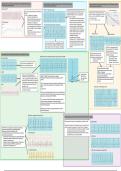
Clinically stable but symptomatic, Wide Complex (>0.12s), RR interval is regular & Clinically stable but symptomatic, Wide Complex (>0.12s), RR interval is irregular Clinically stable but symptomatic, Wide Complex (>0.12s), RR interval is irregular
QRS complexes are Monomorphic & QRS complexes are Monomorphic & QRS complexes are Polymorphic
Monomorphic VT
WPW + AF Antidromic rotation
Any wide complex tachycardia is most likely to Consider that the tachycardia is likely to be a pre-
be a VT. excited atrial fibrillation (AF + WPW) with either Evaluate the QT interval if periods of sinus
If a SVT w/ aberrancy is suspected: antidromic rotation on re-entry or associated rhythm is present using either a QT chart as
aberrancy in conduction found on p13 of the 2008 ECC Guidebook,
• Consider the administration of
• If this is present AV nodal blocking agents or using the formula:
Adenosine following the same process
or therapies should be avoided as these 𝑄𝑇𝑐 = 𝑄𝑇(𝑠) ÷ √𝑅𝑅(𝑖𝑛𝑡𝑒𝑟𝑣𝑎𝑙 (𝑠))
as for narrow complex tachycardias
SVT w/ Aberrancy • If Adenosine is not effective, or agents may cause a paradoxical ventricular
ventricular origin is strongly suspected AF w/ Rapid Ventricular Response & Aberrancy response & worsen the tachycardia
or confirmed administer an Amiodarone • Amiodarone infusion (150mg/10minutes)
infusion: 150mg/10 minutes; repeated if can be considered, however should be
VT is recurrent weighed against the risk of terminating AF
• Followed by a maintenance infusion of (rhythm conversion) which is not desired
1mg/min for first 6 hours • Provide transport & seek expert Polymorphic VT Torsades de Pointes
consultation in hospital
• Immediately perform Electrical
Cardioversion (no. 7) if patient deteriorates
& becomes clinically unstable at any point
In the event that AF with an existing BBB is related • These patients are prone to very rapid
to a rapid ventricular response management would ventricular rates & cardioversion is often
be the same as for AF with a Narrow (<0.12s) QRS required If the QT is prolonged during the
sinus rhythm the VT is most likely
Torsades de Pointes
If the QT interval is normal, the If this is the case or Torsades de
Clinically stable but symptomatic, Narrow QRS (<0.12s) & RR interval is regular arrhythmia is most likely to be Pointes is witnessed:
WPW Syndrome with Orthodromic Rotation causing an AVRT or AVNRT associated to myocardial ischemia • stop all medications that
Sinus Tachycardia prolong the QT interval
• Administer Amiodarone
150mg/10 min • Administer Magnesium
Sulphate 1-2g over 5-60 min
Likely to have a physiological cause,
search for & find reversible causes
If the patient becomes unstable
synchronization for cardioversion may be
AVNRT difficult or impossible.
• Broad QRS with Treat the arrhythmia as VF and provide
• Perform a trial of Vagal Manoeuvres
All AVRT or AVNRT has the potential to be related to Delta Wave up- unsynchronized defibrillation.
• If SVT/PSVT is suspected to be due to a Subsequent deterioration into VF is regarded
re-entry circuit (AVRT or AVNRT) but WPW WPW with AVRT being the most common tachycardia for WPW slant morphology
patients. • Short PR to be imminent once these patients become
syndrome, AF or Atrial Flutter is not present unstable
or identifiable, administer Adenosine (6mg)
The risk of adenosine is related to its potential to cause AF which can
AVRT IV using a 2 syringe technique through a
lead to a rapid ventricular response (12% of patients with WPW)
large bore IV line Polymorphic VT deteriorating into VF
which
• This can be followed by a 2nd & 3rd done can lead to VF.
of 12mg after 2 minutes
Although it is recommended that vagal maneuvers and Adenosine be
used in AVRT or AVNRT, if WPW is known to be present in the patient
Adenosine is contraindicated (HPCSA 2006).
If it is not known whether WPW is present normal therapy should
commence however preparations for immediate electrical
cardioversion should be made in case the patient develops AF with a
rapid ventricular response.
If WPW is known to be present consider Amiodarone or elective
Electrical Cardioversion
MAT (which may present with regular R-R)
Clinically stable by symptomatic, Narrow QRS (<0.12s) & RR interval is irregular
The tachycardia is likely due to Atrial fibrillation, Atrial flutter or MAT Atrial Fibrillation
Antiarrhythmic agents such as Amiodarone are not recommended as
If SVT/PSVT is not responsive to adenosine consider that an rhythm conversion in the case of AF or Atrial Flutter is not desired
automatic tachycardia may be present (Ectopic Atrial • This requires administration of agents only available in hospital
Tachycardia, Junctional Tachycardia or MAT) aimed at reducing AV conduction. Provide transport
If the tachycardia worsens with the administration of adenosine Atrial Tachycardia • Immediately perform Electrical Cardioversion (No. 7) if patient
consider pre-excitation (WPW). deteriorates & becomes clinically unstable
• Tachycardia’s with an automatic focus requires administration Atrial Flutter
of agents only available in hospital aimed at reducing AV
conduction. Provide transport
• Consider the use of an Amiodarone infusion; 150mg over 10
minutes if pre-excitation (WPW) is suspected or the
tachycardia has an automatic focus
Junctional Tachycardia MAT (which may present with irregular R-R)
QRS complexes are Monomorphic & QRS complexes are Monomorphic & QRS complexes are Polymorphic
Monomorphic VT
WPW + AF Antidromic rotation
Any wide complex tachycardia is most likely to Consider that the tachycardia is likely to be a pre-
be a VT. excited atrial fibrillation (AF + WPW) with either Evaluate the QT interval if periods of sinus
If a SVT w/ aberrancy is suspected: antidromic rotation on re-entry or associated rhythm is present using either a QT chart as
aberrancy in conduction found on p13 of the 2008 ECC Guidebook,
• Consider the administration of
• If this is present AV nodal blocking agents or using the formula:
Adenosine following the same process
or therapies should be avoided as these 𝑄𝑇𝑐 = 𝑄𝑇(𝑠) ÷ √𝑅𝑅(𝑖𝑛𝑡𝑒𝑟𝑣𝑎𝑙 (𝑠))
as for narrow complex tachycardias
SVT w/ Aberrancy • If Adenosine is not effective, or agents may cause a paradoxical ventricular
ventricular origin is strongly suspected AF w/ Rapid Ventricular Response & Aberrancy response & worsen the tachycardia
or confirmed administer an Amiodarone • Amiodarone infusion (150mg/10minutes)
infusion: 150mg/10 minutes; repeated if can be considered, however should be
VT is recurrent weighed against the risk of terminating AF
• Followed by a maintenance infusion of (rhythm conversion) which is not desired
1mg/min for first 6 hours • Provide transport & seek expert Polymorphic VT Torsades de Pointes
consultation in hospital
• Immediately perform Electrical
Cardioversion (no. 7) if patient deteriorates
& becomes clinically unstable at any point
In the event that AF with an existing BBB is related • These patients are prone to very rapid
to a rapid ventricular response management would ventricular rates & cardioversion is often
be the same as for AF with a Narrow (<0.12s) QRS required If the QT is prolonged during the
sinus rhythm the VT is most likely
Torsades de Pointes
If the QT interval is normal, the If this is the case or Torsades de
Clinically stable but symptomatic, Narrow QRS (<0.12s) & RR interval is regular arrhythmia is most likely to be Pointes is witnessed:
WPW Syndrome with Orthodromic Rotation causing an AVRT or AVNRT associated to myocardial ischemia • stop all medications that
Sinus Tachycardia prolong the QT interval
• Administer Amiodarone
150mg/10 min • Administer Magnesium
Sulphate 1-2g over 5-60 min
Likely to have a physiological cause,
search for & find reversible causes
If the patient becomes unstable
synchronization for cardioversion may be
AVNRT difficult or impossible.
• Broad QRS with Treat the arrhythmia as VF and provide
• Perform a trial of Vagal Manoeuvres
All AVRT or AVNRT has the potential to be related to Delta Wave up- unsynchronized defibrillation.
• If SVT/PSVT is suspected to be due to a Subsequent deterioration into VF is regarded
re-entry circuit (AVRT or AVNRT) but WPW WPW with AVRT being the most common tachycardia for WPW slant morphology
patients. • Short PR to be imminent once these patients become
syndrome, AF or Atrial Flutter is not present unstable
or identifiable, administer Adenosine (6mg)
The risk of adenosine is related to its potential to cause AF which can
AVRT IV using a 2 syringe technique through a
lead to a rapid ventricular response (12% of patients with WPW)
large bore IV line Polymorphic VT deteriorating into VF
which
• This can be followed by a 2nd & 3rd done can lead to VF.
of 12mg after 2 minutes
Although it is recommended that vagal maneuvers and Adenosine be
used in AVRT or AVNRT, if WPW is known to be present in the patient
Adenosine is contraindicated (HPCSA 2006).
If it is not known whether WPW is present normal therapy should
commence however preparations for immediate electrical
cardioversion should be made in case the patient develops AF with a
rapid ventricular response.
If WPW is known to be present consider Amiodarone or elective
Electrical Cardioversion
MAT (which may present with regular R-R)
Clinically stable by symptomatic, Narrow QRS (<0.12s) & RR interval is irregular
The tachycardia is likely due to Atrial fibrillation, Atrial flutter or MAT Atrial Fibrillation
Antiarrhythmic agents such as Amiodarone are not recommended as
If SVT/PSVT is not responsive to adenosine consider that an rhythm conversion in the case of AF or Atrial Flutter is not desired
automatic tachycardia may be present (Ectopic Atrial • This requires administration of agents only available in hospital
Tachycardia, Junctional Tachycardia or MAT) aimed at reducing AV conduction. Provide transport
If the tachycardia worsens with the administration of adenosine Atrial Tachycardia • Immediately perform Electrical Cardioversion (No. 7) if patient
consider pre-excitation (WPW). deteriorates & becomes clinically unstable
• Tachycardia’s with an automatic focus requires administration Atrial Flutter
of agents only available in hospital aimed at reducing AV
conduction. Provide transport
• Consider the use of an Amiodarone infusion; 150mg over 10
minutes if pre-excitation (WPW) is suspected or the
tachycardia has an automatic focus
Junctional Tachycardia MAT (which may present with irregular R-R)


