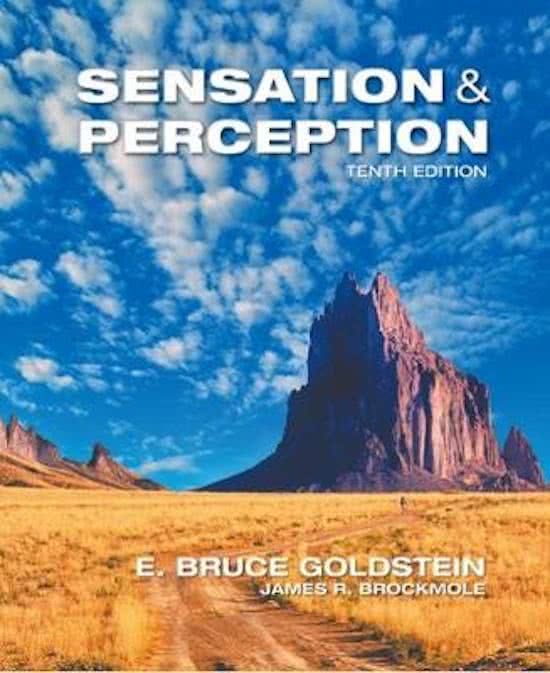
TESTBANK
fb
SensationandPerception,10thEditionby
fb fb fb fb fb
Goldstein, Cacciamani,Chapter1 to15
fb fb fb fb fb
,Table of Content
fb fb
1. Introduction to Perception. fb fb
2. The Physiological Beginnings of Perception.
fb fb fb fb
3. Neural Processing and Coding.
fb fb fb
4. Cortical Organization. f b
5. Perceiving Objects and Scenes. fb fb fb
6. VisualAttention. fb
7. Taking Action. fb
8. Perceiving Motion. fb
9. Perceiving Color. fb
10. Perceiving Depth and Size. fb fb fb
11. Sound and the Perception of Pitch.
fb fb fb fb fb
12. Auditory Localization, the Auditory Scene, and Music.
fb fb fb fb fb fb
13. SpeechPerception. fb
14. The Cutaneous Senses.
fb fb
15. The ChemicalSenses.
fb fb
,Test Bank—Chapter 1: Introduction to Perception
fb fb fb fb fb
MULTIPLE CHOICE fb
1. “Perceiving machines” that can negotiate the environment with humanlike ease
fb fb fb fb fb fb fb fb fb
a. were developed by computer scientists in the 1960s.
fb fb fb fb fb fb fb
b. were developed by computer scientists in the 1970s.
fb fb fb fb fb fb fb
c. were developed by computer scientists in the 1990s.
fb fb fb fb fb fb fb
d. have yet to be developed. fb fb fb fb
2. Which of the following is an application of perception research?
fb fb fb fb fb fb fb fb fb
a. Developing speech recognition c. fb fb
Devising robots that can “see.” syst fb fb fb fb fb
ems.
b. Treating hearing problems. d. All of these. fb fb f b f b fb fb
3. Which of the following is a reason for studying perception?
fb fb fb fb fb fb fb fb fb
a. To become more aware of your own perceptual experiences.
fb fb fb fb fb fb fb fb
b. To provide information that may help with a future career.
fb fb fb fb fb fb fb fb fb
c. To apply perception to everyday problems, such as highway sign visibility.
fb fb fb fb fb fb fb fb fb fb
d. All of these. fb fb
4. The study of perception can overlap with
fb fb fb fb fb fb
a. medicine. c. philosophy.
b. computer science. fb d. all of these. fb fb
5. Which of the following is NOT a category of the stages in the perceptual process?
fb fb fb fb fb fb fb fb fb fb fb fb fb fb
a. Stimuli c. Serendipity
b. Neural Processing d. Behavioral Responses
fb fb
6. The process of transforming energy in the environment into electrical energy in the neurons is cal
fb fb fb fb fb fb fb fb fb fb fb fb fb fb fb
led
a. refraction. c. reduction.
b. transduction. d. construction.
7. fb f b
is the step in the perceptual process that is analogous to an ATM withdrawal (pressure from
fb fb fb fb fb fb fb fb fb fb fb fb fb fb fb
button press becomes electrical energy then becomes a mechanical response resulting in the d
fb fb fb fb fb fb fb fb fb fb fb fb fb fb
ispensing of money). fb fb
a. Knowledge c. Action
b. Transference d. Transduction
8. The specific term for the “stimulus on the receptors” in visual processing is the
fb fb fb fb fb fb fb fb fb fb fb fb fb
8
, a. transducedimage.
fb c. visual image.
f b
b. environmental stimulus.
fb d. perception.
9
fb
SensationandPerception,10thEditionby
fb fb fb fb fb
Goldstein, Cacciamani,Chapter1 to15
fb fb fb fb fb
,Table of Content
fb fb
1. Introduction to Perception. fb fb
2. The Physiological Beginnings of Perception.
fb fb fb fb
3. Neural Processing and Coding.
fb fb fb
4. Cortical Organization. f b
5. Perceiving Objects and Scenes. fb fb fb
6. VisualAttention. fb
7. Taking Action. fb
8. Perceiving Motion. fb
9. Perceiving Color. fb
10. Perceiving Depth and Size. fb fb fb
11. Sound and the Perception of Pitch.
fb fb fb fb fb
12. Auditory Localization, the Auditory Scene, and Music.
fb fb fb fb fb fb
13. SpeechPerception. fb
14. The Cutaneous Senses.
fb fb
15. The ChemicalSenses.
fb fb
,Test Bank—Chapter 1: Introduction to Perception
fb fb fb fb fb
MULTIPLE CHOICE fb
1. “Perceiving machines” that can negotiate the environment with humanlike ease
fb fb fb fb fb fb fb fb fb
a. were developed by computer scientists in the 1960s.
fb fb fb fb fb fb fb
b. were developed by computer scientists in the 1970s.
fb fb fb fb fb fb fb
c. were developed by computer scientists in the 1990s.
fb fb fb fb fb fb fb
d. have yet to be developed. fb fb fb fb
2. Which of the following is an application of perception research?
fb fb fb fb fb fb fb fb fb
a. Developing speech recognition c. fb fb
Devising robots that can “see.” syst fb fb fb fb fb
ems.
b. Treating hearing problems. d. All of these. fb fb f b f b fb fb
3. Which of the following is a reason for studying perception?
fb fb fb fb fb fb fb fb fb
a. To become more aware of your own perceptual experiences.
fb fb fb fb fb fb fb fb
b. To provide information that may help with a future career.
fb fb fb fb fb fb fb fb fb
c. To apply perception to everyday problems, such as highway sign visibility.
fb fb fb fb fb fb fb fb fb fb
d. All of these. fb fb
4. The study of perception can overlap with
fb fb fb fb fb fb
a. medicine. c. philosophy.
b. computer science. fb d. all of these. fb fb
5. Which of the following is NOT a category of the stages in the perceptual process?
fb fb fb fb fb fb fb fb fb fb fb fb fb fb
a. Stimuli c. Serendipity
b. Neural Processing d. Behavioral Responses
fb fb
6. The process of transforming energy in the environment into electrical energy in the neurons is cal
fb fb fb fb fb fb fb fb fb fb fb fb fb fb fb
led
a. refraction. c. reduction.
b. transduction. d. construction.
7. fb f b
is the step in the perceptual process that is analogous to an ATM withdrawal (pressure from
fb fb fb fb fb fb fb fb fb fb fb fb fb fb fb
button press becomes electrical energy then becomes a mechanical response resulting in the d
fb fb fb fb fb fb fb fb fb fb fb fb fb fb
ispensing of money). fb fb
a. Knowledge c. Action
b. Transference d. Transduction
8. The specific term for the “stimulus on the receptors” in visual processing is the
fb fb fb fb fb fb fb fb fb fb fb fb fb
8
, a. transducedimage.
fb c. visual image.
f b
b. environmental stimulus.
fb d. perception.
9