

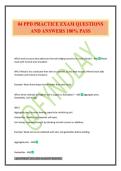
04 PPD PRACTICE EXAM QUESTIONS
AND ANSWERS 100% PASS
Which wall structure best addresses thermal bridging concerns in a cold climate? - ANS Wood
studs with mineral wool insulation
Why? Wood is less conductive than steel or concrete, so less heat escapes. Mineral wool adds
insulation and moisture resistance.
Example: Wood frame keeps heat in better than steel studs.
Which three methods strengthen soil to support a foundation? - ANS Aggregate piers,
Geotextiles, Soil mixing
Why?
Aggregate piers: Increase bearing capacity by reinforcing soil.
Geotextiles: Stabilize and separate soil layers.
Soil mixing: Improves strength by blending soil with cement or additives.
Example: Weak soil can be stabilized with piers and geotextiles before building.
Aggregate piers - ANS
Geotextiles - ANS
1 @COPYRIGHT 2025/2026 ALLRIGHTS RESERVED.
,Soil mixing - ANS
Which three HVAC options suit a historic building with low floor heights and individual thermal
control? - ANS Fan coil units, Chilled-beam cooling with radiator heating, VRF HVAC
Why?
Fan coil units: Compact, good for tight spaces.
Chilled beams + radiators: Efficient heating/cooling without bulky ducts.
VRF: Precise zone control, minimal impact on historic character.
Example: VRF and fan coils allow individual room control without large air-handling units.
Rooftop Water-to-Water - ANS Condenser + chiller cooled by water; chilled water distributed.
Cost: High (complex piping + pumps).
Used in: Large commercial/high-rise buildings.
Remote Water-to-Water - ANS Same as rooftop, but equipment remote for space flexibility.
Cost: High.
Used in: Large campuses or buildings with space constraints.
Basement Chiller + Rooftop Cooling Tower - ANS Whole-building chilled water circulation.
Cost: High.
Used in: High-rise office, hospitals, big institutional buildings.
2 @COPYRIGHT 2025/2026 ALLRIGHTS RESERVED.
,Geothermal Water-to-Water - ANS Heat deposited underground for heating/cooling.
Cost: Very high upfront, low operating cost.
Used in: Sustainable projects, schools, government buildings.
Basement Water-to-Air - ANS Air blows across evaporator; condenser water cooled by tower.
Cost: Medium-high.
Used in: Mid-size commercial buildings.
Rooftop Water-to-Air - ANS Same as basement, but rooftop saves indoor space.
Cost: Medium-high.
Used in: Commercial buildings with limited indoor space.
Split System - ANS Quiet indoor unit; not scalable for big loads/zones.
Cost: Low-medium.
Used in: Houses, small offices.
Evaporative Condenser - ANS Air + sprayed water cool condenser via evaporation.
Cost: Medium.
Used in: Industrial or large commercial systems.
Air-to-Air System - ANS All-in-one machine; no pumps/towers; less efficient for big buildings.
Cost: Medium.
3 @COPYRIGHT 2025/2026 ALLRIGHTS RESERVED.
, Used in: Small commercial or residential.
Window Units (DX) - ANS Cheap, no ducts, but noisy and unattractive.
Cost: Very low.
Used in: Apartments, small rooms.
Single-Zone - ANS Controls one zone; needs many units for multiple spaces.
Cost: Low-medium.
Used in: Small retail or residential.
VAV with Terminal Reheat - ANS Good control, fewer units; wastes energy unless zoned.
Cost: Medium-high. Used in: Offices, schools, hospitals.
Fan Coil Units (FCU) - ANS High control, no ducts; noisy, no fresh air for core zones.
Cost: Medium.
Used in: Hotels, apartments.
Radiant Cooling - ANS Chilled ceiling; quiet, radiant comfort; condensation risk.
Cost: High.
Used in: Museums, high-end offices, 24/7 spaces.
Chilled Beams - ANS Ceiling radiators for cooling; near silent; condensation risk.
4 @COPYRIGHT 2025/2026 ALLRIGHTS RESERVED.
AND ANSWERS 100% PASS
Which wall structure best addresses thermal bridging concerns in a cold climate? - ANS Wood
studs with mineral wool insulation
Why? Wood is less conductive than steel or concrete, so less heat escapes. Mineral wool adds
insulation and moisture resistance.
Example: Wood frame keeps heat in better than steel studs.
Which three methods strengthen soil to support a foundation? - ANS Aggregate piers,
Geotextiles, Soil mixing
Why?
Aggregate piers: Increase bearing capacity by reinforcing soil.
Geotextiles: Stabilize and separate soil layers.
Soil mixing: Improves strength by blending soil with cement or additives.
Example: Weak soil can be stabilized with piers and geotextiles before building.
Aggregate piers - ANS
Geotextiles - ANS
1 @COPYRIGHT 2025/2026 ALLRIGHTS RESERVED.
,Soil mixing - ANS
Which three HVAC options suit a historic building with low floor heights and individual thermal
control? - ANS Fan coil units, Chilled-beam cooling with radiator heating, VRF HVAC
Why?
Fan coil units: Compact, good for tight spaces.
Chilled beams + radiators: Efficient heating/cooling without bulky ducts.
VRF: Precise zone control, minimal impact on historic character.
Example: VRF and fan coils allow individual room control without large air-handling units.
Rooftop Water-to-Water - ANS Condenser + chiller cooled by water; chilled water distributed.
Cost: High (complex piping + pumps).
Used in: Large commercial/high-rise buildings.
Remote Water-to-Water - ANS Same as rooftop, but equipment remote for space flexibility.
Cost: High.
Used in: Large campuses or buildings with space constraints.
Basement Chiller + Rooftop Cooling Tower - ANS Whole-building chilled water circulation.
Cost: High.
Used in: High-rise office, hospitals, big institutional buildings.
2 @COPYRIGHT 2025/2026 ALLRIGHTS RESERVED.
,Geothermal Water-to-Water - ANS Heat deposited underground for heating/cooling.
Cost: Very high upfront, low operating cost.
Used in: Sustainable projects, schools, government buildings.
Basement Water-to-Air - ANS Air blows across evaporator; condenser water cooled by tower.
Cost: Medium-high.
Used in: Mid-size commercial buildings.
Rooftop Water-to-Air - ANS Same as basement, but rooftop saves indoor space.
Cost: Medium-high.
Used in: Commercial buildings with limited indoor space.
Split System - ANS Quiet indoor unit; not scalable for big loads/zones.
Cost: Low-medium.
Used in: Houses, small offices.
Evaporative Condenser - ANS Air + sprayed water cool condenser via evaporation.
Cost: Medium.
Used in: Industrial or large commercial systems.
Air-to-Air System - ANS All-in-one machine; no pumps/towers; less efficient for big buildings.
Cost: Medium.
3 @COPYRIGHT 2025/2026 ALLRIGHTS RESERVED.
, Used in: Small commercial or residential.
Window Units (DX) - ANS Cheap, no ducts, but noisy and unattractive.
Cost: Very low.
Used in: Apartments, small rooms.
Single-Zone - ANS Controls one zone; needs many units for multiple spaces.
Cost: Low-medium.
Used in: Small retail or residential.
VAV with Terminal Reheat - ANS Good control, fewer units; wastes energy unless zoned.
Cost: Medium-high. Used in: Offices, schools, hospitals.
Fan Coil Units (FCU) - ANS High control, no ducts; noisy, no fresh air for core zones.
Cost: Medium.
Used in: Hotels, apartments.
Radiant Cooling - ANS Chilled ceiling; quiet, radiant comfort; condensation risk.
Cost: High.
Used in: Museums, high-end offices, 24/7 spaces.
Chilled Beams - ANS Ceiling radiators for cooling; near silent; condensation risk.
4 @COPYRIGHT 2025/2026 ALLRIGHTS RESERVED.


