
NUR 3065 (HEALTH ASSESSMENT)-THE
INTEGUMENT (EXAM 1) QUESTIONS &
ANSWERS
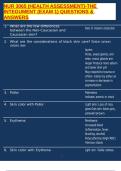
1. What are the few differences
Rate of melanin production
between the Non-Caucasian and
Caucasian skin?
2. What are the considerations of black skin care? Stratum corneum
contains more
layers
Pores, sweat glands, and
seba- ceous glands are
larger Produce more sebum
and lower skin pH
May respond to trauma or
inflam- mation by either an
increase or decrease in
pigmentation
3. Pallor Paleness
Indicates anemia or shock
4. Skin color with Pallor Light skin: Loss of rosy
glow Dark skin: Ashen grey,
yellowish brown
5. Erythema Redness
Increased blood
(inflammation, fever,
blushing, alcohol)
Polycythemia (High RBC)
Venous stasis
6. Skin color with Erythema Light skin: Visible redness
1/
27
,NUR 3065 (HEALTH ASSESSMENT)-THE
INTEGUMENT (EXAM 1) QUESTIONS &
ANSWERS
Dark skin: Dittused, rely on
palpa- tion of warmth or
edema
7. Jaundice Yellow
High bilirubin (liver
dysfunction) Chronic disease
(cirrhosis)
2/
27
, NUR 3065 (HEALTH ASSESSMENT)-THE
INTEGUMENT (EXAM 1) QUESTIONS &
ANSWERS
Severe burns
Infant with immature
livers Renal failure
8. Skin color with Jaundice Light skin: Yellow sclera, skin,
fin- gernails, oral mucosa,
palms, and soles
Dark skin: Reliable on sclera,
hard palate, palms and
soles
9. Cyanosis Bluish
High unoxygenated
blood Heart disease
Cold exposure
10. Skin color with Cyanosis Light skin: Bluish
tinge Dark skin:
Ashen gray
11. Ecchymosis Large dittused bluish black
Bruising
12. Skin color of Ecchymosis Light skin: Purplish to
yel- low-green
Dark skin: Diflcult to see,
check mouth or conjunctive
(usually in- visible)
13. Petechiae Small size pinpoint ecchymosis
14. Skin color of Petechiae Light skin: Purplish points
3/
27
INTEGUMENT (EXAM 1) QUESTIONS &
ANSWERS
1. What are the few differences
Rate of melanin production
between the Non-Caucasian and
Caucasian skin?
2. What are the considerations of black skin care? Stratum corneum
contains more
layers
Pores, sweat glands, and
seba- ceous glands are
larger Produce more sebum
and lower skin pH
May respond to trauma or
inflam- mation by either an
increase or decrease in
pigmentation
3. Pallor Paleness
Indicates anemia or shock
4. Skin color with Pallor Light skin: Loss of rosy
glow Dark skin: Ashen grey,
yellowish brown
5. Erythema Redness
Increased blood
(inflammation, fever,
blushing, alcohol)
Polycythemia (High RBC)
Venous stasis
6. Skin color with Erythema Light skin: Visible redness
1/
27
,NUR 3065 (HEALTH ASSESSMENT)-THE
INTEGUMENT (EXAM 1) QUESTIONS &
ANSWERS
Dark skin: Dittused, rely on
palpa- tion of warmth or
edema
7. Jaundice Yellow
High bilirubin (liver
dysfunction) Chronic disease
(cirrhosis)
2/
27
, NUR 3065 (HEALTH ASSESSMENT)-THE
INTEGUMENT (EXAM 1) QUESTIONS &
ANSWERS
Severe burns
Infant with immature
livers Renal failure
8. Skin color with Jaundice Light skin: Yellow sclera, skin,
fin- gernails, oral mucosa,
palms, and soles
Dark skin: Reliable on sclera,
hard palate, palms and
soles
9. Cyanosis Bluish
High unoxygenated
blood Heart disease
Cold exposure
10. Skin color with Cyanosis Light skin: Bluish
tinge Dark skin:
Ashen gray
11. Ecchymosis Large dittused bluish black
Bruising
12. Skin color of Ecchymosis Light skin: Purplish to
yel- low-green
Dark skin: Diflcult to see,
check mouth or conjunctive
(usually in- visible)
13. Petechiae Small size pinpoint ecchymosis
14. Skin color of Petechiae Light skin: Purplish points
3/
27


