Purines & pyrimidines I
Learning objectives:
1. There are 2 ways of biosynthesising purines
2. Purine rings are created on the sugar ring
3. To see biosynthesis as a succession of activation and nucleophilic attack steps in each step
4. To see the similarities within many of these steps
5. There is a common end molecule before branching process towards the purines itself
6. Note the features of salvage pathways.
Purines overview
Nucleotides consist of ribose (in RNA) or 2-deozyribose (in DNA)
- The sugar, ribose is part of the pentose phosphate pathway
- Deoxyribose is produced from RNR on ribonucleotide diphosphate
Nitrogenous base attached to the sugars 1’ C
- Adenine/ Guanine (purines)
- Thymine/ cytosine / uracil (pyrimidines)
Phosphate group attached to the sugars 5’ C
Are nucleotides
- What are nucleotides?
Precursors of nucleic acids i.e. DNA or RNA
Critical components in energy metabolism
- Provide energy to drive biochemical reaction
- E.g. ATP- most common source
Structural parts of coenzymes
- E.g. CoA
- AMP is part of the structure of coenzymes like NAD & Coenzyme A
Regulators and signal molecules
- cAMP
Nucleotides Nucleosides
Phosphate group – sugar - base Sugar - base
Purines Pyrimidines
Purine nucleoside names end in osine Pyrimidine nucleosides names end in idine
nucleosides with a phosphate group are called nucleotides
nucleotides with 1 phosphate are also called monophosphates (NMP)
nucleoside with 2 phosphates are called nucleoside diphosphate (NDP)
nucleosides with 3 phosphates are called nucleoside triphosphate (NTP)
ATP is a nucleotide and is also called nucleoside triphosphate
Why study purines?
Interesting chemistry
Associated defects => inheritable diseases
Target for anti-microbial and anti-cancer agents
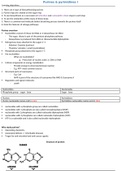
Structure of purines
, LO1. THERE ARE 2 WAYS OF BIOSYNTHESISING PURINES
Biosynthesis of purines
The bases used in nucleotides can come both from de novo or salvage of bases previously made
Nucleotides are synthesised first as ribonucleotides (nucleotide with ribose sugar) whether by de novo or salvage and then
later converted to deoxyribonucleotide as needed to make DNA
Two methods:
1. De novo (from small molecules)
- Forms inosine monophosphate
2. Salvage pathway
- Reclaimed from hydrolytic degradation of nucleic acids and nucleotides (in other words, the DNA we get from food)
LO2. PURINE RINGS ARE CREATED ON THE SUGAR RING
LO3. TO SEE BIOSYNTHESIS AS A SUCCESSION OF ACTIVATION AND NUCLEOPHILIC ATTACK STEPS IN EACH STEP
LO4. TO SEE THE SIMILARITIES WITHIN MANY OF THESE STEPS
De novo biosynthesis
There are 2 priming steps
Primer 1:
- Activation of a sugar ring (α-D-ribose-5-phosphate) by adding a diphosphate to C1 of ribose ring
ATP required
ATP => AMP + diphosphate (to C1)
Retains α configuration on ribose
Forms 5-phosphoribosyl-α-pyrophosphate
- 5-phosphoribosyl-α-pyrophosphate (PRPP) is an important precursor for:
Pyrimidines
Histidine
Tryptophan
Enzyme: ribose-pyrophosphokinase
The process
- Created from successive steps of activation (phosphorylation) followed by displacement by ammonia or a
nucleophile
Primer 2: N9 atom
- Add N9 to C1 atom (nucleophilic attack)
- N9 from glutamine amide side chain
- Requires glutamine & water
- Glutamine becomes glutamate
- Inverts to β configuration on ribose as the nuclophilic attack occurs from above the plane
- Forms: 5-phosphoribosyl -1-amine
- This is the flux-generating step (increase concentration of various components prior to this step = this step need to
be upregulated)
- Enzyme: glutamine phosphoribosyl amidotransferase
- This is the first committed step in purine biosynthesis
9 further steps now create purine structure
Step 1: C4, C5, N7 atoms
Only step where more than 1 purine ring atom is added
Adds glycine to N9
ATP required
- ATP => ADP +Pi
Intermediate: phosphate added to carboxyl of glycine to activate it
Glycine carboxyl group forms peptide bond with N9
Learning objectives:
1. There are 2 ways of biosynthesising purines
2. Purine rings are created on the sugar ring
3. To see biosynthesis as a succession of activation and nucleophilic attack steps in each step
4. To see the similarities within many of these steps
5. There is a common end molecule before branching process towards the purines itself
6. Note the features of salvage pathways.
Purines overview
Nucleotides consist of ribose (in RNA) or 2-deozyribose (in DNA)
- The sugar, ribose is part of the pentose phosphate pathway
- Deoxyribose is produced from RNR on ribonucleotide diphosphate
Nitrogenous base attached to the sugars 1’ C
- Adenine/ Guanine (purines)
- Thymine/ cytosine / uracil (pyrimidines)
Phosphate group attached to the sugars 5’ C
Are nucleotides
- What are nucleotides?
Precursors of nucleic acids i.e. DNA or RNA
Critical components in energy metabolism
- Provide energy to drive biochemical reaction
- E.g. ATP- most common source
Structural parts of coenzymes
- E.g. CoA
- AMP is part of the structure of coenzymes like NAD & Coenzyme A
Regulators and signal molecules
- cAMP
Nucleotides Nucleosides
Phosphate group – sugar - base Sugar - base
Purines Pyrimidines
Purine nucleoside names end in osine Pyrimidine nucleosides names end in idine
nucleosides with a phosphate group are called nucleotides
nucleotides with 1 phosphate are also called monophosphates (NMP)
nucleoside with 2 phosphates are called nucleoside diphosphate (NDP)
nucleosides with 3 phosphates are called nucleoside triphosphate (NTP)
ATP is a nucleotide and is also called nucleoside triphosphate
Why study purines?
Interesting chemistry
Associated defects => inheritable diseases
Target for anti-microbial and anti-cancer agents
Structure of purines
, LO1. THERE ARE 2 WAYS OF BIOSYNTHESISING PURINES
Biosynthesis of purines
The bases used in nucleotides can come both from de novo or salvage of bases previously made
Nucleotides are synthesised first as ribonucleotides (nucleotide with ribose sugar) whether by de novo or salvage and then
later converted to deoxyribonucleotide as needed to make DNA
Two methods:
1. De novo (from small molecules)
- Forms inosine monophosphate
2. Salvage pathway
- Reclaimed from hydrolytic degradation of nucleic acids and nucleotides (in other words, the DNA we get from food)
LO2. PURINE RINGS ARE CREATED ON THE SUGAR RING
LO3. TO SEE BIOSYNTHESIS AS A SUCCESSION OF ACTIVATION AND NUCLEOPHILIC ATTACK STEPS IN EACH STEP
LO4. TO SEE THE SIMILARITIES WITHIN MANY OF THESE STEPS
De novo biosynthesis
There are 2 priming steps
Primer 1:
- Activation of a sugar ring (α-D-ribose-5-phosphate) by adding a diphosphate to C1 of ribose ring
ATP required
ATP => AMP + diphosphate (to C1)
Retains α configuration on ribose
Forms 5-phosphoribosyl-α-pyrophosphate
- 5-phosphoribosyl-α-pyrophosphate (PRPP) is an important precursor for:
Pyrimidines
Histidine
Tryptophan
Enzyme: ribose-pyrophosphokinase
The process
- Created from successive steps of activation (phosphorylation) followed by displacement by ammonia or a
nucleophile
Primer 2: N9 atom
- Add N9 to C1 atom (nucleophilic attack)
- N9 from glutamine amide side chain
- Requires glutamine & water
- Glutamine becomes glutamate
- Inverts to β configuration on ribose as the nuclophilic attack occurs from above the plane
- Forms: 5-phosphoribosyl -1-amine
- This is the flux-generating step (increase concentration of various components prior to this step = this step need to
be upregulated)
- Enzyme: glutamine phosphoribosyl amidotransferase
- This is the first committed step in purine biosynthesis
9 further steps now create purine structure
Step 1: C4, C5, N7 atoms
Only step where more than 1 purine ring atom is added
Adds glycine to N9
ATP required
- ATP => ADP +Pi
Intermediate: phosphate added to carboxyl of glycine to activate it
Glycine carboxyl group forms peptide bond with N9