Film Theory
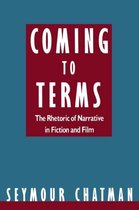
Seymour Benjamin Chatman, Coming to Terms: The Rhetoric of Narrative in Fiction and
Film (Ithaca: Cornell UP, 1990)
Ch 5. ‘In Defense of the Implied Author
- ‘The implied author is the agency within the narrative fiction itself which guides any
reading of it.’ (p.74.)
- ‘the implied author is the reader’s source of instruction about how to read the text and
how to account for the selection and ordering of its components’ (p.83-4)
- P.85- ‘The implied author (unlike the delegated speaker, the narrator) is a silent
source of information.’ > ‘Any narrator, whether authorial, camera-eye, or
dramatized, is a tool of the invention.’ (p.85.) > ‘As inventor, the implied author is by
definition distinguishable from the narrators, who are invented.’ (p.85.) > Implied
author- text implication/ text design/ text intent.
- P.90- ‘The narrator alone tells or shows the text, and if we cannot accept his account,
we must infer that it belongs to someone (or something) else.’ > i.e. the implied
author.
Ch 7. ‘The Literary Narrator’
- Diegesis- pure narrative- poet himself is the speaker and does not attempt to suggest
to us that anyone but himself is speaking. > Mimesis- imitation- the poet delivers a
speech as if he were someone else. (Plato)
- Novels- could be more associated with diegesis and plays with mimesis BUT Novels
and dramas- ‘there is no great difference between the structures of the “what”, the
story component told by epics and enacted by dramas’ and a ‘short story or novel
becomes more or less purely “mimetic” when it consists of nothing but the quoted
dialogue of the characters’ (p.110.)
- ‘we could say that the distinction between mimesis and diegesis or, to use their rough
modern synonyms, “showing” and “telling” is imply the distinction between iconic
and non-iconic or symbolic signs’ (p.111.) > ‘the implied author presents the story
through a tell-er or a show-er or some combination of both’ > only the tell-er can
have a voice > ‘Film and other performative media often have nothing like a narrative
voice, no “tell-er”. Even the cinematic voice-over narrator is usually at the service of
a larger narrative agent, the cinematic show-er’ (p.113.) >>> so need to redefine
‘narration’ to include showing as well as telling.
-
o ‘To “show” a narrative, I maintain, no less than to “tell” it, is to “present it
narratively” or to “narrate” it’ (p.113.)
- ‘As part of the invention of the text, the implied author assigns to a narrative agent
the task of articulating it, of actually offering it to some projected or inscribed
audience (the naratee).’ (p.116.)
- ‘Theater is a medium available for the presentation of stories; it is one of several
ways of bringing a narrative to life.’ (p.118.)
- ‘If we adopt an appropriately broad sense of the term, mimetic forms- dramas, films,
ballets- are just as much “narrated” as short stories and novels.’ (p.118.)
Seymour Benjamin Chatman, Coming to Terms: The Rhetoric of Narrative in Fiction and
Film (Ithaca: Cornell UP, 1990)
Ch 5. ‘In Defense of the Implied Author
- ‘The implied author is the agency within the narrative fiction itself which guides any
reading of it.’ (p.74.)
- ‘the implied author is the reader’s source of instruction about how to read the text and
how to account for the selection and ordering of its components’ (p.83-4)
- P.85- ‘The implied author (unlike the delegated speaker, the narrator) is a silent
source of information.’ > ‘Any narrator, whether authorial, camera-eye, or
dramatized, is a tool of the invention.’ (p.85.) > ‘As inventor, the implied author is by
definition distinguishable from the narrators, who are invented.’ (p.85.) > Implied
author- text implication/ text design/ text intent.
- P.90- ‘The narrator alone tells or shows the text, and if we cannot accept his account,
we must infer that it belongs to someone (or something) else.’ > i.e. the implied
author.
Ch 7. ‘The Literary Narrator’
- Diegesis- pure narrative- poet himself is the speaker and does not attempt to suggest
to us that anyone but himself is speaking. > Mimesis- imitation- the poet delivers a
speech as if he were someone else. (Plato)
- Novels- could be more associated with diegesis and plays with mimesis BUT Novels
and dramas- ‘there is no great difference between the structures of the “what”, the
story component told by epics and enacted by dramas’ and a ‘short story or novel
becomes more or less purely “mimetic” when it consists of nothing but the quoted
dialogue of the characters’ (p.110.)
- ‘we could say that the distinction between mimesis and diegesis or, to use their rough
modern synonyms, “showing” and “telling” is imply the distinction between iconic
and non-iconic or symbolic signs’ (p.111.) > ‘the implied author presents the story
through a tell-er or a show-er or some combination of both’ > only the tell-er can
have a voice > ‘Film and other performative media often have nothing like a narrative
voice, no “tell-er”. Even the cinematic voice-over narrator is usually at the service of
a larger narrative agent, the cinematic show-er’ (p.113.) >>> so need to redefine
‘narration’ to include showing as well as telling.
-
o ‘To “show” a narrative, I maintain, no less than to “tell” it, is to “present it
narratively” or to “narrate” it’ (p.113.)
- ‘As part of the invention of the text, the implied author assigns to a narrative agent
the task of articulating it, of actually offering it to some projected or inscribed
audience (the naratee).’ (p.116.)
- ‘Theater is a medium available for the presentation of stories; it is one of several
ways of bringing a narrative to life.’ (p.118.)
- ‘If we adopt an appropriately broad sense of the term, mimetic forms- dramas, films,
ballets- are just as much “narrated” as short stories and novels.’ (p.118.)