WGU D573 Task 2
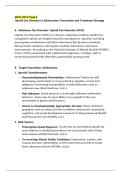
Opioid Use Disorder in Adolescents: Prevention and Treatment Strategy
A. Substance Use Disorder: Opioid Use Disorder (OUD)
Opioid Use Disorder (OUD) is a chronic, relapsing condition marked by
compulsive opioid use despite harmful consequences. Opioids, including
prescription medications and illicit substances like heroin or fentanyl,
disrupt brain chemistry and require medical, behavioral, and social
interventions. According to the National Institute of Mental Health (NIMH),
2024, OUD is associated with withdrawal symptoms, cravings, and co-
occurring mental health disorders, particularly among youth.
B. Target Population: Adolescents
1. Special Considerations
• Neurodevelopmental Vulnerability: Adolescents’ brains are still
developing, particularly in areas related to impulse control and
judgment, increasing susceptibility to risky behaviors such as
substance use (Beck Institute, 2021).
• Peer Influence: Social pressure can strongly influence adolescent
behavior. Teens may be more likely to try opioids if they are
normalized or glamorized by peers.
• Access to Developmentally Appropriate Services: Many treatment
programs cater to adults and fail to address adolescents’ emotional,
cognitive, and social development needs (U.S. Department of Health
and Human Services [HHS], n.d.).
2. Risk Factors
• Prescription Opioid Exposure: Youth who are prescribed opioids for
acute injuries or medical procedures are at increased risk of long-
term misuse (JAMA Network, 2021).
• Co-occurring Mental Health Conditions: Depression, anxiety, and
trauma increase vulnerability to OUD and often precede or result
from substance misuse (NIMH, 2024).
, C. Prevention Program: Strengthening Families Program (SFP 10– 14)
1. Program Overview
The Strengthening Families Program (SFP 10–14) is a family-based prevention
program for adolescents aged 10–14 and their caregivers. It involves seven
weekly sessions covering youth resilience, parental supervision, and family
communication (HHS, n.d.). The program is recognized as evidence-based
by Blueprints for Healthy Youth Development (Blueprints for Healthy Youth
Development, n.d.).
a. Appropriateness
SFP 10–14 directly addresses adolescent vulnerabilities by:
• Teaching youth how to handle peer pressure and manage emotions
• Enhancing parenting skills for practical guidance and support
• Strengthening family relationships—key protective factors for youth at
risk for substance use
2. Setting
SFP 10–14 is typically delivered in community centers, schools, or faith- based
settings. These accessible environments help reduce barriers to attendance
and encourage whole-family participation, which is critical for adolescent
engagement (HHS, n.d.).
3. Length
The program lasts seven weeks with two-hour weekly sessions. This schedule
provides sustained engagement without overwhelming families and allows
adolescents time to apply skills between meetings (Blueprints for Healthy
Youth Development, n.d.).
4. Expected Outcomes
• Delayed Substance Use Initiation: Youth who participate in SFP 10–
14 have a lower risk of initiating drug use in adolescence and young
adulthood (Iowa State University Extension, n.d.).
Opioid Use Disorder in Adolescents: Prevention and Treatment Strategy
A. Substance Use Disorder: Opioid Use Disorder (OUD)
Opioid Use Disorder (OUD) is a chronic, relapsing condition marked by
compulsive opioid use despite harmful consequences. Opioids, including
prescription medications and illicit substances like heroin or fentanyl,
disrupt brain chemistry and require medical, behavioral, and social
interventions. According to the National Institute of Mental Health (NIMH),
2024, OUD is associated with withdrawal symptoms, cravings, and co-
occurring mental health disorders, particularly among youth.
B. Target Population: Adolescents
1. Special Considerations
• Neurodevelopmental Vulnerability: Adolescents’ brains are still
developing, particularly in areas related to impulse control and
judgment, increasing susceptibility to risky behaviors such as
substance use (Beck Institute, 2021).
• Peer Influence: Social pressure can strongly influence adolescent
behavior. Teens may be more likely to try opioids if they are
normalized or glamorized by peers.
• Access to Developmentally Appropriate Services: Many treatment
programs cater to adults and fail to address adolescents’ emotional,
cognitive, and social development needs (U.S. Department of Health
and Human Services [HHS], n.d.).
2. Risk Factors
• Prescription Opioid Exposure: Youth who are prescribed opioids for
acute injuries or medical procedures are at increased risk of long-
term misuse (JAMA Network, 2021).
• Co-occurring Mental Health Conditions: Depression, anxiety, and
trauma increase vulnerability to OUD and often precede or result
from substance misuse (NIMH, 2024).
, C. Prevention Program: Strengthening Families Program (SFP 10– 14)
1. Program Overview
The Strengthening Families Program (SFP 10–14) is a family-based prevention
program for adolescents aged 10–14 and their caregivers. It involves seven
weekly sessions covering youth resilience, parental supervision, and family
communication (HHS, n.d.). The program is recognized as evidence-based
by Blueprints for Healthy Youth Development (Blueprints for Healthy Youth
Development, n.d.).
a. Appropriateness
SFP 10–14 directly addresses adolescent vulnerabilities by:
• Teaching youth how to handle peer pressure and manage emotions
• Enhancing parenting skills for practical guidance and support
• Strengthening family relationships—key protective factors for youth at
risk for substance use
2. Setting
SFP 10–14 is typically delivered in community centers, schools, or faith- based
settings. These accessible environments help reduce barriers to attendance
and encourage whole-family participation, which is critical for adolescent
engagement (HHS, n.d.).
3. Length
The program lasts seven weeks with two-hour weekly sessions. This schedule
provides sustained engagement without overwhelming families and allows
adolescents time to apply skills between meetings (Blueprints for Healthy
Youth Development, n.d.).
4. Expected Outcomes
• Delayed Substance Use Initiation: Youth who participate in SFP 10–
14 have a lower risk of initiating drug use in adolescence and young
adulthood (Iowa State University Extension, n.d.).