

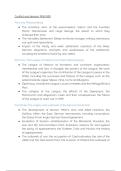
Conflict and tension 1918-1939
Part one: Peacemaking
● The armistice: aims of the peacemakers; Wilson and the Fourteen
Points; Clemenceau and Lloyd George; the extent to which they
achieved their aims.
● The Versailles Settlement: Diktat; territorial changes; military restrictions;
war guilt and reparations.
● Impact of the treaty and wider settlement: reactions of the Allies;
German objections; strengths and weaknesses of the settlement,
including the problems faced by new states.
Part two: The League of Nations and international peace
● The League of Nations: its formation and covenant; organisation;
membership and how it changed; the powers of the League; the work
of the League's agencies; the contribution of the League to peace in the
1920s, including the successes and failures of the League, such as the
Aaland Islands, Upper Silesia, Vilna, Corfu and Bulgaria.
● Diplomacy outside the League: Locarno treaties and the Kellogg-Briand
Pact.
● The collapse of the League: the effects of the Depression; the
Manchurian and Abyssinian crises and their consequences; the failure
of the League to avert war in 1939.
Part three: The origins and outbreak of the Second World War
● The development of tension: Hitler's aims and Allied reactions; the
Dollfuss Affair; the Saar; German rearmament, including conscription;
the Stresa Front; Anglo-German Naval Agreement.
● Escalation of tension: remilitarisation of the Rhineland; Mussolini, the
Axis and the Anti-Comintern Pact; Anschluss; reasons for and against
the policy of appeasement; the Sudeten Crisis and Munich; the ending
of appeasement.
● The outbreak of war: the occupation of Czechoslovakia; the role of the
USSR and the Nazi-Soviet Pact; the invasion of Poland and outbreak of
, war, September 1939; responsibility for the outbreak of war, including
that of key individuals: Hitler, Stalin and Chamberlain.
The Treaty of Versailles
Terms of the treaty
War guilt Germany must accept all blame for the war
according to article 231.
Reparations Germany must pay £6.6 billion which would have
taken until 1984 if the terms hadn’t changed under
the young plan in 1929.
German territories Former german colonies controlled by the league of
nations and given to France and Britain as
mandates
Forbid Germany to unite with its former ally austria.
Lost 10% of its mainland.
German armed The army was limited to 100,000 men.
forces Conscription was banned
Navy limited to 6 battleships
The Rhineland was demilitarised
No planes and submarines allowed
League of nations Germany banned from joining until it becomes a
peaceful country (Joined in 1926)
The Aims of the Big Three
Leader Aims Why?
George Clemenceau ● Wanted to cripple ● France was the most
germany affected by the war,
● German frontier pushed especially north east
back to the rhineland France. Russia was treated
● High reparations just as harsh by Germany
when they left the war in
1918 (Treaty of
Brest-Litovsk-Russia lost
, large parts of land and
25% of its population)
● Only one of the big three
with a mainland border
with Germany
● Way to ensure Germany
can’t invade France again
David Lloyd George ● “Squeeze the German ● Under pressure to follow
lemons till their pips the public opinion in the
squeak” UK at the time to become
PM.
● Keeps Britain as the
● Sink the German naval greatest naval power
fleet ● Keeps Germany as an
● Allow Germany to important trading partner
economically recover (no ● Acts as a barrier against
large reparations) the spread of communism
● Wanted Germany to stop
the Bolshevik uprising ● Gain land to expand its
continuing west own empire and had huge
● Break up Germany’s losses and casualties
colonial empire
Woodrow Wilson ● To set up the league of ● wished for eternal world
nations as chair peace and had idealistic
commissioner and the 14 views
points
● Didn’t want to punish ● Was isolated for most of
Germany harshly (firm the war and believed in
but fair) redemption for germany
● Believed in
self-determination (a
● Wanted to see an end to country should be
empires governed by itself)
The Paris Peace Conference 1919
10 million were killed during the war
Part one: Peacemaking
● The armistice: aims of the peacemakers; Wilson and the Fourteen
Points; Clemenceau and Lloyd George; the extent to which they
achieved their aims.
● The Versailles Settlement: Diktat; territorial changes; military restrictions;
war guilt and reparations.
● Impact of the treaty and wider settlement: reactions of the Allies;
German objections; strengths and weaknesses of the settlement,
including the problems faced by new states.
Part two: The League of Nations and international peace
● The League of Nations: its formation and covenant; organisation;
membership and how it changed; the powers of the League; the work
of the League's agencies; the contribution of the League to peace in the
1920s, including the successes and failures of the League, such as the
Aaland Islands, Upper Silesia, Vilna, Corfu and Bulgaria.
● Diplomacy outside the League: Locarno treaties and the Kellogg-Briand
Pact.
● The collapse of the League: the effects of the Depression; the
Manchurian and Abyssinian crises and their consequences; the failure
of the League to avert war in 1939.
Part three: The origins and outbreak of the Second World War
● The development of tension: Hitler's aims and Allied reactions; the
Dollfuss Affair; the Saar; German rearmament, including conscription;
the Stresa Front; Anglo-German Naval Agreement.
● Escalation of tension: remilitarisation of the Rhineland; Mussolini, the
Axis and the Anti-Comintern Pact; Anschluss; reasons for and against
the policy of appeasement; the Sudeten Crisis and Munich; the ending
of appeasement.
● The outbreak of war: the occupation of Czechoslovakia; the role of the
USSR and the Nazi-Soviet Pact; the invasion of Poland and outbreak of
, war, September 1939; responsibility for the outbreak of war, including
that of key individuals: Hitler, Stalin and Chamberlain.
The Treaty of Versailles
Terms of the treaty
War guilt Germany must accept all blame for the war
according to article 231.
Reparations Germany must pay £6.6 billion which would have
taken until 1984 if the terms hadn’t changed under
the young plan in 1929.
German territories Former german colonies controlled by the league of
nations and given to France and Britain as
mandates
Forbid Germany to unite with its former ally austria.
Lost 10% of its mainland.
German armed The army was limited to 100,000 men.
forces Conscription was banned
Navy limited to 6 battleships
The Rhineland was demilitarised
No planes and submarines allowed
League of nations Germany banned from joining until it becomes a
peaceful country (Joined in 1926)
The Aims of the Big Three
Leader Aims Why?
George Clemenceau ● Wanted to cripple ● France was the most
germany affected by the war,
● German frontier pushed especially north east
back to the rhineland France. Russia was treated
● High reparations just as harsh by Germany
when they left the war in
1918 (Treaty of
Brest-Litovsk-Russia lost
, large parts of land and
25% of its population)
● Only one of the big three
with a mainland border
with Germany
● Way to ensure Germany
can’t invade France again
David Lloyd George ● “Squeeze the German ● Under pressure to follow
lemons till their pips the public opinion in the
squeak” UK at the time to become
PM.
● Keeps Britain as the
● Sink the German naval greatest naval power
fleet ● Keeps Germany as an
● Allow Germany to important trading partner
economically recover (no ● Acts as a barrier against
large reparations) the spread of communism
● Wanted Germany to stop
the Bolshevik uprising ● Gain land to expand its
continuing west own empire and had huge
● Break up Germany’s losses and casualties
colonial empire
Woodrow Wilson ● To set up the league of ● wished for eternal world
nations as chair peace and had idealistic
commissioner and the 14 views
points
● Didn’t want to punish ● Was isolated for most of
Germany harshly (firm the war and believed in
but fair) redemption for germany
● Believed in
self-determination (a
● Wanted to see an end to country should be
empires governed by itself)
The Paris Peace Conference 1919
10 million were killed during the war


