Probability and statistics II - Study guides, Revision notes & Summaries

Looking for the best study guides, study notes and summaries about Probability and statistics II? On this page you'll find 10 study documents about Probability and statistics II.

All 10 results

Sort by:
Probability and Statistics Week 1
  • Lecture notes

    Probability and Statistics Week 1

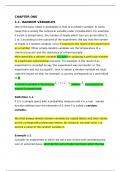
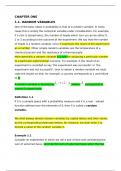
  • CHAPTER ONE 1.1. RANDOM VARIABLES One of the basic ideas in probability is that of a random variable. In many cases this is simply the numerical variable under consideration. For example, if a coin is tossed twice, the number of heads which turn up can be either 0, 1 or 2 according to the outcome of the experiment. We say that the number of heads is a random variable, since it expresses the result of the experiment as a number. Other simple random variables are the temperature of a chemical pr...
  • ExamNerd
    $10.99 More Info
Probability and Statistics Week 1
  • Lecture notes

    Probability and Statistics Week 1

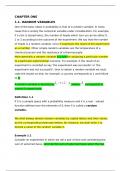
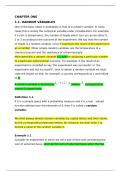
  • CHAPTER ONE 1.1. RANDOM VARIABLES One of the basic ideas in probability is that of a random variable. In many cases this is simply the numerical variable under consideration. For example, if a coin is tossed twice, the number of heads which turn up can be either 0, 1 or 2 according to the outcome of the experiment. We say that the number of heads is a random variable, since it expresses the result of the experiment as a number. Other simple random variables are the temperature of a chemical pr...
  • ExamNerd
    $10.99 More Info
Probability and Statistics Week 1
  • Lecture notes

    Probability and Statistics Week 1

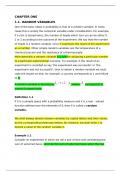
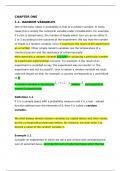
  • CHAPTER ONE 1.1. RANDOM VARIABLES One of the basic ideas in probability is that of a random variable. In many cases this is simply the numerical variable under consideration. For example, if a coin is tossed twice, the number of heads which turn up can be either 0, 1 or 2 according to the outcome of the experiment. We say that the number of heads is a random variable, since it expresses the result of the experiment as a number. Other simple random variables are the temperature of a chemical pr...
  • ExamNerd
    $10.99 More Info
Probability and Statistics Week 1
  • Lecture notes

    Probability and Statistics Week 1

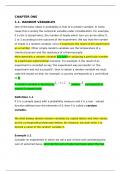
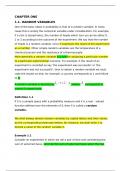
  • CHAPTER ONE 1.1. RANDOM VARIABLES One of the basic ideas in probability is that of a random variable. In many cases this is simply the numerical variable under consideration. For example, if a coin is tossed twice, the number of heads which turn up can be either 0, 1 or 2 according to the outcome of the experiment. We say that the number of heads is a random variable, since it expresses the result of the experiment as a number. Other simple random variables are the temperature of a chemical pr...
  • ExamNerd
    $10.99 More Info
Probability and Statistics Week 1
  • Lecture notes

    Probability and Statistics Week 1

  • CHAPTER ONE 1.1. RANDOM VARIABLES One of the basic ideas in probability is that of a random variable. In many cases this is simply the numerical variable under consideration. For example, if a coin is tossed twice, the number of heads which turn up can be either 0, 1 or 2 according to the outcome of the experiment. We say that the number of heads is a random variable, since it expresses the result of the experiment as a number. Other simple random variables are the temperature of a chemical pr...
  • ExamNerd
    $10.99 More Info
Probability and Statistics Week 1
  • Lecture notes

    Probability and Statistics Week 1

  • CHAPTER ONE 1.1. RANDOM VARIABLES One of the basic ideas in probability is that of a random variable. In many cases this is simply the numerical variable under consideration. For example, if a coin is tossed twice, the number of heads which turn up can be either 0, 1 or 2 according to the outcome of the experiment. We say that the number of heads is a random variable, since it expresses the result of the experiment as a number. Other simple random variables are the temperature of a chemical pr...
  • ExamNerd
    $10.99 More Info
Probability and Statistics Week 1
  • Lecture notes

    Probability and Statistics Week 1

  • CHAPTER ONE 1.1. RANDOM VARIABLES One of the basic ideas in probability is that of a random variable. In many cases this is simply the numerical variable under consideration. For example, if a coin is tossed twice, the number of heads which turn up can be either 0, 1 or 2 according to the outcome of the experiment. We say that the number of heads is a random variable, since it expresses the result of the experiment as a number. Other simple random variables are the temperature of a chemical pr...
  • ExamNerd
    $10.99 More Info
Probability and Statistics Week 1
  • Lecture notes

    Probability and Statistics Week 1

  • CHAPTER ONE 1.1. RANDOM VARIABLES One of the basic ideas in probability is that of a random variable. In many cases this is simply the numerical variable under consideration. For example, if a coin is tossed twice, the number of heads which turn up can be either 0, 1 or 2 according to the outcome of the experiment. We say that the number of heads is a random variable, since it expresses the result of the experiment as a number. Other simple random variables are the temperature of a chemical pr...
  • ExamNerd
    $10.99 More Info
Probability and Statistics Week 1
  • Lecture notes

    Probability and Statistics Week 1

  • CHAPTER ONE 1.1. RANDOM VARIABLES One of the basic ideas in probability is that of a random variable. In many cases this is simply the numerical variable under consideration. For example, if a coin is tossed twice, the number of heads which turn up can be either 0, 1 or 2 according to the outcome of the experiment. We say that the number of heads is a random variable, since it expresses the result of the experiment as a number. Other simple random variables are the temperature of a chemical pr...
  • ExamNerd
    $10.99 More Info
Probability and Statistics Week 1
  • Lecture notes

    Probability and Statistics Week 1

  • CHAPTER ONE 1.1. RANDOM VARIABLES One of the basic ideas in probability is that of a random variable. In many cases this is simply the numerical variable under consideration. For example, if a coin is tossed twice, the number of heads which turn up can be either 0, 1 or 2 according to the outcome of the experiment. We say that the number of heads is a random variable, since it expresses the result of the experiment as a number. Other simple random variables are the temperature of a chemical pr...
  • ExamNerd
    $10.99 More Info
Too much month left at the end of the money?
£5.50 for your revision notes multiplied by 100 fellow students... Do the math: that's a lot of money! Don't be a thief of your own wallet and start uploading yours now.