
- Study guides, Class notes & Summaries
Looking for the best study guides, study notes and summaries about ? On this page you'll find 34 study documents about .
Exam (elaborations)
Test Bank for Chapter 9 Long-Run Costs and Output Decisions {Elementary Microeconomic Theory (Econ 211) Verified Solutions
Test Bank for Chapter 9 Long-Run Costs and Output Decisions {Elementary Microeconomic Theory (Econ 211) Verified Solutions
 NurseBernie
Exam (elaborations)
Test Bank for Chapter 10 Input Demand: The Labor and Land Markets {Elementary Microeconomic Theory (Econ 211) Verified Solutions
PopularTest Bank for Chapter 10 Input Demand: The Labor and Land Markets {Elementary Microeconomic Theory (Econ 211) Verified Solutions
NurseBernie
Summary
Chapter 1 – Economics: The Core Issues
Chapter 1 – Economics: The Core Issues
NurseBernie
Exam (elaborations)
Chapter 1 Mindmap
Chapter 1 Mindmap
NurseBernie
Exam (elaborations)
Chapter 2 mindmap
Chapter 2 mindmap
NurseBernie
Summary
Econ Summary
Econ Summary
NurseBernie
Exam (elaborations)
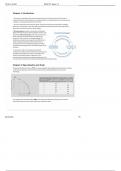
Faculty of Arts and Sciences – Department of Economics ECONOMICS 211 – FALL 2014 – LEILA DAGHER – Sections 6, 7, & 12 Final Review Notes
Faculty of Arts and Sciences – Department of Economics ECONOMICS 211 – FALL 2014 – LEILA DAGHER – Sections 6, 7, & 12 Final Review Notes Faculty of Arts and Sciences – Department of Economics ECONOMICS 211 – FALL 2014 – LEILA DAGHER – Sections 6, 7, & 12 Final Review Notes
NurseBernie
Other
Faculty of Arts and Sciences – Department of Economics ECONOMICS 211 – FALL 2014 – LEILA DAGHER – Sections 6, 7, & 12 Final Review Notes
Faculty of Arts and Sciences – Department of Economics ECONOMICS 211 – FALL 2014 – LEILA DAGHER – Sections 6, 7, & 12 Final Review Notes Faculty of Arts and Sciences – Department of Economics ECONOMICS 211 – FALL 2014 – LEILA DAGHER – Sections 6, 7, & 12 Final Review Notes
NurseBernie
Exam (elaborations)
Practice Problem Set - 1mCh1 Notes of econ 211 at aub in lebanonCh1 Notes
Practice Problem Set - 1mCh1 Notes of econ 211 at aub in lebanonCh1 Notes
NurseBernie
Exam (elaborations)
Micro Utility study chaptre 1
Micro Utility study chaptre 1 Micro Utility study chaptre 1
NurseBernie
Exam (elaborations)
Midterm Exam Study set | ECON 211 Spring 2021 Ccorrect answers)
Midterm Exam Study set | ECON 211 Spring 2021 Ccorrect answers) Midterm Exam Study set | ECON 211 Spring 2021 Ccorrect answers) Midterm Exam Study set | ECON 211 Spring 2021 Ccorrect answers)
NurseBernie
Exam (elaborations)
Chapter 10 Input Demand: The Labor and Land Markets | Questions with correct answers
10.1 Input Markets: Basic Concepts 1 Multiple Choice 1) The idea that the demand for autoworkers stems from the demand for automobiles is A) the value of the marginal product of autoworkers. B) derived demand. C) indirect demand. D) output demand. Answer: B Dif : 3 Topic: Input Markets: Basic Concepts Skill: Conceptual AACSB: Reflective Thinking 2) Demand for the services of Derek Jeter is A) horizontal. B) unrelated to his true productivity. C) an output demand. D) derived from the demand for...
NurseBernie
Exam (elaborations)
Chapter 9 Long-Run Costs and Output Decisions | Questions with correct answers
9.1 Short-Run Conditions and Long-Run Directions 1 Multiple Choice 1) Assume firms break even in an industry. New firms ________ attracted to the industry and current ones ________ exiting it. A) are not; are not B) are not; are C) are; are not D) are; are Answer: A Dif : 2 Topic: Short-Run Conditions and Long-Run Directions Skill: Fact 2) Firms that are ʺbreaking evenʺ are A) earning zero economic profits. B) earning less than a normal rate of return. C) shutting down in the short run. D)...
NurseBernie
Exam (elaborations)
Principles of Microeconomics, 11e -TB1 (Case/Fair/Oster) Chapter 14 Oligopoly
14.1 Market Structure in an Oligopoly 1) The airline industry is an example of a(n) ________ industry. A) perfectly competitive B) monopolistic C) monopolistically competitive D) oligopolistic Answer: D Diff: 1 Topic: Market Structure in an Oligopoly Skill: Conceptual AACSB: Reflective Thinking Learning Outcome: Micro-16 2) In which of the four oligopolistic markets below is there considerable price competition? A) music production industry B) stent industry C) airline industry D) hig...
NurseBernie
Exam (elaborations)
Principles of Microeconomics, 11e -TB1 (Case/Fair/Oster) Chapter 15 Monopolistic Competition
15.1 Industry Characteristics 1) The restaurant industry is an example of a(n) ________ industry. A) perfectly competitive B) monopolistic C) monopolistically competitive D) oligopolistic Answer: C Diff: 1 Topic: Industry Characteristics Skill: Conceptual AACSB: Reflective Thinking Learning Outcome: Micro-15 2) A monopolistically competitive industry has all of the following characteristics EXCEPT: A) there are no barriers to entry. B) strategic behavior. C) product differentiation. D) a la...
NurseBernie
Exam (elaborations)
Principles of Microeconomics, 11e -TB1 (Case/Fair/Oster) Chapter 1 The Scope and Method of Economics
1.1 Why Study Economics? 1) Which of the following is NOT listed in the book as a reason to study economics? A) to learn a way of thinking B) to understand society C) to be an informed citizen D) to learn how to make lots of money Answer: D Diff: 1 Topic: Why Study Economics? Skill: Fact Learning Outcome: Micro-1 2) Among the fundamental concepts in economics are A) opportunity cost. B) marginalism. C) efficient markets. D) all of the above Answer: D Diff: 1 Topic: Why Study Economics...
NurseBernie
Exam (elaborations)
Principles of Microeconomics, 11e -TB1 (Case/Fair/Oster) Chapter 19 Public Finance: The Economics of Taxation
19.1 The Economics of Taxation 1) The measure or value upon which a tax is levied is the A) tax base. B) tax rate. C) tax structure. D) tax incidence. Answer: A Diff: 1 Topic: The Economics of Taxation Skill: Definition Learning Outcome: Micro-24 2) Every tax has two parts: a(n) ________ and a(n) ________. A) base; rate structure B) incidence; rate C) base; incidence D) rate structure; excess burden Answer: A Diff: 1 Topic: The Economics of Taxation Skill: Fact Learning Outcome: Micro-24 ...
NurseBernie
Exam (elaborations)
Principles of Microeconomics, 11e -TB1 (Case/Fair/Oster) Chapter 16 Externalities, Public Goods, and Social Choice
16.1 Externalities and Environmental Economics 1) The field of environmental economics is concerned with ________. A) externalities B) public goods C) government inefficiency D) economies of scale Answer: A Diff: 1 Topic: Externalities and Environmental Economics Skill: Conceptual AACSB: Reflective Thinking Learning Outcome: Micro-22 2) Second hand cigarette smoke is an example of a(n) ________. A) economy of scale B) externality C) public good D) government failure Answer: B Diff: 1 ...
NurseBernie
Exam (elaborations)
Principles of Microeconomics, 11e -TB1 (Case/Fair/Oster) Chapter 20 International Trade, Comparative Advantage, and Protectionism
20.1 Trade Surpluses and Deficits 1) A country has a trade surplus when A) its exports exceed its imports. B) its exports equal its imports. C) its government spending exceeds its tax revenues. D) its exports are less than its imports. Answer: A Diff: 1 Topic: Trade Surpluses and Deficits Skill: Definition Learning Outcome: Micro-8 2) A country's trade is balanced when A) its imports exceeds its exports. B) its government expenditures are equal to its tax revenues. C) its net exports equal...
NurseBernie
Exam (elaborations)
Principles of Microeconomics, 11e -TB1 (Case/Fair/Oster) Chapter 21 Economic Growth in Developing and Transitional Economies
21.1 Life in the Developing Nations: Population and Poverty 1) Chronic food shortages, explosive population growth, and hyperinflations are problems facing A) industrial countries. B) first world countries. C) developing countries. D) developed countries. Answer: C Diff: 1 Topic: Life in the Developing Nations: Population and Poverty Skill: Fact Learning Outcome: Macro-16 2) In developing countries, A) financial markets are well developed. B) central banks are effective in controlling the...
NurseBernie
Exam (elaborations)
Principles of Microeconomics, 11e -TB1 (Case/Fair/Oster) Chapter 13 Monopoly and Antitrust Policy
13.1 Imperfect Competition and Market Power: Core Concepts 1) In imperfectly competitive markets, A) there is no competition in the markets. B) some competition may exist in the markets. C) some competition may exist but only on price and not in other ways. D) some competition may exist but only in other ways and not on price. Answer: B Diff: 1 Topic: Imperfect Competition and Market Power: Core Concepts Skill: Conceptual AACSB: Reflective Thinking Learning Outcome: Micro-14 2) A firm must ...
NurseBernie
Exam (elaborations)
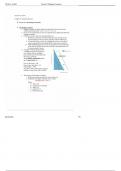
Econ211 Lectures: Chapter 6: Consumer Behavior
Lesson 6.1: The Budget Constraint A. The Budget Constraint a. Budget constraint: the limits imposed on individual’s choices by income, wealth, and product prices. (since resources are scarce) b. Choice set (or opportunity set): the set of options that is defined and limited by a budget constraint. c. Preferences, tastes, trade-offs, and opportunity cost i. Within the constraints imposed by limited income and fixed prices, decision-makers are free to choose what they will and will not bu...
NurseBernie