
DNRS 6630 (DNRS6630)
Walden University
Here are the best resources to pass DNRS 6630 (DNRS6630). Find DNRS 6630 (DNRS6630) study guides, notes, assignments, and much more.

Exam (elaborations)
DNRS 6630A-4NURS-6630F-4NURS-6630N-4NURS-6630C-4DNRS-6630-4-Approaches to Treatment Week 6 Midterm (Score; 99 Points)
1. Question: Which of the following receptors below would likely result in extra-pyramidal symptoms, tardive dyskinesia, and hyper pro lactinemia? 2. Question: Which statement is TRUE regarding the use of selective serotonin reuptake inhibitors (SSRI)/serotonin- norepinephrine reuptake inhibitors (SNRI) in patients with Generalized Anxiety Disorder? 3. Question: Patient is a 72-year-old male with a past medical history significant for atrial fibrillation and COPD with a new diagnosis of majo...
 AcademicResources
Exam (elaborations)
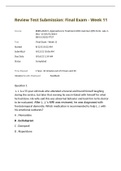
DNRS 6630-5, Week 11 Final Exam; Summer 2021
Popular1. Question: L. J. is a 55-year-old male who attended a funeral and found himself laughing during the service, but later that evening he was irritated with himself for what he had done. His wife said this was abnormal behavior and took him to his doctor to be evaluated. After L. J.’s MRI was reviewed, he was diagnosed with frontotemporal dementia. Which medication is recommended to help L. J. with his emotional outbursts? 2. Question: When can buprenorphine be initiated in a patient who is su...
AcademicResources

Exam (elaborations)
DNRS 6630A-4NURS-6630F-4NURS-6630N-4NURS-6630C-4DNRS-6630-4-Approaches toTreatment Week 6 Midterm (Score; 99 Points)
1. Question: Which of the following receptors below would likely result in extra-pyramidal symptoms, tardive dyskinesia, and hyper pro lactinemia? 2. Question: Which statement is TRUE regarding the use of selective serotonin reuptake inhibitors (SSRI)/serotonin- norepinephrine reuptake inhibitors (SNRI) in patients with Generalized Anxiety Disorder? 3. Question: Patient is a 72-year-old male with a past medical history significant for atrial fibrillation and COPD with a new diagnosis of majo...
TeachingTechnique

Exam (elaborations)
DNRS 6630A-4NURS-6630F-4NURS-6630N-4NURS-6630C-4DNRS-6630-4-Approaches to Treatment Week 6 Midterm (Score; 99 Points).docx
1. Question: Which of the following receptors below would likely result in extra-pyramidal symptoms, tardive dyskinesia, and hyper pro lactinemia? 2. Question: Which statement is TRUE regarding the use of selective serotonin reuptake inhibitors (SSRI)/serotonin- norepinephrine reuptake inhibitors (SNRI) in patients with Generalized Anxiety Disorder? 3. Question: Patient is a 72-year-old male with a past medical history significant for atrial fibrillation and COPD with a new diagnosis of majo...
AcademicGuide

Exam (elaborations)
DNRS 6630A-4NURS-6630F-4NURS-6630N-4NURS-6630C-4DNRS-6630-4-Approaches toTreatment Week 6 Midterm (Score; 99 Points).docx
1. Question: Which of the following receptors below would likely result in extra-pyramidal symptoms, tardive dyskinesia, and hyper pro lactinemia? 2. Question: Which statement is TRUE regarding the use of selective serotonin reuptake inhibitors (SSRI)/serotonin- norepinephrine reuptake inhibitors (SNRI) in patients with Generalized Anxiety Disorder? 3. Question: Patient is a 72-year-old male with a past medical history significant for atrial fibrillation and COPD with a new diagnosis of majo...
KnowledgeBase
Exam (elaborations)
DNRS 6630A-4NURS-6630F-4NURS-6630N Approaches to Treatment Week 6 Midterm
1. Question: Which of the following receptors below would likely result in extra-pyramidal symptoms, tardive dyskinesia, and hyper pro lactinemia? 2. Question: Which statement is TRUE regarding the use of selective serotonin reuptake inhibitors (SSRI)/serotonin- norepinephrine reuptake inhibitors (SNRI) in patients with Generalized Anxiety Disorder? 3. Question: Patient is a 72-year-old male with a past medical history significant for atrial fibrillation and COPD with a new diagnosis of majo...
sapling

Exam (elaborations)
DNRS 6630A-4NURS-6630F-4NURS-6630N-4NURS-6630C-4DNRS-6630-4-Approaches toTreatment Week 6 Midterm (99 Points)
1. Question: Which of the following receptors below would likely result in extra-pyramidal symptoms, tardive dyskinesia, and hyper pro lactinemia? 2. Question: Which statement is TRUE regarding the use of selective serotonin reuptake inhibitors (SSRI)/serotonin- norepinephrine reuptake inhibitors (SNRI) in patients with Generalized Anxiety Disorder? 3. Question: Patient is a 72-year-old male with a past medical history significant for atrial fibrillation and COPD with a new diagnosis of majo...
KnowledgeBase

Exam (elaborations)
DNRS 6630A-4NURS-6630F-4NURS-6630N-4NURS-6630C-4DNRS-6630-4-Approaches toTreatment Week 6 Midterm (99 Points).docx
1. Question: Which of the following receptors below would likely result in extra-pyramidal symptoms, tardive dyskinesia, and hyper pro lactinemia? 2. Question: Which statement is TRUE regarding the use of selective serotonin reuptake inhibitors (SSRI)/serotonin- norepinephrine reuptake inhibitors (SNRI) in patients with Generalized Anxiety Disorder? 3. Question: Patient is a 72-year-old male with a past medical history significant for atrial fibrillation and COPD with a new diagnosis of majo...
AcademicGuide

Exam (elaborations)
DNRS 6630A-4NURS-6630F-4NURS-6630N-4NURS-6630C-4DNRS-6630-4-Approaches toTreatment Week 6 Midterm (99 Points)
1. Question: Which of the following receptors below would likely result in extra-pyramidal symptoms, tardive dyskinesia, and hyper pro lactinemia? 2. Question: Which statement is TRUE regarding the use of selective serotonin reuptake inhibitors (SSRI)/serotonin- norepinephrine reuptake inhibitors (SNRI) in patients with Generalized Anxiety Disorder? 3. Question: Patient is a 72-year-old male with a past medical history significant for atrial fibrillation and COPD with a new diagnosis of majo...
AcademicResources
Exam (elaborations)
DNRS 6630A-4NURS-6630F-4NURS-6630N-4NURS-6630C-4DNRS-6630-4-Approaches toTreatment Week 6 Midterm
1. Question: Which of the following receptors below would likely result in extra-pyramidal symptoms, tardive dyskinesia, and hyper pro lactinemia? 2. Question: Which statement is TRUE regarding the use of selective serotonin reuptake inhibitors (SSRI)/serotonin- norepinephrine reuptake inhibitors (SNRI) in patients with Generalized Anxiety Disorder? 3. Question: Patient is a 72-year-old male with a past medical history significant for atrial fibrillation and COPD with a new diagnosis of majo...
Intelligently
Exam (elaborations)
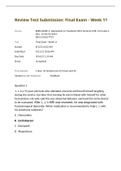
DNRS6630F-5, Final Exam Week 11
1. Question: L. J. is a 55-year-old male who attended a funeral and found himself laughing during the service, but later that evening he was irritated with himself for what he had done. His wife said this was abnormal behavior and took him to his doctor to be evaluated. After L. J.’s MRI was reviewed, he was diagnosed with frontotemporal dementia. Which medication is recommended to help L. J. with his emotional outbursts? 2. Question: When can buprenorphine be initiated in a patient who is su...
AcademicResources
Exam (elaborations)
Dnrs6630-5, Nurs-6630N-5, Nurs-6630C-5, Nurs-6630F-5, Dnrs-6630F-5 Final Exam Week 11
1. Question: L. J. is a 55-year-old male who attended a funeral and found himself laughing during the service, but later that evening he was irritated with himself for what he had done. His wife said this was abnormal behavior and took him to his doctor to be evaluated. After L. J.’s MRI was reviewed, he was diagnosed with frontotemporal dementia. Which medication is recommended to help L. J. with his emotional outbursts? 2. Question: When can buprenorphine be initiated in a patient who is su...
AcademicResources
Exam (elaborations)
DNRS6630-5, Final Exam Week 11
1. Question: L. J. is a 55-year-old male who attended a funeral and found himself laughing during the service, but later that evening he was irritated with himself for what he had done. His wife said this was abnormal behavior and took him to his doctor to be evaluated. After L. J.’s MRI was reviewed, he was diagnosed with frontotemporal dementia. Which medication is recommended to help L. J. with his emotional outbursts? 2. Question: When can buprenorphine be initiated in a patient who is su...
AcademicResources
Exam (elaborations)
DNRS 6630F-5, Week 11 Final Exam; Summer 2021
1. Question: L. J. is a 55-year-old male who attended a funeral and found himself laughing during the service, but later that evening he was irritated with himself for what he had done. His wife said this was abnormal behavior and took him to his doctor to be evaluated. After L. J.’s MRI was reviewed, he was diagnosed with frontotemporal dementia. Which medication is recommended to help L. J. with his emotional outbursts? 2. Question: When can buprenorphine be initiated in a patient who is su...
AcademicResources
Exam (elaborations)
DNRS 6630-5, Week 11 Final Exam; Summer 2021
1. Question: L. J. is a 55-year-old male who attended a funeral and found himself laughing during the service, but later that evening he was irritated with himself for what he had done. His wife said this was abnormal behavior and took him to his doctor to be evaluated. After L. J.’s MRI was reviewed, he was diagnosed with frontotemporal dementia. Which medication is recommended to help L. J. with his emotional outbursts? 2. Question: When can buprenorphine be initiated in a patient who is su...
AcademicResources
Exam (elaborations)
DNRS 6630F-5 Week 11 Final Exam (August 2021)
1. Question: L. J. is a 55-year-old male who attended a funeral and found himself laughing during the service, but later that evening he was irritated with himself for what he had done. His wife said this was abnormal behavior and took him to his doctor to be evaluated. After L. J.’s MRI was reviewed, he was diagnosed with frontotemporal dementia. Which medication is recommended to help L. J. with his emotional outbursts? 2. Question: When can buprenorphine be initiated in a patient who is su...
KnowledgeBase
Exam (elaborations)
DNRS 6630-5, Week 11 Final Exam (August 2021)
1. Question: L. J. is a 55-year-old male who attended a funeral and found himself laughing during the service, but later that evening he was irritated with himself for what he had done. His wife said this was abnormal behavior and took him to his doctor to be evaluated. After L. J.’s MRI was reviewed, he was diagnosed with frontotemporal dementia. Which medication is recommended to help L. J. with his emotional outbursts? 2. Question: When can buprenorphine be initiated in a patient who is su...
KnowledgeBase
Exam (elaborations)
Dnrs 6630-5, Nurs-6630N-5, Nurs-6630C-5, Nurs-6630F-5, Dnrs-6630F-5 Week 11 Final Exam (Aug 2021)
1. Question: L. J. is a 55-year-old male who attended a funeral and found himself laughing during the service, but later that evening he was irritated with himself for what he had done. His wife said this was abnormal behavior and took him to his doctor to be evaluated. After L. J.’s MRI was reviewed, he was diagnosed with frontotemporal dementia. Which medication is recommended to help L. J. with his emotional outbursts? 2. Question: When can buprenorphine be initiated in a patient who is su...
KnowledgeBase