

University of St Andrews • Medicine
Latest uploads for Medicine at University of St Andrews. Looking for Medicine notes at University of St Andrews? We have lots of notes, study guides and study notes available for Medicine at University of St Andrews.
-
52
- 0
- 0
Courses Medicine at University of St Andrews
Notes available for the following courses of Medicine at University of St Andrews
-
MD2001 52
Latest content University of St Andrews • Medicine
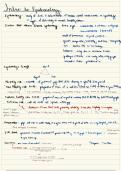
Introduction to Epidemiology Element Learning Outcomes: -Define selected basic epidemiological terms (i.e. mortality rate, incidence, prevalence, patterns of outcome occurrence, outcomes, exposures -Describe the need to consider time, place, and person in epidemiological enquiry. -Define and calculate prevalence and incidence, and factors that can alter the such measures -Describe and differentiate exposures and outcomes in epidemiological enquiry. -Describe the hierarchy of evidence, and ...
- Class notes
- • 2 pages's •
-
University of St Andrews•MD2001
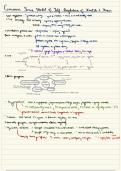
Common Sense Model of Illness Element Learning Outcomes: -Construct Leventhal's Common Sense Model of Self-regulation of health and illness (by identifying the parallel pathways in people's reactions to health threats.) -Identify the components of illness representations (illness beliefs). -Identify the steps involved in the concept of self-regulation. -Identify the assumptions of Common Sense Model
- Class notes
- • 1 pages's •
-
University of St Andrews•MD2001
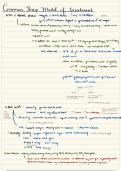
Common Sense Model of Treatment Element Learning Outcomes: -Evaluate adherence to health care recommendations -Apply the CSMT to general prescribing and health care interventions -Understand the main principles of patient treatment beliefs and how they are incorporated into the CSM
- Class notes
- • 1 pages's •
-
University of St Andrews•MD2001
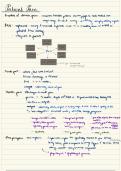
Patient Pain Element Learning Outcomes: -Describe the burden associated with chronic pain for the individual, society, and health care system -Define pain and describe acute and chronic pain -Understand the main theories of pain -Describe the common methods of assessment including behavioural and self-report -Compare methods of psychological approaches to the alleviation of acute and chronic pain
- Class notes
- • 3 pages's •
-
University of St Andrews•MD2001
Use of Health Services Element Learning Outcomes: -Describe the major factors that have been implicated in utilisation of health services -Understand how delay in seeking treatment can influences health outcomes -Identify the various types of health service user -Describe the 3 stages that typically occur in treatment delay
- Class notes
- • 2 pages's •
-
University of St Andrews•MD2001
Normal and Abnormal Blood Films Element Learning Outcomes: -Be able to identify neutrophils, eosinophils, lymphocytes and monocytes in a blood film -Be able to describe the differences between the abnormal blood film presented and a normal blood film -Be able to perform a differential cell counts
- Class notes
- • 1 pages's •
-
University of St Andrews•MD2001
Membrane Potential Element Learning Outcomes: -Explain the interactions between ion concentrations and the membrane permeability on the resting membrane potential -Contrast the consequences of infusing KCl v NaCl -Plot the relationship between extracellular ionic concentrations of Na and K and the transmembrane potential -Interpret the effects of changing ionic concentrations on the membrane potential
- Class notes
- • 1 pages's •
-
University of St Andrews•MD2001
Histology of the Skin Element Learning Outcomes: -Describe the layers/strata that make up the epidermis of 'thick skin'. -Describe the layers/strata that make up the epidermis of 'thin skin'. -Compare and contrast loose connective tissue and dense irregular connective tissue. -Contrast eccrine and apocrine sweat and the way in which it is delivered onto the skin surface. -List the structures that form a pilosebaceous unit. -Distinguish merocrine, apocrine and holocrine modes of secret...
- Class notes
- • 1 pages's •
-
University of St Andrews•MD2001

Does Sunscreen Protect My DNA Element Learning Outcomes: -Describe the mechanisms which normally exist to protect the body against UV damage -Discuss the potential consequences of defects in the uv protection system -Design an experiment to examine the efficacy of sunscreens -Analyse the results of an experiment to test the efficacy of sunscreens -Compare different ways of presenting data
- Class notes
- • 1 pages's •
-
University of St Andrews•MD2001
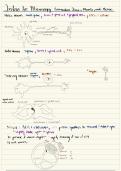
Connective Tissue, Muscle, and Nerve Element Learning Outcomes: -Describe the major histological features of the neurone cell body and white matter including myelin. -Identify the histological features of skeletal, cardiac and smooth muscle and distinguish between them.... -Identify and describe the main cell types as well as the fibre types found in fibrocollagenous connective tissues.
- Class notes
- • 3 pages's •
-
University of St Andrews•MD2001
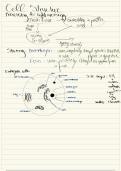
Cell Structure Element Learning Outcomes: -Describe and draw the major organelles and structures of eukaryotic cells as seen using electron microscopy. -Appreciate the relative size of the different organelles. -Appreciate the functions of the main cellular organelles and cell compartments. -Recognise organelles in some histological sections. Realise that not all details of a cell can be seen by light microscopy but that the vast majority of cells contain these organelles. -Recognise that ...
- Class notes
- • 1 pages's •
-
University of St Andrews•MD2001
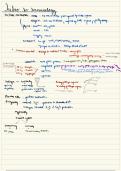
Introduction to Immunology Element Learning Outcomes: -Describe the different lines of defence available to combat bacteria, viruses, fungi and parasites. -List the different chemicals produced in the bodies defence mechanisms -Explain the terms chemotaxis and opsonisation and their importance in defence mechanisms -Outline the functions of lymphocytes and NK cells in the immune response -Understand the principle of how vaccination/immunisation works
- Class notes
- • 1 pages's •
-
University of St Andrews•MD2001
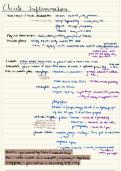
Acute Inflammation Element Learning Outcomes: -Describe the principal causes of acute inflammation -List the physical characteristics of acute inflammation -Describe the vascular and exudative phases -Recognise the macroscopic and microscopic appearances of acute inflammation -Describe the beneficial, harmful and systemic effects of acute inflammation
- Class notes
- • 2 pages's •
-
University of St Andrews•MD2001
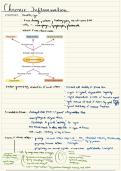
Chronic Inflammation Element Learning Outcomes: -Describe the sequelae of acute inflammation -Name the important causes of chronic inflammation -Describe the macroscopic and microscopic appearances of chronic inflammation -Name the cells of chronic inflammation -Describe the role of the macrophage and its derivatives in chronic inflammation
- Class notes
- • 2 pages's •
-
University of St Andrews•MD2001
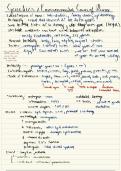
Genetics and Environmental Causes of Disease Element Learning Outcomes: -Describe the contribution of genetic factors to human disease -Identify common environmental factors that contribute to human disease -Describe the major classes of infectious agent and routes of transmission. -Describe the role of chemical and physical agents in causing human disease -Discuss why it is so difficult to ascertain genetic vs environmental causes of disease and methods used to study this conundrum
- Class notes
- • 2 pages's •
-
University of St Andrews•MD2001
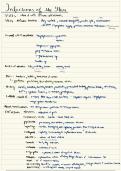
Infections of the Skin Element Learning Outcomes: -Explain the role of the commensal microbiota in and on the body/skin -Explain how the skin's structure (epidermis, dermis, hypodermis) acts as a defensive barrier against pathogens. -Describe how breaks in the layers of the skin can lead to infection. -Outline the different types of pathogens (bacteria, viruses, fungi, [parasites]) that can cause skin and soft tissue infections. -Illustrate specific infections each pathogen can cause (e.g...
- Class notes
- • 4 pages's •
-
University of St Andrews•MD2001

Intro to Infection Control & Prevention Element Learning Outcomes: -Recognise your role as a medical student with regards to the prevention and control of infection -Recognise that infection prevention and control (IPC) is a recurring theme throughout the curriculum -Recognise that infection control is an integral part of patient safety -Know how to access the online infection control programme - SIPCEP -Understand what is expected for completion of required SIPCEP units
- Class notes
- • 1 pages's •
-
University of St Andrews•MD2001
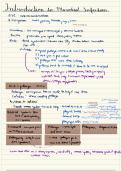
Introduction to Microbial Infection Element Learning Outcomes: -Define and explain key microbiological terms such as microorganism, pathogen, infection, pathogenicity, and virulence, and identify major medically significant microorganisms -Describe and discuss the association between microorganisms and disease, including Koch’s postulates and their limitations -Categorise environmental, commensal, obligate and opportunistic pathogens, providing real-world examples of each -Compare and app...
- Class notes
- • 7 pages's •
-
University of St Andrews•MD2001
Making an Infection Diagnosis Element Learning Outcomes: -List the main modalities for making a laboratory diagnosis of infection -Understand the nature of the diagnostic process and the role of the infection specialist -Define the terms sensitivity and specificity and relate them to the doctor patient interaction timelines -Describe what specimens can be taken -Describe the methods that are used to make a microbiological diagnosis -Describe the impact of molecular biology on diagnostics
- Class notes
- • 2 pages's •
-
University of St Andrews•MD2001
Surgical Site Infections Element Learning Outcomes: -Understand what is meant by Surgical Site Infection -Appreciate the history of surgical site infection -Appreciate the basics of wound healing -Recognise the clinical signs of surgical site infections -Describe appropriate measures to take in pre-, intra- and postoperative phases of care to prevent infection -Recognise the importance of device associated infections and prosthetic joint infections
- Class notes
- • 3 pages's •
-
University of St Andrews•MD2001