
AQA • Law
Latest uploads for Law at AQA. Looking for Law notes at AQA? We have lots of notes, study guides and study notes available for Law at AQA.
-
553
-
3
-
102
Courses Law at AQA
Notes available for the following courses of Law at AQA
-
Unit 1 LAW01 - Law Making and the Legal System
-
Unit 2 LAW02 - The Concept of Liability
-
Unit 3 LAW03 - Criminal Law (Offences against the Person) or Contract Law
-
Unit 4 LAW04 - Criminal Law (Offences against Property) or Tort, and Concepts of Law
Popular books AQA • Law
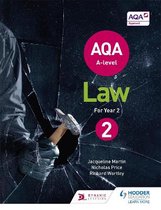
Jacqueline Martin, Richard Wortley • ISBN 9781510401747

Jacqueline Martin, Nicholas Price • ISBN 9781510401648
Latest content AQA • Law
Theft is a statutory offence defined under Section 1(1) of the Theft Act 1968 as the "dishonest appropriation of property belonging to another with the intention of permanently depriving the other of it." For a conviction to be successful, the prosecution must prove all five elements of the offence. The Actus Reus consists of the appropriation (Section 3), which involves assuming any of the rights of an owner (R v Pitham and Hehl); the property (Section 4), which includes money and all oth...
- Summary
- • 2 pages's •
-
AQA•Unit 3 LAW03 - Criminal Law or Contract Law
Sentencing in the English legal system is the final stage of the criminal process, where the court determines the appropriate punishment for a defendant who has pleaded guilty or been convicted. This process is governed by the Sentencing Act 2020 and guided by the Sentencing Council, which provides specific guidelines to ensure consistency across courts. Judges and magistrates must consider the five statutory purposes of sentencing: the punishment of offenders, the reduction of crime (deterrence...
- Summary
- • 3 pages's •
-
AQA•Unit 3 LAW03 - Criminal Law or Contract Law
Section 47 of the Offences Against the Person Act 1861, commonly known as Actual Bodily Harm (ABH), is the most frequently prosecuted non-fatal offence. The actus reus requires a base offence of either an assault or a battery that results in "actual bodily harm." In the case of R v Miller, ABH was defined as any hurt or injury calculated to interfere with the health or comfort of the victim, provided it is "more than merely transient or trifling." This includes injuries such as exten...
- Summary
- • 1 pages's •
-
AQA•Unit 3 LAW03 - Criminal Law or Contract Law
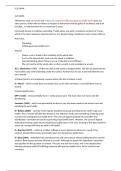
Section 20 of the Offences Against the Person Act 1861, known as Malicious Wounding or Inflicting Grievous Bodily Harm (GBH), is a mid-range non-fatal offence. The actus reus requires the defendant to either "wound" the victim (breaking both layers of the skin, often resulting in blood loss) or "inflict" GBH (defined in DPP v Smith as "really serious harm"). Examples include broken bones, permanent disfigurement, or serious psychiatric injury.
- Summary
- • 2 pages's •
-
AQA•Unit 3 LAW03 - Criminal Law or Contract Law
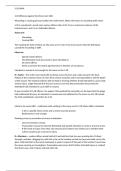
Section 18 of the Offences Against the Person Act 1861, often referred to as Wounding or GBH with Intent, is the most serious non-fatal offence in English law. The actus reus is identical to Section 20, requiring either a wound (a break in both layers of the skin, as in Moriarty v Brooks) or Grievous Bodily Harm (defined as "really serious harm" in DPP v Smith). What sets Section 18 apart is its significantly higher mens rea requirement: the prosecution must prove that the defendant had th...
- Summary
- • 1 pages's •
-
AQA•Unit 3 LAW03 - Criminal Law or Contract Law
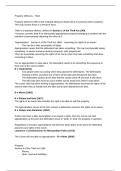
Theft is a statutory offence defined under Section 1(1) of the Theft Act 1968 as the "dishonest appropriation of property belonging to another with the intention of permanently depriving the other of it." For a conviction to be successful, the prosecution must prove all five elements of the offence. The Actus Reus consists of the appropriation (Section 3), which involves assuming any of the rights of an owner (R v Pitham and Hehl); the property (Section 4), which includes money and all oth...
- Summary
- • 5 pages's •
-
AQA•Unit 3 LAW03 - Criminal Law or Contract Law
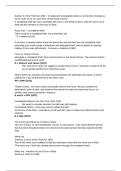
Robbery is a statutory offence under Section 8(1) of the Theft Act 1968, famously described as "theft aggravated by force." To secure a conviction, the prosecution must first prove all five elements of a completed theft (appropriation, property, belonging to another, dishonesty, and intention to permanently deprive). The additional actus reus requirements for robbery are that the defendant must use force—or the threat of force—on any person immediately before or at the time of the thef...
- Summary
- • 2 pages's •
-
AQA•Unit 3 LAW03 - Criminal Law or Contract Law

Non-Fatal Offences Against the Person refer to a hierarchy of criminal acts where physical or psychological harm is inflicted on a victim without resulting in death. In English Law, these are primarily governed by the Criminal Justice Act 1988 and the Offences Against the Person Act 1861 (OAPA). The offences are structured in a "ladder" of severity, where both the actus reus (the injury caused) and the mens rea (the level of intent or recklessness) increase at each rung.
- Summary
- • 6 pages's •
-
AQA•Unit 3 LAW03 - Criminal Law or Contract Law
In English law, Murder is a common law offence defined by Lord Coke as the unlawful killing of a reasonable creature in being and under the King's (or Queen's) peace, with malice aforethought. The actus reus requires that the defendant’s conduct was the factual and legal cause of the victim's death. The mens rea, known as malice aforethought, is unique because it can be satisfied by either an express intent to kill or an implied intent to cause grievous bodily harm (GBH) (R v Vickers)...
- Summary
- • 3 pages's •
-
AQA•Unit 3 LAW03 - Criminal Law or Contract Law
In criminal law, Mens Rea (the "guilty mind") refers to the mental element required at the time of the actus reus to establish criminal liability. It ensures that individuals are punished for their intentions or recklessness rather than for mere accidents. The levels of mens rea exist on a hierarchy of culpability: Direct Intent is the highest form, where the prohibited consequence is the defendant's specific objective (R v Mohan), while Oblique Intent applies when a result is a virtual...
- Summary
- • 2 pages's •
-
AQA•Unit 3 LAW03 - Criminal Law or Contract Law
ross Negligence Manslaughter (GNM) is an involuntary manslaughter offence where a defendant causes death through an extreme level of negligence, despite lacking the specific intent to kill or cause GBH. As established in R v Adomako (1994), the prosecution must prove four key elements: the existence of a duty of care (based on the "neighbor principle" from Donoghue v Stevenson), a breach of that duty which creates a serious and obvious risk of death, and that this breach actually caused th...
- Summary
- • 4 pages's •
-
AQA•Unit 3 LAW03 - Criminal Law or Contract Law
In English law, the coincidence of actus reus and mens rea (also known as the contemporaneity rule) dictates that for a crime to be committed, the physical act and the guilty mind must occur at the same time. However, to prevent defendants from escaping liability on technicalities, the courts have developed two key doctrines to "stretch" this timing. The first is the continuing act theory, where the actus reus is viewed as a single, ongoing event; if the defendant develops the mens rea ...
- Summary
- • 1 pages's •
-
AQA•Unit 3 LAW03 - Criminal Law or Contract Law
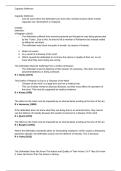
The defendant must prove that this defect caused them to either not know the nature and quality of their act (they didn't understand what they were physically doing) or, if they did know, that they did not know what they were doing was wrong in the legal sense (R v Windle). Unlike most criminal defences where the prosecution must disprove it, the burden of proof for insanity rests on the defence on the balance of probabilities. If successful, the verdict is "Not Guilty by Reason of Insanit...
- Summary
- • 5 pages's •
-
AQA•Unit 3 LAW03 - Criminal Law or Contract Law
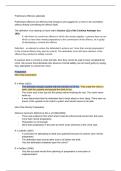
In English law, Attempted Offences are governed by Section 1(1) of the Criminal Attempts Act 1981, which defines an attempt as an act that is "more than merely preparatory" to the commission of a full offence. This legal framework allows the justice system to intervene before a crime is completed, provided the defendant has moved beyond the planning stage and into the execution phase. The actus reus requires a significant step toward the crime—such as standing outside a door with a lo...
- Summary
- • 3 pages's •
-
AQA•Unit 3 LAW03 - Criminal Law or Contract Law
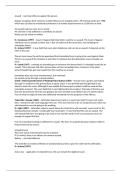
This summary defines Assault and Battery as the two least serious non-fatal offences against the person, collectively categorized as "Common Assault" under Section 39 of the Criminal Justice Act 1988. Assault is a summary offence committed when a defendant intentionally or recklessly causes a victim to apprehend immediate, unlawful personal violence; notably, no physical contact is required, as the harm lies in the psychological fear of imminent force. In contrast, Battery involves the ...
- Summary
- • 2 pages's •
-
AQA•Unit 3 LAW03 - Criminal Law or Contract Law
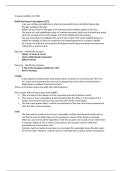
Occupiers' Liability is a branch of negligence that deals with the duty of care owed by those who occupy land or premises to those who enter them. In the UK, this is governed by two separate statutes: the 1957 Act (for lawful visitors) and the 1984 Act (for trespassers). The core of any claim depends on identifying the Occupier (the person with "sufficient control" over the premises, per Wheat v E Lacon & Co) and the Premises (any fixed or moveable structure, including vessels, vehic...
- Summary
- • 3 pages's •
-
AQA•Unit 4 LAW04 - Criminal Law or Tort, and Concepts of Law
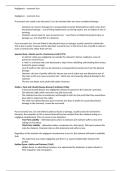
In Tort Law, Economic Loss refers to financial damage. The law makes a very sharp distinction between Consequential Economic Loss (which is easy to claim) and Pure Economic Loss (which is generally restricted). The courts limit these claims to prevent "floodgates" of litigation where a single negligent act (like cutting a power cable) could lead to thousands of businesses claiming for lost profits.
- Summary
- • 2 pages's •
-
AQA•Unit 4 LAW04 - Criminal Law or Tort, and Concepts of Law
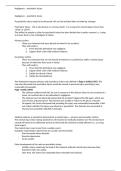
In Tort Law, Psychiatric Injury (also known as "nervous shock") refers to a diagnosed mental condition caused by a defendant's negligence. The courts are traditionally cautious here to avoid "floodgates" of litigation, so the rules are much stricter than for physical injuries. To claim, the condition must be a recognized psychiatric illness (e.g., PTSD, clinical depression). Mere grief, shock, or anxiety is not sufficient (Reilly v Merseyside RHA).
- Summary
- • 4 pages's •
-
AQA•Unit 4 LAW04 - Criminal Law or Tort, and Concepts of Law
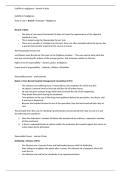
In the law of Tort, Breach of Duty is the second element of the negligence test (Duty, Breach, Damage). It occurs when a defendant fails to act as a "reasonable person" would have in the same situation. This is an objective test, meaning the court does not care if the defendant did their "best"; they care if the defendant reached the standard of a competent person performing that task.
- Summary
- • 4 pages's •
-
AQA•Unit 4 LAW04 - Criminal Law or Tort, and Concepts of Law
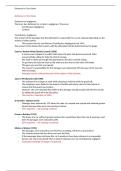
In general tort law (including Negligence and Private Nuisance), defendants can rely on several "General Defences." These are distinct from the specific statutory protections found in Occupiers' Liability, though they share the same underlying legal logic.
- Summary
- • 3 pages's •
-
AQA•Unit 4 LAW04 - Criminal Law or Tort, and Concepts of Law