
AQA • Law
Latest uploads for Law at AQA. Looking for Law notes at AQA? We have lots of notes, study guides and revision notes available for Law at AQA.
-
553
-
3
-
102
Modules Law at AQA
Notes available for the following courses of Law at AQA
-
Unit 1 LAW01 - Law Making and the Legal System
-
Unit 2 LAW02 - The Concept of Liability
-
Unit 3 LAW03 - Criminal Law (Offences against the Person) or Contract Law
-
Unit 4 LAW04 - Criminal Law (Offences against Property) or Tort, and Concepts of Law
Popular books AQA • Law
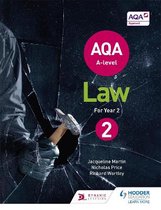
Jacqueline Martin, Richard Wortley • ISBN 9781510401747
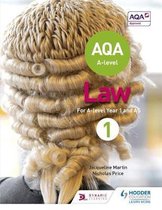
Jacqueline Martin, Nicholas Price • ISBN 9781510401648
Latest content AQA • Law
AQA A-level Law Paper 3B (Human Rights) (2026). Combines the official question paper and marking scheme in one document, with full mark allocations, for easy side-by-side revision and self-marking. Includes: Full question paper Official marking scheme Merged format for quick reference
- Package deal
- Exam (elaborations)
- • 24 pages's •
-
AQA•law 2026
-
AQA Law A-Level – Papers 1–3 (3A & 3B) Verified Merged Q&A 2026• ByTODAYchamp
AQA A-level Law Paper 3A (Contract) (2026). Combines the official question paper and marking scheme in one document, with full mark allocations, for easy side-by-side revision and self-marking. Includes: Full question paper Official marking scheme Merged format for quick reference
- Package deal
- Exam (elaborations)
- • 24 pages's •
-
AQA•law 2026
-
AQA Law A-Level – Papers 1–3 (3A & 3B) Verified Merged Q&A 2026• ByTODAYchamp
AQA A-level Law Paper 2 (2026). Combines the official question paper and marking scheme in one document, with full mark allocations, for easy side-by-side revision and self-marking. Includes: Full question paper Official marking scheme Merged format for quick reference
- Package deal
- Exam (elaborations)
- • 24 pages's •
-
AQA•law 2026
-
AQA Law A-Level – Papers 1–3 (3A & 3B) Verified Merged Q&A 2026• ByTODAYchamp
AQA A-level Law Paper 1 (2026). Combines the official question paper and marking scheme in one document, with full mark allocations, for easy side-by-side revision and self-marking. Includes: Full question paper Official marking scheme Merged format for quick reference
- Package deal
- Exam (elaborations)
- • 24 pages's •
-
AQA•law 2026
-
AQA Law A-Level – Papers 1–3 (3A & 3B) Verified Merged Q&A 2026• ByTODAYchamp
Official AQA A-level Law Paper 3B: Human Rights Question Paper. Question and marking scheme merged - 2026.
- Package deal
- Exam (elaborations)
- • 24 pages's •
-
AQA•law
-
AQA Law A-Level – Papers 1–3 (3A & 3B) Merged Q&A + Schemes 2026• Bylearnersuk
Official AQA A-level Law Paper 3A: Contract Question Paper. Question and marking scheme merged - 2026.
- Package deal
- Exam (elaborations)
- • 24 pages's •
-
AQA•law
-
AQA Law A-Level – Papers 1–3 (3A & 3B) Merged Q&A + Schemes 2026• Bylearnersuk
Official AQA A-level Law Paper 2 Question Paper. Question and marking scheme merged - 2026.
- Package deal
- Exam (elaborations)
- • 24 pages's •
-
AQA•law
-
AQA Law A-Level – Papers 1–3 (3A & 3B) Merged Q&A + Schemes 2026• Bylearnersuk
Official AQA A-level Law Paper 1 Question Paper. Question and marking scheme merged - 2026.
- Package deal
- Exam (elaborations)
- • 24 pages's •
-
AQA•law
-
AQA Law A-Level – Papers 1–3 (3A & 3B) Merged Q&A + Schemes 2026• Bylearnersuk
AQA A Level 2026 Law paper 1 Mark Scheme
- Package deal
- Exam (elaborations)
- • 18 pages's •
-
AQA•7162
-
AQA A LEVEL LAW 2026 ALL QUESTION PAPERS AND MARK SCHEMES | PAPER 1 2 AND 3 | ALL INCLUSIVE AND VERIFIED• Bysmartprof
AQA A Level 2026 Law paper 2 Mark Scheme
- Package deal
- Exam (elaborations)
- • 19 pages's •
-
AQA•7162
-
AQA A LEVEL LAW 2026 ALL QUESTION PAPERS AND MARK SCHEMES | PAPER 1 2 AND 3 | ALL INCLUSIVE AND VERIFIED• Bysmartprof
AQA A Level 2026 Law paper 3A Mark Scheme
- Package deal
- Exam (elaborations)
- • 18 pages's •
-
AQA•7162
-
AQA A LEVEL LAW 2026 ALL QUESTION PAPERS AND MARK SCHEMES | PAPER 1 2 AND 3 | ALL INCLUSIVE AND VERIFIED• Bysmartprof
AQA A Level 2026 Law paper 3B Mark Scheme
- Package deal
- Exam (elaborations)
- • 19 pages's •
-
AQA•7162
-
AQA A LEVEL LAW 2026 ALL QUESTION PAPERS AND MARK SCHEMES | PAPER 1 2 AND 3 | ALL INCLUSIVE AND VERIFIED• Bysmartprof
AQA A Level 2026 Law Question paper 1
- Package deal
- Exam (elaborations)
- • 24 pages's •
-
AQA•7162
-
AQA A LEVEL LAW 2026 ALL QUESTION PAPERS AND MARK SCHEMES | PAPER 1 2 AND 3 | ALL INCLUSIVE AND VERIFIED• Bysmartprof
AQA A Level 2026 Law Question paper 2
- Package deal
- Exam (elaborations)
- • 25 pages's •
-
AQA•7162
-
AQA A LEVEL LAW 2026 ALL QUESTION PAPERS AND MARK SCHEMES | PAPER 1 2 AND 3 | ALL INCLUSIVE AND VERIFIED• Bysmartprof
AQA A Level 2026 Law Question paper 3A (Contract)
- Package deal
- Exam (elaborations)
- • 24 pages's •
-
AQA•7162
-
AQA A LEVEL LAW 2026 ALL QUESTION PAPERS AND MARK SCHEMES | PAPER 1 2 AND 3 | ALL INCLUSIVE AND VERIFIED• Bysmartprof
AQA A Level 2026 Law Question paper (Human rights)
- Package deal
- Exam (elaborations)
- • 24 pages's •
-
AQA•7162
-
AQA A LEVEL LAW 2026 ALL QUESTION PAPERS AND MARK SCHEMES | PAPER 1 2 AND 3 | ALL INCLUSIVE AND VERIFIED• Bysmartprof
AQA Law A level 2026 Paper 3B Question Paper (Actual Question paper )
- Package deal
- Exam (elaborations)
- • 24 pages's •
-
AQA•7162
-
AQA Law A level 2026 Paper 1 , 2 , 3A and 3B (Actual Question papers and Mark Schemes )• Bymavericpapers
AQA Law A level 2026 Paper 3A Question Paper (Actual Question paper )
- Package deal
- Exam (elaborations)
- • 24 pages's •
-
AQA•7162
-
AQA Law A level 2026 Paper 1 , 2 , 3A and 3B (Actual Question papers and Mark Schemes )• Bymavericpapers
AQA Law A level 2026 Paper 2 Question Paper (Actual Question paper )
- Package deal
- Exam (elaborations)
- • 25 pages's •
-
AQA•7162
-
AQA Law A level 2026 Paper 1 , 2 , 3A and 3B (Actual Question papers and Mark Schemes )• Bymavericpapers
AQA Law A level 2026 Paper 3B Mark Scheme (Actual Mark Scheme)
- Package deal
- Exam (elaborations)
- • 19 pages's •
-
AQA•7162
-
AQA Law A level 2026 Paper 1 , 2 , 3A and 3B (Actual Question papers and Mark Schemes )• Bymavericpapers